In the summer of 465 BC a Persian king was murdered in his own palace. In the fifteen years that followed, Athens lost a fleet on the Nile, moved the League’s treasury from Delos to its own Acropolis, and sent Cimon on one last campaign to Cyprus, where he died. Then, according to later Greek writers, an Athenian named Callias made a peace with the Persian king that kept the royal fleet out of the Aegean for good. Whether that treaty was ever signed is one of the oldest arguments in Greek history.
Where this chapter fits
The battle of the Eurymedon had broken Persian sea power in the eastern Mediterranean. The next fifteen years are known mainly from Thucydides, who wrote within living memory, but who covered the time between the Persian and the Peloponnesian wars in a short summary. The Victorian historian George Grote warned that for these years Thucydides only glances briefly at the main events.1Grote, History of Greece, vol. 5, ch. 45G. Grote, History of Greece, vol. 5 (1847). A modern history, written 2,300 years laterRead on Project Gutenberg ↗ The details come from Ctesias, Diodorus and Plutarch, who wrote later and often disagree with him and with each other.
Thasos: the ally that wanted out
The first crisis came from inside the League. Thasos, a rich island off the coast of Thrace, quarrelled with Athens over the trading posts and the gold mine it owned on the mainland opposite.2Thucydides, History of the Peloponnesian War 1.100Written c. 400 BC. Translation by R. CrawleyRead on Project Gutenberg ↗ Cimon beat the Thasian fleet and laid siege to the city, as the previous chapter told.
In the third year of the siege the Thasians gave in. The terms show what the League had become. They had to pull down their walls, hand over their ships, pay what was demanded at once “and tribute in future”, and give up their mainland possessions and the mine.3Thucydides, History of the Peloponnesian War 1.101Written c. 400 BC. Translation by R. CrawleyRead on Project Gutenberg ↗ An ally that had joined to fight Persia now paid Athens instead of sailing with it. Diodorus, too, puts the blame on a quarrel over the mines.
A new king in Persia
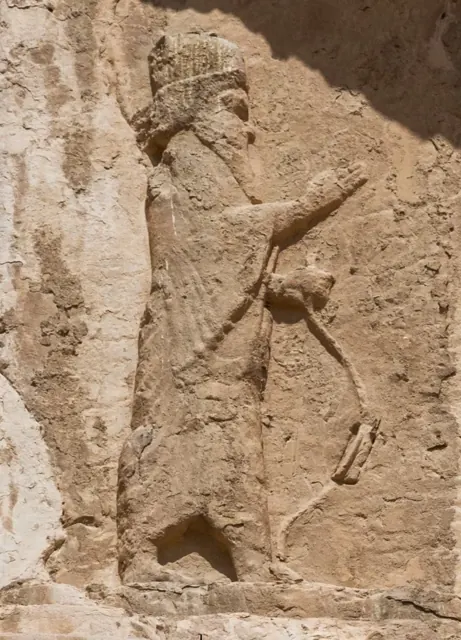
At the same time the Persian empire changed rulers. In 465 BC Xerxes, the king who had invaded Greece, was killed in his palace. Diodorus names the murderer as Artabanus, a Hyrcanian, the captain of the royal bodyguard, who then tried to seize the throne for himself.4Diodorus Siculus, Library of History 11.69Written c. 30 BC. Translation by C. H. Oldfather (1946)Read on LacusCurtius ↗ The young prince Artaxerxes survived the plot and became king. A Babylonian tablet dates Xerxes’ death to the summer of 465 BC.5M. Waters, Ancient Persia: A Concise History of the Achaemenid Empire, 550–330 BCE (2014), ch. “Empire at large: from the death of Xerxes to Darius II”Modern history of the Persian empire (Cambridge University Press); dates the murder from a Babylonian tabletRead on Cambridge Core ↗ Artaxerxes I ruled for some forty years; Thucydides records his death in the winter of 425/424 BC.
One of his first visitors was a Greek. Themistocles, the victor of Salamis, had been ostracised and then hunted as a traitor, and he fled across the Aegean, as chapter 9 told. On landing in Asia he wrote to Artaxerxes, who had just come to the throne, offering his services. The king made him governor of Magnesia, a city in Asia Minor. Thucydides says he died of disease, though some said he poisoned himself because he could not keep his promises to the king. Plutarch, five centuries later, preferred the dramatic version: Themistocles took his own life rather than lead a Persian army against Cimon.
Egypt: a fleet on the Nile
The change of king was a signal for rebellion. When the Egyptians heard of Xerxes’ death and the disorder at court, Diodorus says, they drove out the Persian tax collectors and made a man named Inaros their king.6Diodorus Siculus, Library of History 11.71Written c. 30 BC. Translation by C. H. Oldfather (1946)Read on LacusCurtius ↗ Thucydides calls Inaros a Libyan king from the Egyptian border, who brought almost the whole of Egypt over to his side and asked Athens for help.
The Athenians said yes. Their fleet was then campaigning off Cyprus, and Thucydides says they abandoned that campaign and sailed up the Nile with two hundred ships of their own and their allies. They made themselves masters of the river and of two-thirds of Memphis, the old capital, and besieged the Persians and Medes who held out in the last third, the “White Castle”.
The king first tried money. Thucydides says Artaxerxes sent a Persian, Megabazus, to Sparta with money to bribe the Spartans into invading Attica and so drawing the Athenians home. When nothing came of it, he sent an army instead, under Megabyzus son of Zopyrus. Megabyzus beat the Egyptians and their allies, drove the Greeks out of Memphis, and besieged them on the island of Prosopitis for eighteen months.
Six years, and three different endings
Thucydides’ ending is a catastrophe. When the canal was drained, the Persians marched across and took the island. “Thus the enterprise of the Hellenes came to ruin after six years of war.” Of the whole force only a few reached Cyrene through Libya; most died.7Thucydides, History of the Peloponnesian War 1.110Written c. 400 BC. Translation by R. CrawleyRead on Project Gutenberg ↗ Inaros was betrayed and crucified.8Thucydides, History of the Peloponnesian War 1.110Written c. 400 BC. Translation by R. CrawleyRead on Project Gutenberg ↗ Worse followed. A relief squadron of fifty ships had sailed from Athens, knowing nothing of the defeat; it put in at the Mendesian mouth of the Nile and was attacked by the Persian army from the land and the Phoenician fleet from the sea, and most of its ships were lost.
Diodorus tells it differently. In his version the Athenians, trapped on the island, burned their own ships and prepared to fight to the end. The Persian generals, unwilling to lose many thousands of men against such opponents, agreed a truce that let them leave Egypt unharmed, and the Athenians marched home through Libya, “as by a miracle”.9Diodorus Siculus, Library of History 11.77Written c. 30 BC. Translation by C. H. Oldfather (1946)Read on LacusCurtius ↗ His translator notes that Thucydides says the opposite: most of them perished.10C. H. Oldfather, note to Diodorus 11.77 (1946)Modern note by the translator of the Loeb edition of DiodorusRead on LacusCurtius ↗
Ctesias, a Greek doctor at the Persian court around 400 BC, tells a third story from Persian informants. In his account Athens sent only forty ships, and their commander Charitimides won a sea battle in which twenty Persian ships were captured and thirty sunk.11Ctesias, Persica, summarised by Photius (Bibliotheca, codex 72)Ctesias wrote c. 400 BC; the summary is from the 9th century AD. Translation by J. H. Freese (1920)Read on Project Gutenberg ↗ At the end Megabyzus could not take the last stronghold and came to terms with Inaros and more than 6,000 Greeks, promising that they would come to no harm.
Modern historians generally follow Thucydides, the earliest and most careful of the three, and treat the Egyptian expedition as a heavy defeat for Athens.12R. Meiggs, The Athenian Empire (Oxford, Clarendon Press, 1972)Standard modern study of the League, its tribute and the tribute listsFind in a library (WorldCat) ↗ But how heavy is uncertain. Two hundred ships would have carried tens of thousands of men; Ctesias’ figure is far smaller, and Thucydides does not count the dead. What is not in doubt is that Egypt went back to the king, except for Amyrtaeus, a rebel king in the marshes of the delta, whom the Persians could not catch.
The treasury moves to Athens
When the League was founded in 478/477 BC, its money was kept on the sacred island of Delos, and its meetings were held in the temple there. Thucydides says the common treasury was kept at Delos and the League’s meetings were held in the temple. In 454 BC the treasury was moved to Athens. The date comes not from a historian but from stone: from that year on, the Athenians inscribed on large slabs on the Acropolis the share of each ally’s tribute that was given to Athena, and the fragments of these “tribute lists” survive.13R. Meiggs, The Athenian Empire (Oxford, Clarendon Press, 1972)Standard modern study of the League, its tribute and the tribute listsFind in a library (WorldCat) ↗
Ancient writers saw the move as a turning point. Plutarch says Pericles’ enemies attacked him for “removing the common treasure of the Greeks from the isle of Delos into their own custody”, and then spending it on temples and statues for Athens.14Plutarch, PericlesWritten c. AD 100. Translation by J. Dryden, revised by A. H. CloughRead on Project Gutenberg ↗ Another story makes Aristides himself comment, when the Samians proposed the move, “that the thing indeed was not just, but was expedient”.15Plutarch, AristidesWritten c. AD 100. Translation by J. Dryden, revised by A. H. CloughRead on Project Gutenberg ↗ Aristides had probably died before 454 BC, so the story is doubtful, but it shows how later Greeks judged the decision. The official reason, according to Pericles’ critics in Plutarch, was safety: the money was moved so that the barbarians could not seize it.16Plutarch, PericlesWritten c. AD 100. Translation by J. Dryden, revised by A. H. CloughRead on Project Gutenberg ↗ Modern historians often link the timing to the disaster in Egypt: with a fleet lost, an island in the middle of the Aegean may have seemed exposed to a Persian raid.17R. Meiggs, The Athenian Empire (Oxford, Clarendon Press, 1972)Standard modern study of the League, its tribute and the tribute listsFind in a library (WorldCat) ↗
Cimon’s last campaign
Cimon had not been in Athens for the Egyptian adventure. After the Spartans sent home an Athenian army that he had led to help them against their rebel helots, the angry Athenians turned on him and ostracised him for ten years. Plutarch says he was recalled early, by a decree proposed by Pericles himself, and made peace with Sparta. Thucydides records a five-year truce between Athens and the Peloponnesians, and goes straight on: freed from war in Greece, the Athenians sent two hundred ships of their own and their allies to Cyprus under Cimon.
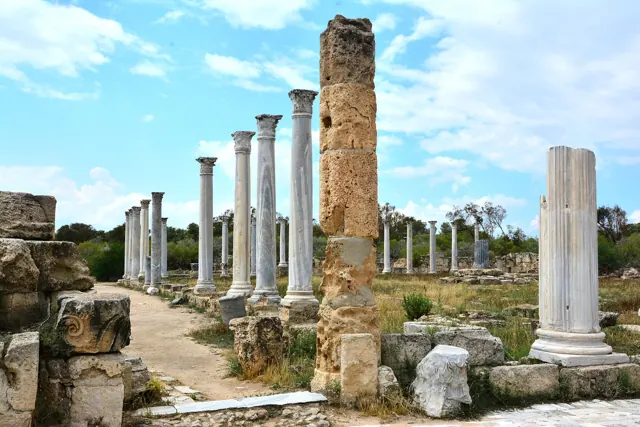
Sixty of the ships went on to Egypt, at the request of Amyrtaeus, the rebel king still holding out in the marshes. The rest besieged Kition, on the south coast of Cyprus. There Cimon died. Thucydides gives only the bare fact: Cimon’s death and a shortage of food forced the Athenians to give up the siege. Plutarch knew two versions: “He died, some say, of sickness, while besieging Citium, in Cyprus; according to others, of a wound he received in a skirmish with the barbarians.”18Plutarch, CimonWritten c. AD 100. Translation by J. Dryden, revised by A. H. CloughRead on Project Gutenberg ↗
The retreat ended in a victory. Sailing off Salamis, on the east coast of Cyprus, the Athenians “fought with the Phoenicians, Cyprians, and Cilicians by land and sea, and, being victorious on both elements departed home”, joined by the squadron returning from Egypt.19Thucydides, History of the Peloponnesian War 1.112Written c. 400 BC. Translation by R. CrawleyRead on Project Gutenberg ↗ It was a double victory, like the Eurymedon. Grote thought the two fights were probably not on the same day, unlike the Eurymedon.20Grote, History of Greece, vol. 5, ch. 45G. Grote, History of Greece, vol. 5 (1847). A modern history, written 2,300 years laterRead on Project Gutenberg ↗
Diodorus puts the events in a different order. In his version Cimon took Kition and Marion, beat a Phoenician and Cilician fleet and captured a hundred ships with their crews, won a battle on land in Cilicia, and then besieged Salamis itself. He makes Cimon die of illness only after the peace was signed, while Thucydides says his death came before the battle. Grote noticed the problem and trusted Thucydides.
What the sources say about a peace
After Cyprus the fighting between Athens and Persia stopped. Diodorus, writing about 30 BC and probably following the fourth-century historian Ephorus, explains why.21Grote, History of Greece, vol. 5, ch. 45G. Grote, History of Greece, vol. 5 (1847). A modern history, written 2,300 years laterRead on Project Gutenberg ↗ Artaxerxes, “when he learned of the reverses his forces had suffered at Cyprus, took counsel on the war with his friends and decided that it was to his advantage to conclude a peace with the Greeks.”22Diodorus Siculus, Library of History 12.4Written c. 30 BC. Translation by C. H. Oldfather (1946)Read on LacusCurtius ↗ His generals sent envoys to Athens, and the Athenians sent ambassadors of their own, led by Callias son of Hipponicus.23Diodorus Siculus, Library of History 12.4Written c. 30 BC. Translation by C. H. Oldfather (1946)Read on LacusCurtius ↗
Callias came from one of the great families of Athens.24Grote, History of Greece, vol. 5, ch. 45G. Grote, History of Greece, vol. 5 (1847). A modern history, written 2,300 years laterRead on Project Gutenberg ↗ Herodotus, writing in Callias’ own lifetime, mentions him in passing: at a time when Argive envoys came to ask Artaxerxes whether their friendship with his father still held, “Athenian envoys, Callias son of Hipponicus, and the rest who had come up with him, were at Susa, called the Memnonian, about some other business”.25Herodotus, Histories 7.151Written c. 430 BC. Translation by A. D. GodleyRead on Perseus ↗ Herodotus does not say what that business was, or when it happened.
Plutarch, about AD 100, tells the story differently again. He connects the peace not with Cyprus but with the Eurymedon, twenty years earlier: “This success of Cimon so daunted the king of Persia, that he presently made that celebrated peace”.26Plutarch, CimonWritten c. AD 100. Translation by J. Dryden, revised by A. H. CloughRead on Project Gutenberg ↗ He knew that the matter was disputed, and gives his evidence: the fourth-century historian Callisthenes denied that the king agreed to any terms, “but in the collection which Craterus made of the public acts of the people, there is a draft of this treaty given.”27Plutarch, CimonWritten c. AD 100. Translation by J. Dryden, revised by A. H. CloughRead on Project Gutenberg ↗ Craterus had collected the decrees of the Athenian assembly, so a copy of the treaty was apparently on record in Athens. His collection is lost.
No writer of the fifth century mentions a treaty at all. The first surviving reference comes from the Athenian orator Isocrates, in a speech of 380 BC, some seventy years after the event.28J. V. A. Fine, The Ancient Greeks: A Critical History (1983), pp. 360–363Modern history of Greece (Harvard University Press); accepts the peaceFind in a library (WorldCat) ↗ By then the peace had become a boast. The German scholar Dahlmann, quoted by Grote, thought the treaty itself was invented in the schools of Athenian rhetoric as a rhetorical answer to the humiliating peace Sparta made with Persia in the 380s BC.
The reported terms
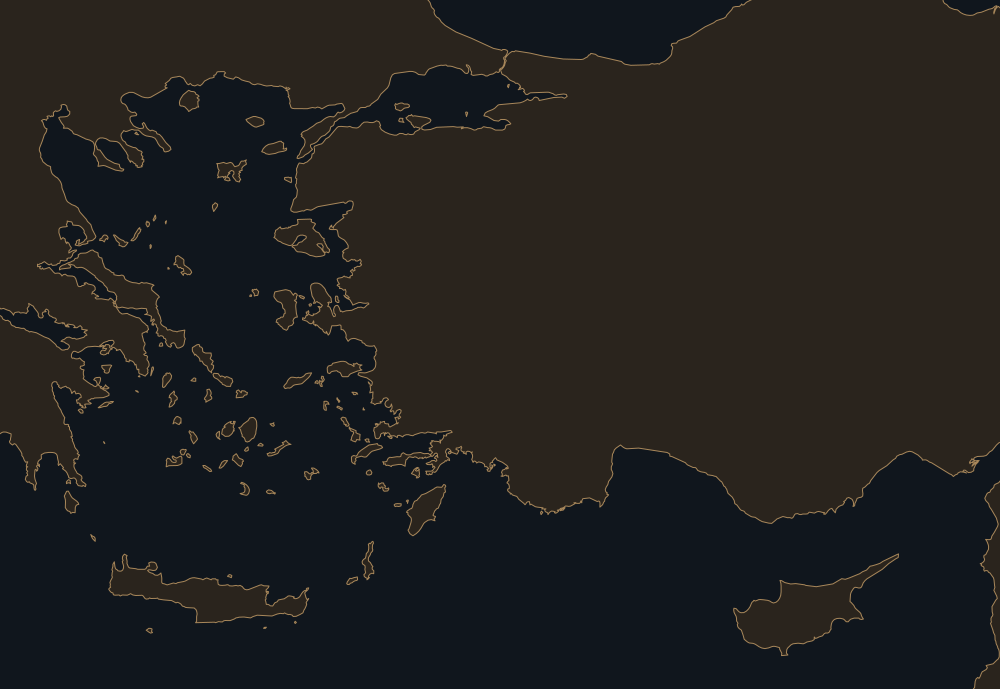
Diodorus gives the fullest version of the terms: “All the Greek cities are to live under laws of their own making; the satraps of the Persians are not to come nearer to the sea than a three days’ journey”, and no Persian warship was to sail inside Phaselis or the Cyanean Rocks. In return, the Athenians would not send troops into the king’s territory. Phaselis lies on the coast of Lycia, in the south-west of Asia Minor; the Cyanean Rocks are at the entrance to the Black Sea, at the northern end of the Bosporus.29C. H. Oldfather, note to Diodorus 12.4 (1946)Modern note by the translator of the Loeb edition of DiodorusRead on LacusCurtius ↗
Plutarch’s version uses different landmarks. The king’s armies were to “come no nearer the Grecian sea than the length of a horse’s course”, and his warships were not to appear “between the Cyanean and Chelidonian isles”.30Plutarch, CimonWritten c. AD 100. Translation by J. Dryden, revised by A. H. CloughRead on Project Gutenberg ↗ Elsewhere in the same Life he puts the limit at four hundred furlongs, about 75 kilometres: after Cimon, he says, not even a royal messenger on horseback came that close to the sea.31Plutarch, CimonWritten c. AD 100. Translation by J. Dryden, revised by A. H. CloughRead on Project Gutenberg ↗ Grote added that the Athenians, for their part, left the king Cyprus and Egypt.32Grote, History of Greece, vol. 5, ch. 45G. Grote, History of Greece, vol. 5 (1847). A modern history, written 2,300 years laterRead on Project Gutenberg ↗
The terms do not agree with each other, and none of them can be checked against the treaty itself. C. H. Oldfather, who translated Diodorus for the Loeb edition, put it bluntly: “There was a cessation of hostilities at this time between Athens and Persia; but the specific terms of the treaty, as they are stated here and in fourth-century orators, are clearly false.”33C. H. Oldfather, note to Diodorus 12.4 (1946)Modern note by the translator of the Loeb edition of DiodorusRead on LacusCurtius ↗
Did the peace exist?
The doubts are as old as the treaty’s fame. In the fourth century BC the historian Callisthenes said that the king “did not agree to any such articles”, only that fear kept his forces away from the coast.34Plutarch, CimonWritten c. AD 100. Translation by J. Dryden, revised by A. H. CloughRead on Project Gutenberg ↗ His contemporary Theopompus went further and called the treaty a forgery. He had seen the text on a stone in Athens and noticed that it was written in the Ionic alphabet, which Athens adopted officially only after the archonship of Eucleides (403/402 BC). Grote summarised the argument: the peace “was engraved, not in ancient Attic, but in Ionic letters”.35Grote, History of Greece, vol. 5, ch. 45G. Grote, History of Greece, vol. 5 (1847). A modern history, written 2,300 years laterRead on Project Gutenberg ↗
The strongest argument against the peace is a silence. Thucydides, who describes the Egyptian expedition and the battle off Salamis in Cyprus, never mentions a treaty with Persia. Grote, who believed in the peace, answered that the treaty only recognised the existing state of things, which gave Thucydides “a reasonable ground for the silence”.36Grote, History of Greece, vol. 5, ch. 45G. Grote, History of Greece, vol. 5 (1847). A modern history, written 2,300 years laterRead on Project Gutenberg ↗ He also pointed out that the orators of the next century had so exaggerated the treaty that it was easy to doubt it.
Other evidence points the other way. Grote answered Theopompus: a treaty that mattered most to the Ionian cities might have been cut in Ionic letters, or the stone could have been re-cut later, since nearly a century had passed when Theopompus saw it.37Grote, History of Greece, vol. 5, ch. 45G. Grote, History of Greece, vol. 5 (1847). A modern history, written 2,300 years laterRead on Project Gutenberg ↗ Thucydides himself shows that something restrained the king’s fleet. In 411 BC, when the Athenians were desperate for Persian help, they broke off talks when they were asked to “allow the King to build ships and sail along his own coast wherever and with as many as he pleased”.38Thucydides, History of the Peloponnesian War 8.56Written c. 400 BC. Translation by R. CrawleyRead on Project Gutenberg ↗ That demand only makes sense if the king had not been free to do so before. Grote weighed it all and concluded “in favor of this treaty as an historical fact”.39Grote, History of Greece, vol. 5, ch. 45G. Grote, History of Greece, vol. 5 (1847). A modern history, written 2,300 years laterRead on Project Gutenberg ↗
Modern historians are still divided. Some accept a formal treaty about 449 BC; J. V. A. Fine thought the Athenian withdrawal from Cyprus itself suggests an agreement.40J. V. A. Fine, The Ancient Greeks: A Critical History (1983), pp. 360–363Modern history of Greece (Harvard University Press); accepts the peaceFind in a library (WorldCat) ↗ Ernst Badian argued for a first peace after the Eurymedon, renewed by Callias about 449 BC, which would explain why Plutarch connects it with Cimon.41E. Badian, “The Peace of Callias”, Journal of Hellenic Studies 107 (1987), pp. 1–39Modern article arguing for a first peace after the Eurymedon, renewed in 449 BC; disputed by other historiansRead on Cambridge Core ↗ Others, like Raphael Sealey, doubted that a formal peace was ever made, noting that Callisthenes and Theopompus had already rejected it in antiquity.42R. Sealey, A History of the Greek City States, ca. 700–338 B.C. (1976), pp. 280–281Modern history of Greece (University of California Press); doubts that a formal peace was madeView on Google Books ↗ Between them lies a middle view, found in popular histories such as Tom Holland’s Persian Fire: some kind of accommodation was reached, whatever its form.43T. Holland, Persian Fire (2005), p. 366Modern narrative history of the Persian WarsView on Google Books ↗ The debate is still going on in the journals.44L. J. Samons II, “Kimon, Kallias and Peace with Persia”, Historia 47 (1998), pp. 129–140Modern article on the evidence for a peace with PersiaRead on JSTOR ↗
The end of the Persian Wars
Treaty or not, the war was over. For a generation Athens sent no more fleets against Persia, and, as Grote noted, Persian warships no longer appeared in the Aegean.45Grote, History of Greece, vol. 5, ch. 45G. Grote, History of Greece, vol. 5 (1847). A modern history, written 2,300 years laterRead on Project Gutenberg ↗ Plutarch saw Cimon’s death as the end of an age: after him “there was not one commander among the Greeks that did anything considerable against the barbarians”, and the Greeks turned on one another instead.46Plutarch, CimonWritten c. AD 100. Translation by J. Dryden, revised by A. H. CloughRead on Project Gutenberg ↗ Thucydides moves straight on from Cyprus to wars between Greeks: a Spartan “sacred war” over Delphi, then revolts in Boeotia and Euboea, and in the end the great war between Athens and Sparta that began in 431 BC.47Thucydides, History of the Peloponnesian War 1.112Written c. 400 BC. Translation by R. CrawleyRead on Project Gutenberg ↗
The peace, real or not, confirmed what the fighting had already decided. Grote judged that it “did little more than recognize the existing state of things, without introducing any new advantage or disadvantage on either side”.48Grote, History of Greece, vol. 5, ch. 45G. Grote, History of Greece, vol. 5 (1847). A modern history, written 2,300 years laterRead on Project Gutenberg ↗ The Greek cities of the Asian coast belonged to the Athenian alliance, not to the king, and paid their tribute to Athens. The League, though, did not dissolve when the war ended. Its ships and money now served Athens, and Pericles’ critics complained that the allies’ money was being spent to gild Athens, on temples such as the Parthenon, begun in 447 BC.
Egypt won back, a coastline let go
For Artaxerxes the great event of these years was not Cyprus but Egypt, and there he won. Ctesias, who heard the court’s version of events, says the king’s brother Achaemenides was killed in the first battle against Inaros and his body sent to the king, and that the king then sent Megabyzus with a huge army and fleet.49Ctesias, Persica, summarised by Photius (Bibliotheca, codex 72)Ctesias wrote c. 400 BC; the summary is from the 9th century AD. Translation by J. H. Freese (1920)Read on Project Gutenberg ↗ Thucydides agrees that the revolt ended with Egypt back under the king. The richest province of the west was safe; the small Greek cities of the coast were a much smaller loss.
Ctesias also shows what the war cost inside the palace. Megabyzus had promised Inaros and the Greeks their lives, and the king agreed. But the queen mother Amestris wanted revenge for her son Achaemenides, and after five years she got it: “Inarus was impaled on three stakes; fifty of the Greeks, all that she could lay hands on, were decapitated.” Megabyzus, his oath broken, went to his province of Syria and rebelled.50Ctesias, Persica, summarised by Photius (Bibliotheca, codex 72)Ctesias wrote c. 400 BC; the summary is from the 9th century AD. Translation by J. H. Freese (1920)Read on Project Gutenberg ↗ No Persian text tells this story, and Ctesias liked scandal, but it is the only account we have from inside the court.
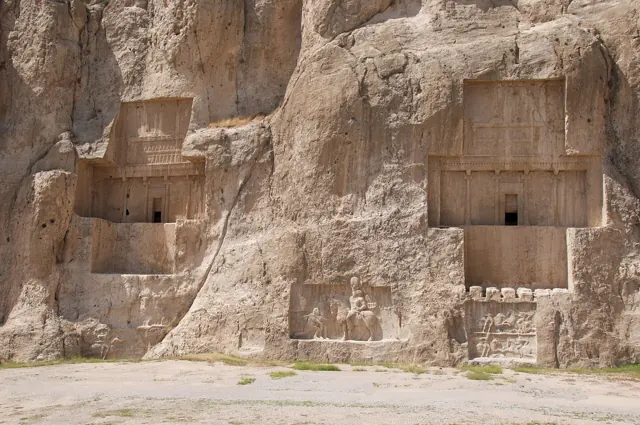
Did the king give anything up? Not in his own eyes. The Persian kings never stopped regarding the Greek cities of Asia as their subjects. In 412 BC, when Athens was weakened by its disaster in Sicily, the king pressed his satrap Tissaphernes for the tribute of his province, which, Thucydides says, Tissaphernes had been unable to raise “from the Hellenic towns by reason of the Athenians”.51Thucydides, History of the Peloponnesian War 8.5Written c. 400 BC. Translation by R. CrawleyRead on Project Gutenberg ↗ The claim had been put aside, not abandoned. Even Herodotus’ story of Callias at Susa shows the king keeping his options open, assuring the Argives at the same time that no city was a better friend to him than Argos.
How close is our evidence?
For the events of these years the evidence is fair. Thucydides, writing within living memory, gives the Egyptian expedition and the campaign in Cyprus in outline, and the tribute lists date the move of the treasury. For the peace itself it is poor. No text of the treaty survives, no writer of the fifth century mentions it, and the first writers who do were orators with a political point to make. Everything beyond that, the terms, the altar, Craterus’ copy, comes from Diodorus and Plutarch, three and five centuries later. The fairest summary is Oldfather’s: the fighting stopped, but the exact terms are unknown.52C. H. Oldfather, note to Diodorus 12.4 (1946)Modern note by the translator of the Loeb edition of DiodorusRead on LacusCurtius ↗
Fifty years of war, from Sardis to Salamis in Cyprus
The Persian Wars began in 499 BC with a revolt in Ionia and the burning of Sardis, and they ended around 449 BC off another Salamis, in Cyprus. In between, Persia twice invaded Greece and was beaten, at Marathon, at Salamis and at Plataea, and then the Greeks carried the war to the Persian coast. Herodotus, who wrote the first history of the conflict, saw its beginning in the Athenian ships sent to help the Ionians: “These ships were the beginning of troubles for both Greeks and foreigners.”53Herodotus, Histories 5.97Written c. 430 BC. Translation by A. D. GodleyRead on Perseus ↗ By the end, the Greek cities of Asia were free of the king, and Athens, not Sparta, led the Greeks at sea.
Both sides went on telling the story long after the fighting stopped. For the Athenians, the peace became proof that they had humbled the king. The worst of those came in the next century, when Sparta sent Antalcidas to the Persians to make peace, “basely and wickedly betraying the Asiatic Greeks”, as Plutarch put it, and the cities of Ionia went back to the king.54Plutarch, AgesilausWritten c. AD 100. Translation by J. Dryden, revised by A. H. CloughRead on Project Gutenberg ↗ The freedom won between Mycale and Cyprus had lasted about two generations. The full story, from the revolt in Ionia to the last battle off Cyprus, is on the Persian Wars page.
- Grote, History of Greece, vol. 5, ch. 45
- Thucydides, History of the Peloponnesian War 1.100
- Thucydides, History of the Peloponnesian War 1.101
- Diodorus Siculus, Library of History 11.69
- M. Waters, Ancient Persia: A Concise History of the Achaemenid Empire, 550–330 BCE (2014), ch. “Empire at large: from the death of Xerxes to Darius II”
- Diodorus Siculus, Library of History 11.71
- Thucydides, History of the Peloponnesian War 1.110
- Thucydides, History of the Peloponnesian War 1.110
- Diodorus Siculus, Library of History 11.77
- C. H. Oldfather, note to Diodorus 11.77 (1946)
- Ctesias, Persica, summarised by Photius (Bibliotheca, codex 72)
- R. Meiggs, The Athenian Empire (Oxford, Clarendon Press, 1972)
- R. Meiggs, The Athenian Empire (Oxford, Clarendon Press, 1972)
- Plutarch, Pericles
- Plutarch, Aristides
- Plutarch, Pericles
- R. Meiggs, The Athenian Empire (Oxford, Clarendon Press, 1972)
- Plutarch, Cimon
- Thucydides, History of the Peloponnesian War 1.112
- Grote, History of Greece, vol. 5, ch. 45
- Grote, History of Greece, vol. 5, ch. 45
- Diodorus Siculus, Library of History 12.4
- Diodorus Siculus, Library of History 12.4
- Grote, History of Greece, vol. 5, ch. 45
- Herodotus, Histories 7.151
- Plutarch, Cimon
- Plutarch, Cimon
- J. V. A. Fine, The Ancient Greeks: A Critical History (1983), pp. 360–363
- C. H. Oldfather, note to Diodorus 12.4 (1946)
- Plutarch, Cimon
- Plutarch, Cimon
- Grote, History of Greece, vol. 5, ch. 45
- C. H. Oldfather, note to Diodorus 12.4 (1946)
- Plutarch, Cimon
- Grote, History of Greece, vol. 5, ch. 45
- Grote, History of Greece, vol. 5, ch. 45
- Grote, History of Greece, vol. 5, ch. 45
- Thucydides, History of the Peloponnesian War 8.56
- Grote, History of Greece, vol. 5, ch. 45
- J. V. A. Fine, The Ancient Greeks: A Critical History (1983), pp. 360–363
- E. Badian, “The Peace of Callias”, Journal of Hellenic Studies 107 (1987), pp. 1–39
- R. Sealey, A History of the Greek City States, ca. 700–338 B.C. (1976), pp. 280–281
- T. Holland, Persian Fire (2005), p. 366
- L. J. Samons II, “Kimon, Kallias and Peace with Persia”, Historia 47 (1998), pp. 129–140
- Grote, History of Greece, vol. 5, ch. 45
- Plutarch, Cimon
- Thucydides, History of the Peloponnesian War 1.112
- Grote, History of Greece, vol. 5, ch. 45
- Ctesias, Persica, summarised by Photius (Bibliotheca, codex 72)
- Ctesias, Persica, summarised by Photius (Bibliotheca, codex 72)
- Thucydides, History of the Peloponnesian War 8.5
- C. H. Oldfather, note to Diodorus 12.4 (1946)
- Herodotus, Histories 5.97
- Plutarch, Agesilaus
- Diodorus Siculus, Library of History: 11.70, 12.3, 12.4
- Thucydides, History of the Peloponnesian War: 1.96, 1.104, 1.109, 1.110, 1.112, 1.137, 1.138, 4.50
- Plutarch, Cimon
- Ctesias, Persica, summarised by Photius (Bibliotheca, codex 72)
- Grote, History of Greece, vol. 5: ch. 45
- Plutarch, Pericles
- Herodotus, Histories: 7.151