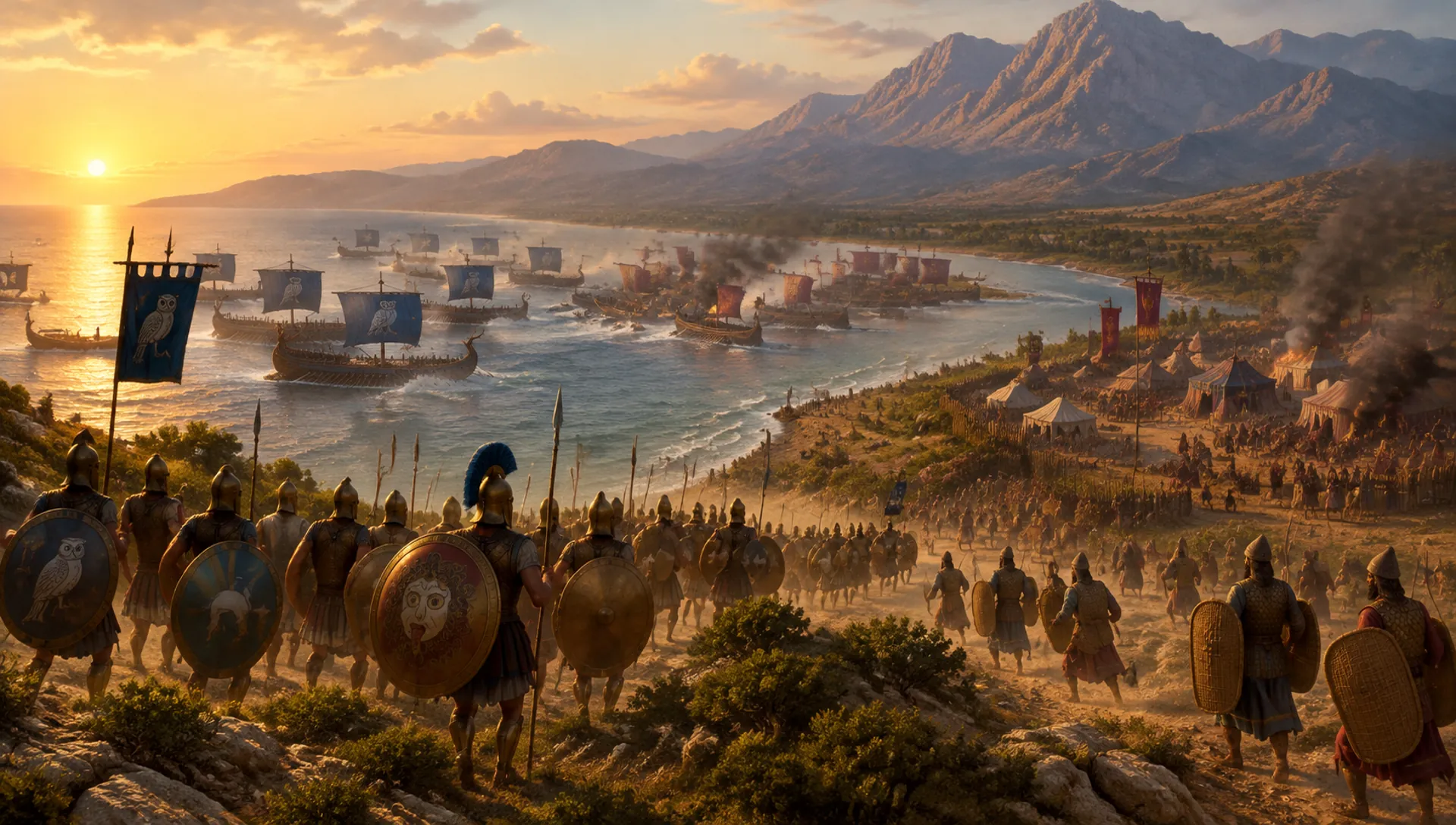
Some ten years after Salamis, a Greek fleet sailed east along the south coast of Asia Minor to fight Persia on its own shore. At the mouth of the river Eurymedon, in Pamphylia, it found a Persian fleet and army waiting. On a single day the Athenian commander Cimon beat both of them, first at sea and then on land. It was the greatest Greek victory over Persia in the years after the invasion, and we know surprisingly little about it.
Where this chapter fits
In the previous chapter the Greeks of the islands and the coast formed the Delian League under Athenian leadership in 478/477 BC, to carry the war into the king’s territory. Its first campaigns under Cimon took Persian strongholds in Thrace and cleared the Aegean of pirates, and the League forced its first rebel, Naxos, back into line. Thucydides, our only historian of these years, then turns straight to the next great event: “Next we come to the actions by land and by sea at the river Eurymedon”.1Thucydides, History of the Peloponnesian War 1.100Written c. 400 BC. Translation by R. CrawleyRead on Project Gutenberg ↗
That sentence and the one after it are almost all that Thucydides says about the battle. The fuller accounts come from Plutarch’s Life of Cimon, written about AD 100, and from Diodorus, writing about 30 BC. Both relied on historians of the fourth century BC, Ephorus and Callisthenes, and Plutarch also on Phanodemus, a later writer on the history of Attica.2Grote, History of Greece, vol. 5, ch. 45G. Grote, History of Greece, vol. 5 (1847). A modern history, written 2,300 years laterRead on Project Gutenberg ↗ Those books are lost. So the story of the Eurymedon reaches us through writers who lived 130 to 570 years after it, and who did not always agree.
Cimon, son of Miltiades
Cimon was the son of Miltiades, the victor of Marathon, and of a Thracian princess, Hegesipyle. His start in life was a disaster. After a failed attack on Paros, Miltiades was condemned to pay fifty talents, a huge fine; “unable to pay it, was cast into prison, and there died”, Plutarch writes, leaving Cimon an orphan with a young sister, Elpinice.3Plutarch, CimonWritten c. AD 100. Translation by J. Dryden, revised by A. H. CloughRead on Project Gutenberg ↗ As a young man he had a poor name in Athens, as a drinker who resembled his simple-minded grandfather. Stesimbrotus of Thasos, a writer of Cimon’s own time quoted by Plutarch, said he had no gift for music or the quick talk of the Athenians, but great nobility and candour, more like a man of the Peloponnese than of Athens.
He made his name in 480 BC. When Themistocles persuaded the Athenians to leave their city and fight at sea, Cimon was seen walking cheerfully through the Ceramicus to the Acropolis with his friends, “carrying a bridle in his hand to offer to the goddess”: the city now needed sailors, not horsemen. He hung up the bridle, took down one of the shields dedicated in the temple, and went down to the ships.4Plutarch, CimonWritten c. AD 100. Translation by J. Dryden, revised by A. H. CloughRead on Project Gutenberg ↗ The poet Ion of Chios, who met him, described him as “tall and large”, with thick curly hair worn long.5Plutarch, CimonWritten c. AD 100. Translation by J. Dryden, revised by A. H. CloughRead on Project Gutenberg ↗
After Salamis his rise was quick. Plutarch says the people were tired of Themistocles and welcomed a man of easy, open temper, and that Aristides deliberately promoted Cimon as a counterweight to Themistocles’ cunning. As the League’s commander he took Eion and Scyros, brought home the supposed bones of Theseus, and, by Plutarch’s account, trained large numbers of Athenians in constant campaigns at sea. By the late 470s Themistocles had been ostracised, and Cimon was the leading man in Athens.
South along the coast: Caria and Lycia
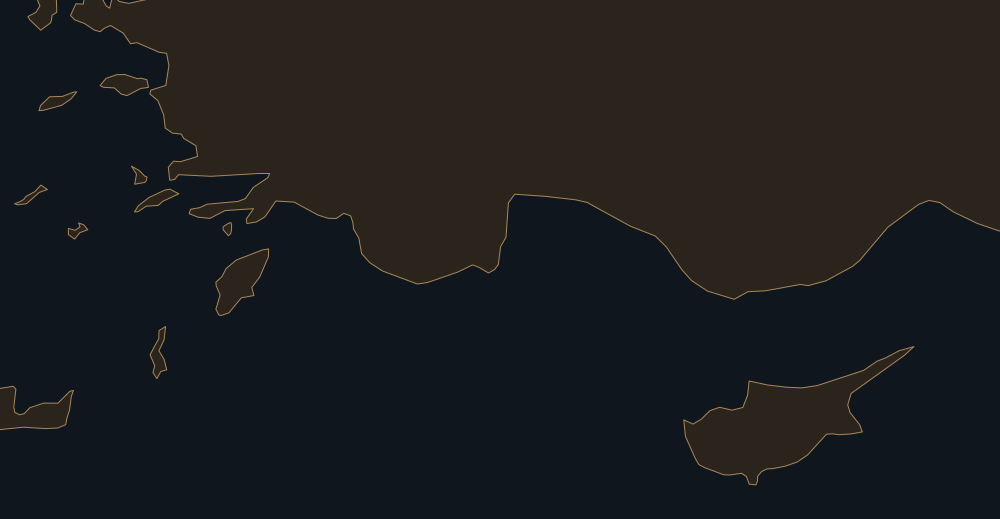
The aim of the campaign was to push the Persians back from the southern coast of Asia Minor, where Greek cities still lay under Persian control. Plutarch says that from Ionia to Pamphylia Cimon’s raids, sieges and the voluntary revolts of the cities left the coast clear: “from Ionia to Pamphylia, all Asia was clear of Persian soldiers”.6Plutarch, CimonWritten c. AD 100. Translation by J. Dryden, revised by A. H. CloughRead on Project Gutenberg ↗ When word came that the king’s commanders were gathering a large army and fleet on the coast of Pamphylia, he set out from Cnidus and the Triopian headland, at the south-western corner of Asia Minor, with two hundred ships.7Plutarch, CimonWritten c. AD 100. Translation by J. Dryden, revised by A. H. CloughRead on Project Gutenberg ↗
Plutarch adds a technical detail. The ships had been built under Themistocles for speed and quick turns; Cimon now gave them more width and broader decks, so that more armed men could stand on them and fight. A fleet that carried more soldiers could fight boarding actions and, if needed, put an army ashore. That would matter at the Eurymedon.
Diodorus gives a different picture of the numbers and the route. Cimon left the Piraeus with two hundred triremes, collected more from the Ionians and the other allies until he had three hundred, and sailed to Caria. There the Greek cities on the coast went over to him at once, while the towns with mixed populations that still had Persian garrisons were besieged. Then he won over the cities of Lycia by persuasion, and the fleet kept growing as new allies joined.8Diodorus Siculus, Library of History 11.60Written c. 30 BC. Translation by C. H. Oldfather (1946)Read on LacusCurtius ↗ Diodorus places all this in a single year together with Eion and Scyros, which his translator calls a compression of “some ten years into one”.9C. H. Oldfather, notes to Diodorus 11.60–62 (1946)Modern notes by the translator of the Loeb edition of DiodorusRead on LacusCurtius ↗
Phaselis: a Greek city on the Persian side
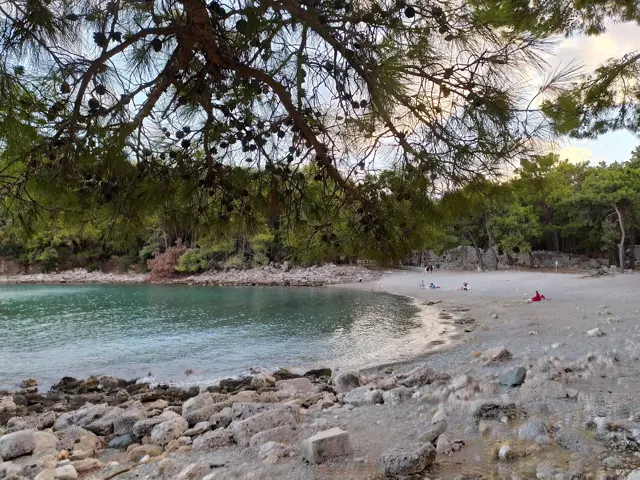
The last Greek city before Pamphylia was Phaselis, a trading port on the east coast of Lycia. Although its people were Greeks, Plutarch says, they would not abandon the Persians and shut their harbour to Cimon’s ships. Cimon ravaged their land and brought his army up to the walls.10Plutarch, CimonWritten c. AD 100. Translation by J. Dryden, revised by A. H. CloughRead on Project Gutenberg ↗
The siege ended through old friendships. The Chians serving in Cimon’s fleet had long been friends of the Phaselites. They pleaded with Cimon on their behalf, and at the same time shot arrows over the walls with letters tied to them, to tell the townspeople what was happening. In the end Cimon made terms: Phaselis would pay ten talents and join him against the barbarians. Grote, writing in 1847, called it “the important trading city of Phasêlis”, and saw the Chians’ “friendly suggestions” as the decisive factor.11Grote, History of Greece, vol. 5, ch. 45G. Grote, History of Greece, vol. 5 (1847). A modern history, written 2,300 years laterRead on Project Gutenberg ↗
The Persians wait at the Eurymedon
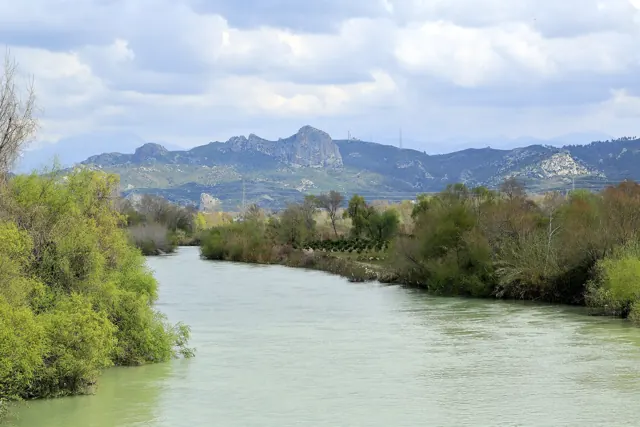
Beyond Phaselis lay the plain of Pamphylia, and the river Eurymedon, which flows past the city of Aspendos into the sea. There the Persian commanders had gathered their fleet and their army. Even their names were disputed in antiquity. Ephorus said the fleet was led by Tithraustes and the army by Pherendates; Callisthenes said that Ariomandes, son of Gobryas, was in supreme command. Diodorus calls Tithraustes an illegitimate son of Xerxes.12Diodorus Siculus, Library of History 11.60Written c. 30 BC. Translation by C. H. Oldfather (1946)Read on LacusCurtius ↗
The Persians were not ready to fight. According to Plutarch, they lay at the mouth of the river with no intention of giving battle, because they were “expecting a reinforcement of eighty Phoenician ships on their way from Cyprus”.13Plutarch, CimonWritten c. AD 100. Translation by J. Dryden, revised by A. H. CloughRead on Project Gutenberg ↗ Grote found this detail credible: it explains why the Persian fleet put up so little resistance, and why Cimon was in such a hurry to attack before the reinforcement arrived.14Grote, History of Greece, vol. 5, ch. 45G. Grote, History of Greece, vol. 5 (1847). A modern history, written 2,300 years laterRead on Project Gutenberg ↗
Most of the ships on the Persian side were Phoenician. The empire had no navy of its own in the Greek sense: its fleets came from its subject peoples on the coast, above all the cities of Phoenicia, Cyprus and Cilicia, as Diodorus says. The land army was drawn from the Persians’ own peoples, but how large it was no ancient writer says.
The battle at sea
Cimon knew the Phoenician ships were coming and was determined to force a battle first. When he put out to sea, the Persians pulled back inside the mouth of the river. When the Athenians kept coming, the Persian fleet came out to meet them, but, Plutarch writes, did nothing worthy of its size: the ships at once turned their bows towards the shore. The crews of the first ships to reach the beach jumped down and fled to the army drawn up nearby; the rest were destroyed or captured with their ships.15Plutarch, CimonWritten c. AD 100. Translation by J. Dryden, revised by A. H. CloughRead on Project Gutenberg ↗
How many ships the Persians had depends on which writer Plutarch followed. Phanodemus gave six hundred, Ephorus three hundred and fifty: “they met them with six hundred ships, as Phanodemus relates but according to Ephorus, only with three hundred and fifty”.16Plutarch, CimonWritten c. AD 100. Translation by J. Dryden, revised by A. H. CloughRead on Project Gutenberg ↗ Whatever the true total, the result was clear. Plutarch reckons that “two hundred galleys were taken by the Athenians”, even though many escaped and many others were sunk.17Plutarch, CimonWritten c. AD 100. Translation by J. Dryden, revised by A. H. CloughRead on Project Gutenberg ↗
Thucydides, writing within living memory of the battle, gives the figure that most modern historians trust: the Athenians “captured and destroyed the whole Phoenician fleet, consisting of two hundred vessels”.18Thucydides, History of the Peloponnesian War 1.100Written c. 400 BC. Translation by R. CrawleyRead on Project Gutenberg ↗ A fleet that ran ashore under the protection of its own army was beaten, but not yet lost. The ships on the beach would only fall to the Greeks if the army behind them was beaten too.
The battle on land
The Persian army now stood on the shore beside the beached ships. Cimon hesitated, Plutarch says: his men were tired from the fighting at sea, while the enemy were fresh and many times their number. But seeing his soldiers eager and confident, he landed them at once. They charged with a shout. The Persians held their ground and “sustained the first shock with great courage”, and the fight was hard; “some principal men of the Athenians in rank and courage were slain”.19Plutarch, CimonWritten c. AD 100. Translation by J. Dryden, revised by A. H. CloughRead on Project Gutenberg ↗ In the end the Persians broke. The Greeks killed many, took others prisoner, and plundered the camp, whose tents were full of rich spoil.
For Plutarch the day was Cimon’s masterpiece. Like an athlete winning two events at the same games, Cimon, “having in one day carried off two victories”, had surpassed both Salamis and Plataea.20Plutarch, CimonWritten c. AD 100. Translation by J. Dryden, revised by A. H. CloughRead on Project Gutenberg ↗ Grote, more soberly, explained the order of events: the fleet gave way easily, which left Cimon’s men the strength for a long and hard-fought battle on land the same day. Because the beaten fleet had run ashore, the defeat of the army handed the ships to the Greeks as well.21Grote, History of Greece, vol. 5, ch. 45G. Grote, History of Greece, vol. 5 (1847). A modern history, written 2,300 years laterRead on Project Gutenberg ↗
The eighty Phoenician ships
Cimon did not rest. News came that the eighty Phoenician ships were in sight at a place Plutarch calls Hydrum, whose location is unknown. Cimon sailed against them before they had any reliable news of the battle, and caught them unprepared: “they lost all their vessels, and most of their men with them”.22Plutarch, CimonWritten c. AD 100. Translation by J. Dryden, revised by A. H. CloughRead on Project Gutenberg ↗ Grote places this third fight off Cyprus and thought that most of the crews escaped ashore there, which differs from Plutarch.23Grote, History of Greece, vol. 5, ch. 45G. Grote, History of Greece, vol. 5 (1847). A modern history, written 2,300 years laterRead on Project Gutenberg ↗
Thucydides does not mention the eighty ships at all. His figure of two hundred Phoenician ships “captured and destroyed” may include them or not; he gives no details. The story of the reinforcement is told only by the later writers, but it fits the rest of the account so well that Grote, and most historians since, have accepted it.
The Greek dead were remembered in verse. An epigram preserved in the Palatine Anthology, later ascribed to Simonides, honours men who “lost their splendid youth at the Eurymedon, fighting the van of the Median bowmen with the spear”, and adds that they fought “both ashore and on swift shipboard”.24Epigram on the dead of the Eurymedon (Palatine Anthology, ascribed to Simonides)The ascription to Simonides is doubtful and the date unknown. Translation in J. M. Edmonds, Lyra Graeca II (1924)Read on archive.org ↗ Whether the poem was really carved on a monument after the battle, and who wrote it, is not known.
The numbers, source by source
Every number in the story depends on the writer. The table below sets them side by side. Thucydides is the earliest and gives only one figure; the larger Persian fleets come from fourth-century historians known only through Plutarch and Diodorus. Grote already preferred the smaller number, because an easy victory at sea is needed to explain how the same men could then fight a hard battle on land.25Grote, History of Greece, vol. 5, ch. 45G. Grote, History of Greece, vol. 5 (1847). A modern history, written 2,300 years laterRead on Project Gutenberg ↗ Modern historians generally agree that Thucydides’ two hundred ships is the most reliable figure for the Persian fleet.26G. Cawkwell, The Greek Wars: The Failure of Persia (2005), p. 134Modern study of the wars between Greece and Persia (Oxford University Press)View on Google Books ↗
Diodorus gives the most precise totals and is the least reliable. He says Cimon captured “three hundred and forty ships, more than twenty thousand men, and a considerable sum of money”.27Diodorus Siculus, Library of History 11.62Written c. 30 BC. Translation by C. H. Oldfather (1946)Read on LacusCurtius ↗ Yet he then quotes a dedication that speaks of only a hundred Phoenician ships captured, which, as the next section shows, may not even belong to this battle. No source gives a credible size for either army, and no source gives the Greek losses.
Diodorus’ other battle
Diodorus tells a very different story. In his version the sea battle took place off Cyprus, “pitting two hundred and fifty ships against three hundred and forty”, and the Persian survivors fled to Cyprus.28Diodorus Siculus, Library of History 11.60Written c. 30 BC. Translation by C. H. Oldfather (1946)Read on LacusCurtius ↗ Then Cimon sailed to the Eurymedon, where the Persian army was camped, and used a trick: he put his best men on the captured Persian ships, dressed in Persian clothes with tiaras on their heads. The Persians welcomed the ships as friends, and at night Cimon’s men fell on the sleeping camp and killed the general Pheredates in his tent.
His translator, C. H. Oldfather, was blunt: “The contents of the three preceding chapters reveal Diodorus in the worst light.” Cimon could not have fought off Cyprus in the day and reached the Eurymedon, at least 125 miles away, in time to land by nightfall, and “great generals do not win battles by such comic-opera stratagems”. The verse dedication Diodorus quotes, Oldfather adds, belonged to a later battle off Cyprus in 449 BC.29C. H. Oldfather, notes to Diodorus 11.60–62 (1946)Modern notes by the translator of the Loeb edition of DiodorusRead on LacusCurtius ↗ The reliable account, in his view, is Plutarch’s.
The dedication itself is a fine poem, whatever battle it celebrated: “E’en from the day when the sea divided Europe from Asia”, it begins, no deed like this was ever done “at one time both upon land and at sea”.30Diodorus Siculus, Library of History 11.62Written c. 30 BC. Translation by C. H. Oldfather (1946)Read on LacusCurtius ↗ It shows how the Athenians liked to remember their double victories, and how easily later writers mixed one victory with another.
When was the battle? 469 or 466 BC
No ancient writer gives the year in a form that settles it. Thucydides puts the Eurymedon after the revolt of Naxos and before the revolt of Thasos, but gives no dates. Diodorus puts it in the year when Demotion was archon at Athens, 470/469 BC, but he crams ten years of Cimon’s campaigns into that one year.31Diodorus Siculus, Library of History 11.60Written c. 30 BC. Translation by C. H. Oldfather (1946)Read on LacusCurtius ↗ Modern historians argue for two possible dates.
The early date, about 469 BC, rests on a story in Plutarch. When Sophocles first competed in the tragic contest, the archon Apsephion asked Cimon and his fellow generals, who had just entered the theatre, to judge the plays, and they gave Sophocles the prize. Apsephion was archon in 469/468 BC. Plutarch links the honour to the return of Theseus’ bones, and Grote used it to date that event “with great confidence to 469 B. C.” Some modern historians take the generals’ presence in the theatre as their return from the Eurymedon campaign. Plutarch does not say so; that link is a modern inference.
The later date, about 466 BC, rests on Thucydides’ order of events. When Themistocles fled to Persia, his ship passed the Athenian fleet besieging Naxos, and on landing he wrote to “King Artaxerxes, Xerxes’s son, who had just come to the throne”.32Thucydides, History of the Peloponnesian War 1.137Written c. 400 BC. Translation by R. CrawleyRead on Project Gutenberg ↗ Artaxerxes became king in 465 BC, so the siege of Naxos cannot have been long before that, and the Eurymedon came after Naxos. The translator of Diodorus put the battle in “467 or 466 B.C.”33C. H. Oldfather, notes to Diodorus 11.60–62 (1946)Modern notes by the translator of the Loeb edition of DiodorusRead on LacusCurtius ↗ Grote admitted that the evidence “does not enable us to establish any good positive chronology for the period between 477 and 466 B. C.”
What the victory changed
The Eurymedon ended Persian naval power in the eastern Aegean for a generation. A fleet gathered to retake the coast had been destroyed before it could move, and the Greek cities of Caria and Lycia were now in the League. Diodorus says the Persians answered by building more triremes than before, because they feared the growing might of Athens.34Diodorus Siculus, Library of History 11.62Written c. 30 BC. Translation by C. H. Oldfather (1946)Read on LacusCurtius ↗ At Athens the sale of the spoils paid for building projects: Plutarch says it funded the south wall of the Acropolis, and “they laid the foundation of the long walls” to the harbour, finished only later.35Plutarch, CimonWritten c. AD 100. Translation by J. Dryden, revised by A. H. CloughRead on Project Gutenberg ↗
Plutarch also connects the battle with a peace treaty. The king, he says, was so frightened that he agreed to keep his armies a day’s ride from the sea and his warships out of the Aegean. But Plutarch also reports that Callisthenes, a fourth-century historian, “says that he did not agree to any such articles”, only that the king behaved as if he had.36Plutarch, CimonWritten c. AD 100. Translation by J. Dryden, revised by A. H. CloughRead on Project Gutenberg ↗ Modern historians are divided. Some have argued for a first peace in the 460s, after the Eurymedon, renewed about 449 BC; others doubt that any treaty was made at this time.37E. Badian, “The Peace of Callias”, Journal of Hellenic Studies 107 (1987), pp. 1–39Modern article arguing for a first peace after the Eurymedon, renewed in 449 BC; disputed by other historiansRead on Cambridge Core ↗ Whether a peace was made about 449 BC is the subject of the next chapter.
The victory also changed the League. With the Persian threat pushed far to the east, some allies saw less reason to pay and serve. Thucydides goes straight on from the battle to the next revolt: “Some time afterwards occurred the defection of the Thasians, caused by disagreements about the marts on the opposite coast of Thrace, and about the mine in their possession”.38Thucydides, History of the Peloponnesian War 1.100Written c. 400 BC. Translation by R. CrawleyRead on Project Gutenberg ↗ Diodorus, too, says the Thasians revolted “because of a quarrel over mines”.39Diodorus Siculus, Library of History 11.70Written c. 30 BC. Translation by C. H. Oldfather (1946)Read on LacusCurtius ↗ Thasos was a rich island off the coast of Thrace, with gold mines on the mainland opposite, and Athens wanted them.
Cimon beat the Thasian fleet, taking thirty-three ships according to Plutarch, and laid siege to the city. At the same time the Athenians sent ten thousand settlers to the Strymon, to a place called Nine Ways (later Amphipolis); pushing inland, the settlers were wiped out by the Thracians at Drabescus. The Thasians asked Sparta to invade Attica, and the Spartans secretly agreed, but a great earthquake and a revolt of the helots stopped them. In the third year of the siege Thasos gave in, on hard terms: its walls were pulled down and its ships handed over, and it had to pay what was demanded at once, “and tribute in future”.40Thucydides, History of the Peloponnesian War 1.101Written c. 400 BC. Translation by R. CrawleyRead on Project Gutenberg ↗ The great victory over Persia had made Athens stronger, and its allies less free.
A defeat on the edge, a murder at the centre
To the Greeks the Eurymedon was one of their greatest victories. Seen from Persepolis or Susa, it was the loss of a fleet and an army on the far western edge of a huge empire, among peoples of the coast who often changed sides. No Persian text mentions it. Even Ctesias, a Greek doctor who lived at the Persian court around 400 BC and wrote a history of Persia from Persian informants, seems not to have mentioned the battle: the summary of his work that survives passes from Xerxes’ return from Greece to scandals at court and the plot that killed him.41Ctesias, Persica, summarised by Photius (Bibliotheca, codex 72)Ctesias wrote c. 400 BC; the summary is from the 9th century AD. Translation by J. H. Freese (1920)Read on Project Gutenberg ↗
That plot was the big Persian event of these years. In 465 BC Xerxes was murdered in his palace. Diodorus names Artabanus, “an Hyrcanian by birth”, captain of the royal bodyguard, as the murderer; he then persuaded the young Artaxerxes that his elder brother Darius was the killer, and Artaxerxes had Darius put to death before discovering the truth and killing Artabanus.42Diodorus Siculus, Library of History 11.69Written c. 30 BC. Translation by C. H. Oldfather (1946)Read on LacusCurtius ↗ Ctesias tells much the same story with different names. A Babylonian tablet dates the death to the summer of 465 BC, in late July or early August.43M. Waters, Ancient Persia: A Concise History of the Achaemenid Empire, 550–330 BCE (2014), ch. “Empire at large: from the death of Xerxes to Darius II”Modern history of the Persian empire (Cambridge University Press); dates the murder from a Babylonian tabletRead on Cambridge Core ↗
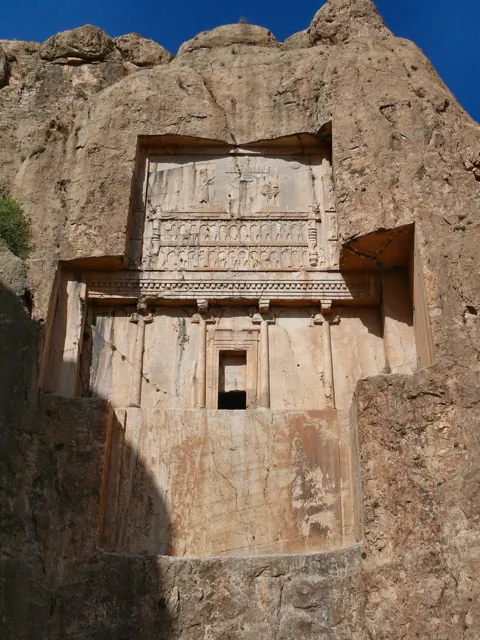
The new king had more urgent problems than the Aegean. According to Ctesias, Bactria in the far north-east rose under its satrap and had to be beaten in two battles, and then Egypt revolted under Inaros, a Libyan. Thucydides confirms the Egyptian revolt and adds that Inaros invited the Athenians, who sent a fleet of two hundred ships from Cyprus up the Nile. Egypt was one of the richest provinces of the empire, and for Persia keeping it mattered far more than a coastline of small Greek cities.
That is why the Victorian historian George Rawlinson, who looked at the war from the Persian side, judged that the Eurymedon “had, however, no further effect on the relations of the two powers”.44Rawlinson, The Fifth Monarchy: Persia, ch. 7G. Rawlinson, The Seven Great Monarchies, vol. 5 (1871). A Victorian history of Persia, based mostly on Greek writersRead on Project Gutenberg ↗ That probably goes too far: the ancient sources record no Persian fleet in the Aegean in the years that followed. But it is a reminder that the empire survived the defeat easily, and that its rulers measured it against rebellions in Bactria and Egypt and a murder in the palace.
How close is our evidence?
The only evidence from the time is a monument that no longer exists: the bronze palm the Athenians set up at Delphi, which Pausanias saw some six hundred years later.45Pausanias, Description of Greece 10.15Written c. AD 160; Pausanias visited the sites. Translation by A. R. Shilleto (1886)Read on Project Gutenberg ↗ Thucydides, writing within living memory, gives two sentences and one number. Everything else, the bridle, the arrows at Phaselis, the wide decks, the eighty ships, the names of the Persian commanders, comes from Plutarch and Diodorus, who copied fourth-century historians who were themselves writing a century after the battle. Where they disagree, as on the numbers and on where the sea battle was fought, the safest course is to follow Thucydides and to treat the rest as possible but uncertain.
- Thucydides, History of the Peloponnesian War 1.100
- Grote, History of Greece, vol. 5, ch. 45
- Plutarch, Cimon
- Plutarch, Cimon
- Plutarch, Cimon
- Plutarch, Cimon
- Plutarch, Cimon
- Diodorus Siculus, Library of History 11.60
- C. H. Oldfather, notes to Diodorus 11.60–62 (1946)
- Plutarch, Cimon
- Grote, History of Greece, vol. 5, ch. 45
- Diodorus Siculus, Library of History 11.60
- Plutarch, Cimon
- Grote, History of Greece, vol. 5, ch. 45
- Plutarch, Cimon
- Plutarch, Cimon
- Plutarch, Cimon
- Thucydides, History of the Peloponnesian War 1.100
- Plutarch, Cimon
- Plutarch, Cimon
- Grote, History of Greece, vol. 5, ch. 45
- Plutarch, Cimon
- Grote, History of Greece, vol. 5, ch. 45
- Epigram on the dead of the Eurymedon (Palatine Anthology, ascribed to Simonides)
- Grote, History of Greece, vol. 5, ch. 45
- G. Cawkwell, The Greek Wars: The Failure of Persia (2005), p. 134
- Diodorus Siculus, Library of History 11.62
- Diodorus Siculus, Library of History 11.60
- C. H. Oldfather, notes to Diodorus 11.60–62 (1946)
- Diodorus Siculus, Library of History 11.62
- Diodorus Siculus, Library of History 11.60
- Thucydides, History of the Peloponnesian War 1.137
- C. H. Oldfather, notes to Diodorus 11.60–62 (1946)
- Diodorus Siculus, Library of History 11.62
- Plutarch, Cimon
- Plutarch, Cimon
- E. Badian, “The Peace of Callias”, Journal of Hellenic Studies 107 (1987), pp. 1–39
- Thucydides, History of the Peloponnesian War 1.100
- Diodorus Siculus, Library of History 11.70
- Thucydides, History of the Peloponnesian War 1.101
- Ctesias, Persica, summarised by Photius (Bibliotheca, codex 72)
- Diodorus Siculus, Library of History 11.69
- M. Waters, Ancient Persia: A Concise History of the Achaemenid Empire, 550–330 BCE (2014), ch. “Empire at large: from the death of Xerxes to Darius II”
- Rawlinson, The Fifth Monarchy: Persia, ch. 7
- Pausanias, Description of Greece 10.15