In the autumn of 481 BC Xerxes was at Sardis with the largest army the Greeks had ever heard of, and his heralds were travelling through Greece asking every city for earth and water. Most of the Greek world either gave them or waited to see who would win. Only a small group of cities swore to fight.1Thucydides 3.56 (speech of the Plataeans)Written c. 400 BC. Translation by R. CrawleyRead on Project Gutenberg ↗ This chapter is about who they were, who refused to join them, and why.
Where this chapter fits
This is the first chapter of the second Persian invasion of Greece, the third part of the Persian Wars. Ten years earlier, in 490 BC, Athens and Plataea had beaten the army that Darius sent across the Aegean at Marathon. Darius died in 486 BC before he could send a larger one, and his son Xerxes took over both the empire and the unfinished war. After several years of preparation, with a canal dug through the Athos peninsula and bridges of ships planned for the Hellespont, the new king set out. He spent the winter of 481/480 BC at Sardis, the old Lydian capital in western Asia Minor.
Everything that happened at Thermopylae, Salamis and Plataea depended on what the Greeks decided in the months before. Which cities would fight? Who would lead them? Where would they make a stand? The answers were worked out at a series of meetings at the Isthmus of Corinth, and the results were far from a united Greece.
Hundreds of cities, no Greece
In 481 BC there was no country called Greece. There was Hellas: the world of people who spoke Greek, worshipped the same gods and took part in the same festivals, scattered in hundreds of independent states from the coast of Spain to the Black Sea. Each polis, or city-state, had its own laws, its own army and often its own coins. Most were small: a town with a few thousand citizens and the farmland around it. Neighbours fought each other constantly, over borders, grazing land and old grudges.
Nobody counted these states in antiquity. The largest modern survey, the Inventory of Archaic and Classical Poleis compiled by the Copenhagen Polis Centre and published in 2004, lists 1,035 of them across the whole Greek world. Fewer than a hundred states took part in the war against Xerxes at any point. The often-repeated phrase “seventy out of seven hundred” is a modern round estimate of that gap, not a figure from an ancient source. Herodotus gives no total. What survives from the time is a list of names on a victory monument, the Serpent Column, which names 31 states.
Earth and water
Before marching, Xerxes sent heralds to the Greek cities from Sardis.2Diodorus Siculus, Library of History 11.2.3Written c. 30 BC. Translation by C. H. Oldfather (1946)Read on LacusCurtius ↗ They asked for earth and water, the tokens by which a people acknowledged the Persian king as its master. Herodotus says that when the heralds came back, some empty-handed and some with the tokens, those who had given them included the Thessalians, Dolopes, Enienes, Perrhaebians, Locrians, Magnesians, Malians, the Achaeans of Phthia, the Thebans and all the other Boeotians except the men of Thespiae and Plataea. Diodorus, writing more than four centuries later, gives almost the same list, and adds that some of these peoples went over only after the Greek army had left Thessaly.
No heralds went to Athens or Sparta. Ten years earlier, when Darius had sent heralds with the same demand, the Athenians had thrown them into a pit used for criminals and the Spartans had thrown theirs down a well, telling them to take earth and water from there. Killing a herald broke one of the oldest rules in the Greek world. Herodotus tells a striking sequel. The Spartans, believing their bad omens were a punishment for the murder, asked for volunteers to go to the king and die in atonement. Two wealthy Spartans, Sperthias and Bulis, offered themselves. They travelled all the way to Susa, refused to bow down before Xerxes, and offered him their lives. Xerxes refused: he said he would not do the very thing he blamed the Spartans for, and sent them home.
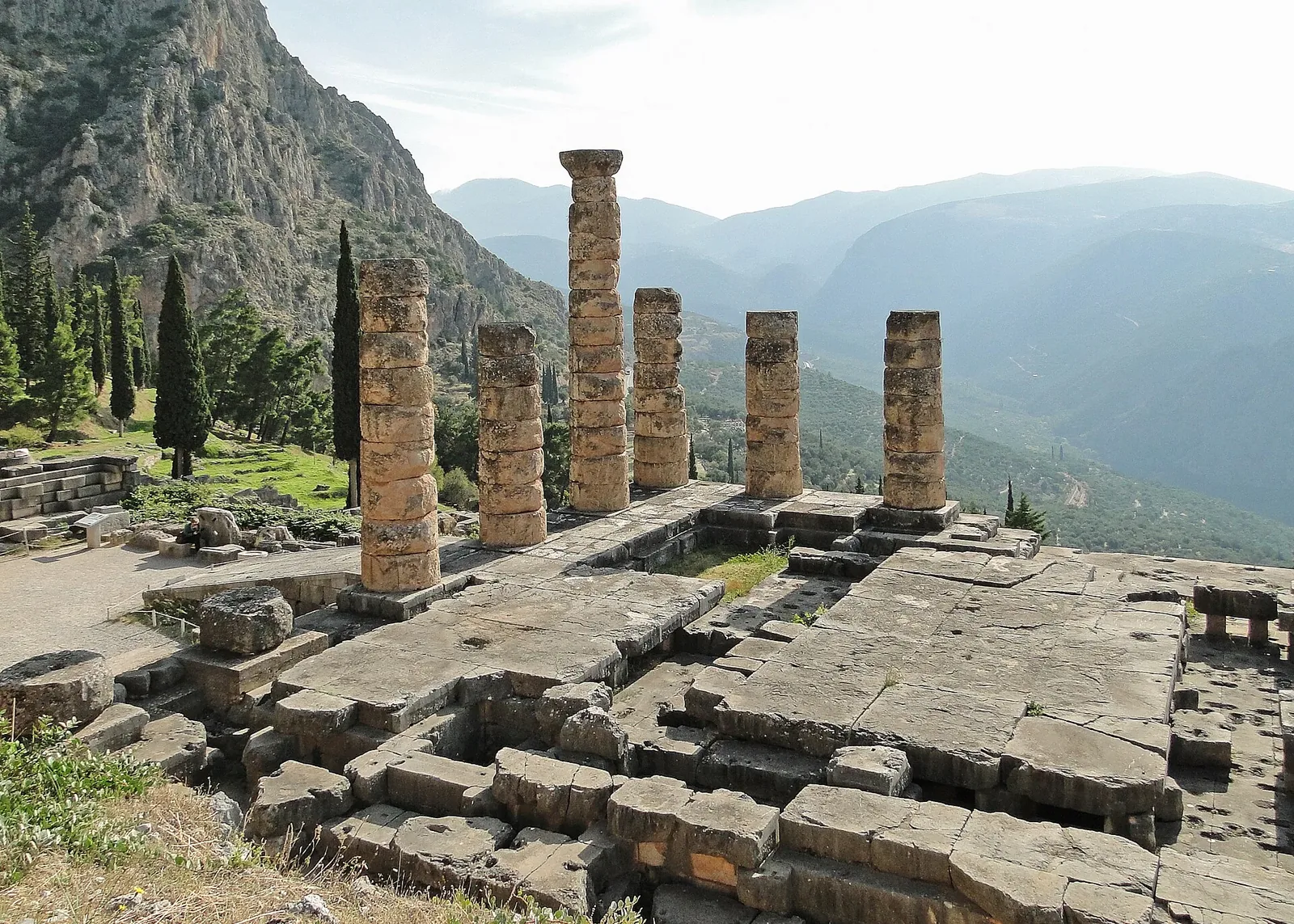
The allies answered with an oath. Those who had “declared war with the foreigner” swore that, if they won, every Greek state that had given itself up to the Persians of its own free will would have to pay a tithe of its possessions to Apollo at Delphi.3Herodotus, Histories 7.132Written c. 430 BC. Translation by A. D. GodleyRead on Perseus ↗4Diodorus Siculus, Library of History 11.3.3Written c. 30 BC. Translation by C. H. Oldfather (1946)Read on LacusCurtius ↗ It was a threat to be carried out after a victory that, in 481 BC, few people expected.
Who gave in, and why
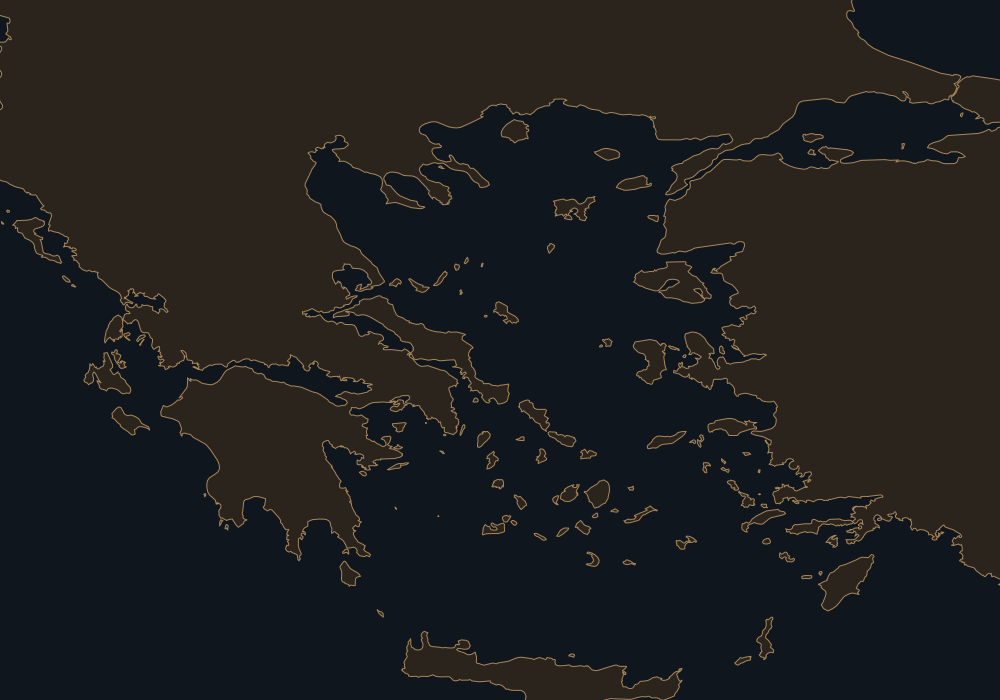
Looking at the map, the reason most of the states that gave earth and water did so is obvious: they lay in Xerxes’ path. Thessaly, Magnesia, Malis and the small hill peoples around them stood between Macedonia, which was already under Persian rule, and central Greece. Their cavalry and their plains were exactly what the Persian army needed, and nobody further south could protect them.5Grote, History of Greece, vol. 5, ch. 39G. Grote, History of Greece, vol. 5 (1847). A modern history, written 2,300 years laterRead on Project Gutenberg ↗ For a city in the north, refusing the king meant being the first to be destroyed.
Politics mattered too. In Thessaly, the powerful Aleuad family of Larissa had invited Xerxes into Greece, and at the Persian court the exiled family of the old Athenian tyrant Peisistratus urged the same, hoping to be restored to power in Athens. Herodotus insists that the Thessalians as a whole sided with Persia only “of necessity”, because they disliked the Aleuads’ plans. Thebes, the leading city of Boeotia, was run by a small group of families who chose the Persian side and stuck to it until the end of the war; the smaller Boeotian towns of Thespiae and Plataea, both long-standing enemies of Thebes, chose the opposite side.
None of this made these peoples traitors in their own eyes. There was no Greek nation to betray. A city that gave earth and water kept its land, its temples and its people, and the Persian empire had a long record of leaving local rulers in place as long as they paid and obeyed. The allies who later dedicated a tithe of their spoils at Delphi saw it differently, and Greek writers after the war treated “medizing” as the worst kind of treachery. Herodotus himself is more careful, and sometimes defends the medizers against their critics.
Athens and the wooden wall
Athens had the most to fear. Xerxes said openly that his target was Athens, the city that had helped burn Sardis and had beaten his father’s army at Marathon. Herodotus adds that his real aim was all of Hellas. When the Athenians sent to Delphi for advice, the priestess Aristonice told them to flee to the ends of the earth: fire and war would bring their city low. Horrified, the envoys asked again, carrying olive branches as suppliants.6Grundy, The Great Persian War, ch. 6G. B. Grundy, The Great Persian War (1901). Grundy surveyed the battlefields himselfRead on Project Gutenberg ↗ The second answer was hardly better, but it held out one hope: Zeus would grant Athena “a wood-built wall” that alone would not be taken, and it ended with a mysterious line about “divine Salamis”.7Herodotus, Histories 7.140–141Written c. 430 BC. Translation by A. D. GodleyRead on Perseus ↗8Grundy, The Great Persian War, ch. 6G. B. Grundy, The Great Persian War (1901). Grundy surveyed the battlefields himselfRead on Project Gutenberg ↗
In Athens the experts argued that the wooden wall meant the old thorn hedge around the Acropolis, or that Salamis meant defeat at sea. Themistocles, a politician who had risen to prominence only recently, argued that the wooden wall was the fleet. If Salamis were to be a disaster for Athens, he said, the god would have called it “cruel”, not “divine”. The Athenians decided to trust the god and their ships.
They had the ships because of a lucky decision a few years earlier. A rich new vein of silver had been found at the state mines of Laurium in southern Attica, and the Athenians were about to share out the profit, ten drachmas each. Themistocles persuaded them instead to build two hundred warships for their war against the neighbouring island of Aegina. That war, Herodotus says, saved Greece, because it forced the Athenians to become seamen. At Salamis in 480 BC the Athenians would provide 180 of the 378 Greek triremes, almost half the fleet.
The congress at the Isthmus
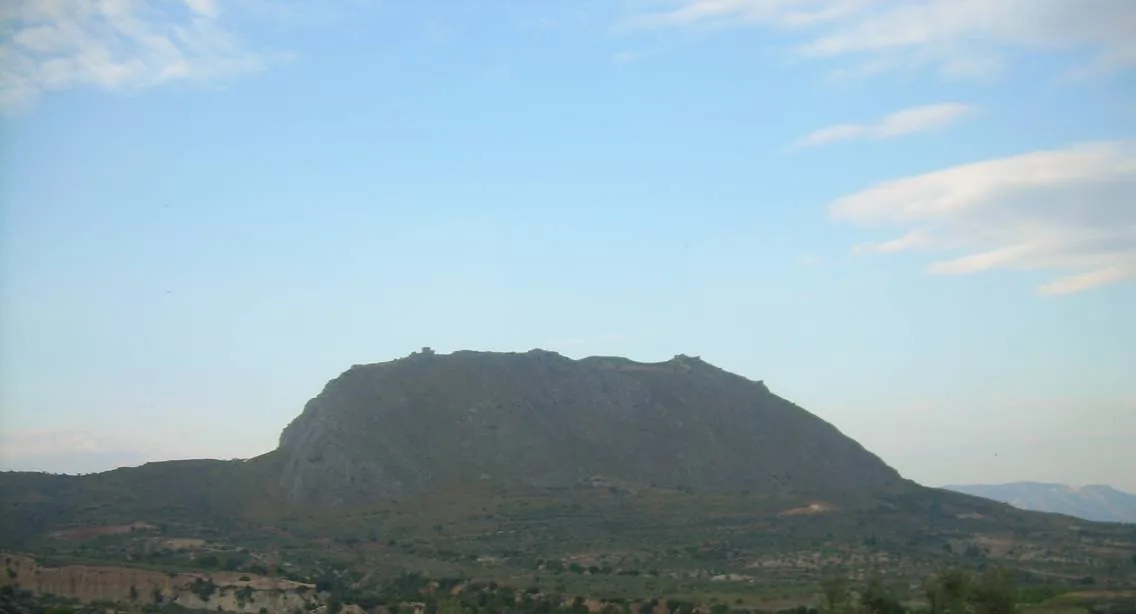
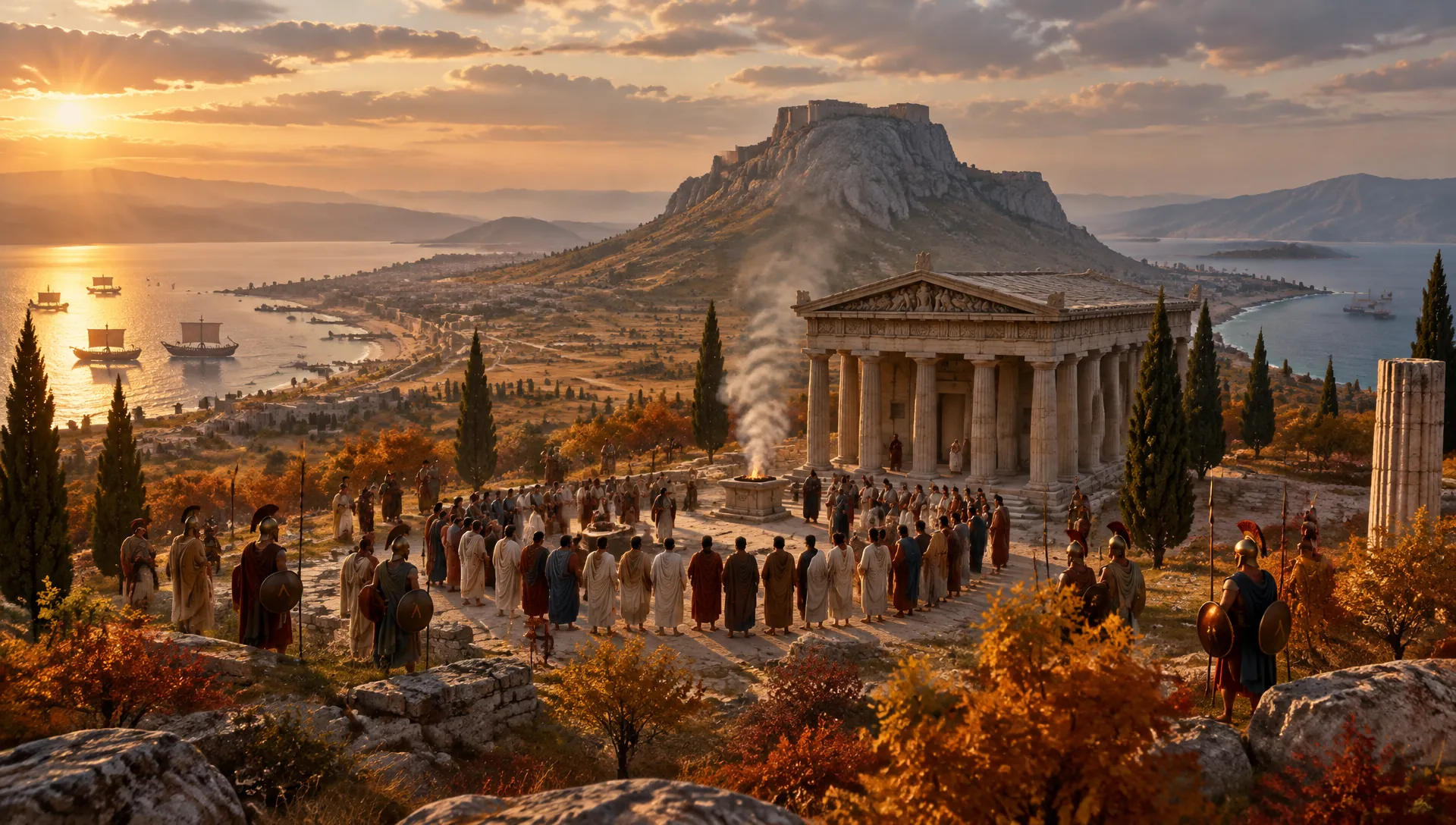
The cities that were willing to fight sent delegates to the Isthmus of Corinth, the narrow neck of land that joins the Peloponnese to the rest of Greece. Herodotus describes them simply as the Greeks “who were concerned about the general welfare of Hellas”. They exchanged guarantees and agreed first of all to end every war between themselves. The greatest of these was the war between Athens and Aegina, two of the strongest naval powers in Greece, which now had to fight side by side.9Plutarch, Themistocles 6Written c. AD 100. Translation by J. Dryden, revised by A. H. CloughRead on Project Gutenberg ↗
Herodotus does not date the meeting. Modern historians usually place the first congress in the autumn of 481 BC, while Xerxes was wintering at Sardis, with later meetings in the spring of 480 BC. The allies seem to have had no single name for themselves: Herodotus calls them simply “the Greeks” or “those who had sworn alliance”. Modern historians call the alliance the Hellenic League. Command went to Sparta, both on land and at sea, even though Athens would bring far more ships. The allies said they would rather break up the fleet than be led by Athenians, and the Athenians gave way, judging that a quarrel over the leadership would destroy Hellas.
Spies at Sardis
The allies’ first decision was to find out what they were facing. They sent three spies to Sardis. The spies were caught, questioned by the Persian generals and condemned to death. When Xerxes heard of it, he stopped the execution, had the three men shown around his entire army, and let them go wherever they liked.10Grote, History of Greece, vol. 5, ch. 39G. Grote, History of Greece, vol. 5 (1847). A modern history, written 2,300 years laterRead on Project Gutenberg ↗ Herodotus gives the king’s reasoning: three dead spies would do the Greeks little harm, but three living ones would tell them how vast his power was, and the Greeks might give up their freedom before he even arrived.
Herodotus pairs this with another story. At Abydos on the Hellespont, Xerxes saw grain ships sailing from the Black Sea towards Aegina and the Peloponnese. His advisers wanted to seize them. Xerxes asked where they were going, and when he heard that they were carrying grain to his enemies, he answered that he was sailing to the same place: why stop them bringing food for his own army? Both stories show a king who was sure of victory, and who thought of the war as much as a matter of persuasion as of fighting.
Argos: a truce and half the command
Next the allies sent envoys to the four Greek powers that had not yet chosen a side: Argos, Gelon of Syracuse, Corcyra and Crete. Herodotus says they hoped that, since the danger threatened all Greeks alike, all of Greek blood might unite. Every one of the four stayed out of the war.
Argos was the old rival of Sparta for the leadership of the Peloponnese, and it had just suffered a disaster: around 494 BC the Spartan king Cleomenes had killed six thousand Argives at the battle of Sepeia. The Argives told Herodotus their side of the story. They had asked Delphi for advice and been told to keep out, but they were willing to join the alliance on two conditions: a thirty-year truce with Sparta, so that their sons could grow up, and half of the command. The Spartan envoys replied that Sparta had two kings and Argos only one, so the Argive king could have one vote of three. The Argives, by their own account, decided it was better to be ruled by the foreigners than to give way to the Spartans, and ordered the envoys out of Argos before sunset.
Herodotus also reports a less flattering version told elsewhere in Greece. In this story Xerxes himself had sent a herald to Argos, reminding the Argives that the Persians descended from Perses, son of the Argive hero Perseus. They were kinsmen, the herald said, and Argos should simply stay out. Years later, the story went, Argive envoys at Susa asked Xerxes’ son Artaxerxes whether the friendship still held, and he assured them that no city was a better friend to him than Argos. Herodotus will not say which version is true, and adds a famous line: his business is to report what is said, not to believe all of it.11Plutarch, On the Malice of Herodotus 28Written c. AD 100. Translation by W. W. Goodwin (1874)Read on Project Gutenberg ↗
Gelon: “the year has lost its spring”
The richest and strongest Greek ruler of the day was not in Greece at all. Gelon, tyrant of Syracuse and of Gela, controlled much of Greek Sicily. The allied envoys, among them Syagrus of Sparta and an Athenian, asked him for help. Gelon first reminded them that when he had asked mainland Greece for help against the Carthaginians, nobody had come. Then he made a remarkable offer: two hundred triremes, twenty thousand hoplites, two thousand cavalry, two thousand archers, two thousand slingers and two thousand light horsemen, and food for the whole Greek army for as long as the war lasted.12Grote, History of Greece, vol. 5, ch. 43G. Grote, History of Greece, vol. 5 (1847). A modern history, written 2,300 years laterRead on Project Gutenberg ↗ There was one condition: he must be leader of the Greeks.
Syagrus exploded: Agamemnon would groan in his grave to hear that the Spartans had lost the command to Gelon. Gelon lowered his demand: he would take command of the army or of the fleet. Now it was the Athenian envoy’s turn. The fleet, he said, belonged to Athens if Sparta did not want it; Athens was the oldest people in Greece and would give way to no one at sea. Gelon sent them home with a famous line: “You seem to have many who lead, but none who will follow. Go home and tell Hellas that the spring has been taken out of her year.” His army, he meant, was the best part of the Greek world, as spring is the best part of the year.
Gelon then hedged his bets. Herodotus says he sent a trusted man, Cadmus of Cos, to Delphi with three ships full of money: if Xerxes won, Cadmus was to hand over the money and earth and water on Gelon’s behalf; if the Greeks won, he was to bring it all home. Cadmus brought it home. The Sicilian Greeks told a different story: Gelon would have come, even under Spartan command, but a huge Carthaginian army under Hamilcar landed in Sicily, and he defeated it at Himera on the same day as the battle of Salamis. Diodorus goes further and claims that Xerxes and Carthage had agreed to attack the Greeks of the east and the west at the same time. Herodotus knows nothing of such a pact, and most modern historians doubt it, though the two wars did happen in the same year.
Corcyra and Crete
The envoys sailed home from Sicily by way of Corcyra, the island now called Corfu, which had the second-largest Greek navy after Athens. The Corcyraeans gave the best answer of all: they would not stand by while Hellas perished, because if Hellas fell they would be enslaved the very next day. They manned sixty ships, sailed to the Peloponnese and anchored off Pylos and Cape Taenarum, where they waited to see which way the war would go. Herodotus says they expected Xerxes to win and planned to tell him they had stayed away on purpose.13Grundy, The Great Persian War, ch. 6G. B. Grundy, The Great Persian War (1901). Grundy surveyed the battlefields himselfRead on Project Gutenberg ↗ When the Greeks won, they claimed the north winds had kept them from rounding Cape Malea in time for Salamis.
The Cretans sent to Delphi, which reminded them of their legendary king Minos. When Minos was killed in Sicily, the other Greeks had not helped to avenge him, yet the Cretans had helped them avenge the abduction of Helen of Sparta by a Trojan. Why help them again? The Cretans stayed home. Both refusals have the same logic as the medizers in the north: these were distant islands, safe as long as the Persian fleet did not reach them, and nothing obliged them to risk their ships for cities that had never helped them.
Thessaly and the retreat from Tempe
In the spring of 480 BC, as Xerxes prepared to cross into Europe, messengers came to the Isthmus from Thessaly. Not all Thessalians agreed with the Aleuads, they said. If the allies would help them guard the pass of Olympus, they would fight; if not, they would come to terms with Persia, because it was not right that they should stand guard alone and die for the sake of the others.
The allies sent about ten thousand hoplites by sea and then overland to the Vale of Tempe, the gorge of the river Peneus between Mount Olympus and Mount Ossa.14Diodorus Siculus, Library of History 11.2.5Written c. 30 BC. Translation by C. H. Oldfather (1946)Read on LacusCurtius ↗ The Spartans were led by Euaenetus and the Athenians by Themistocles. They stayed only a few days. Alexander of Macedon, a vassal of Persia who was friendly to the Greeks, warned them of the size of the army coming and told them that the pass could be bypassed by other routes. They sailed home. Thessaly, abandoned, went over to Xerxes wholeheartedly, and Herodotus says the Thessalians became some of his most useful allies.
Back at the Isthmus the allies chose a new line further south, which could not be bypassed so easily: the narrow coast road at Thermopylae and, beside it at sea, the strait of Artemisium. That decision is where the next chapter begins.
Counting the allies
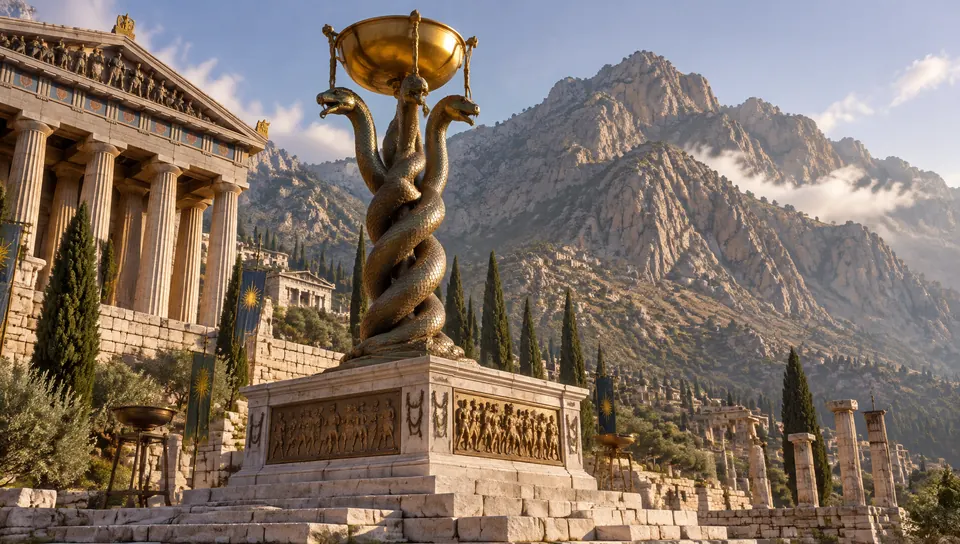
So how many Greek states did fight Xerxes? The best evidence is the victory monument itself. After the final victory at Plataea in 479 BC, the allies set aside a tenth of the spoils for Apollo and made a golden tripod resting on a bronze column of three intertwined snakes, which they set up at Delphi beside the great altar.15Pausanias 10.13.9Written c. AD 160. Translation by A. R. Shilleto (1886)Read on Project Gutenberg ↗ The Spartan general Pausanias had a boastful couplet engraved on it, naming himself as the victor. The Spartans had it erased at once and replaced with the names of the cities that had fought.
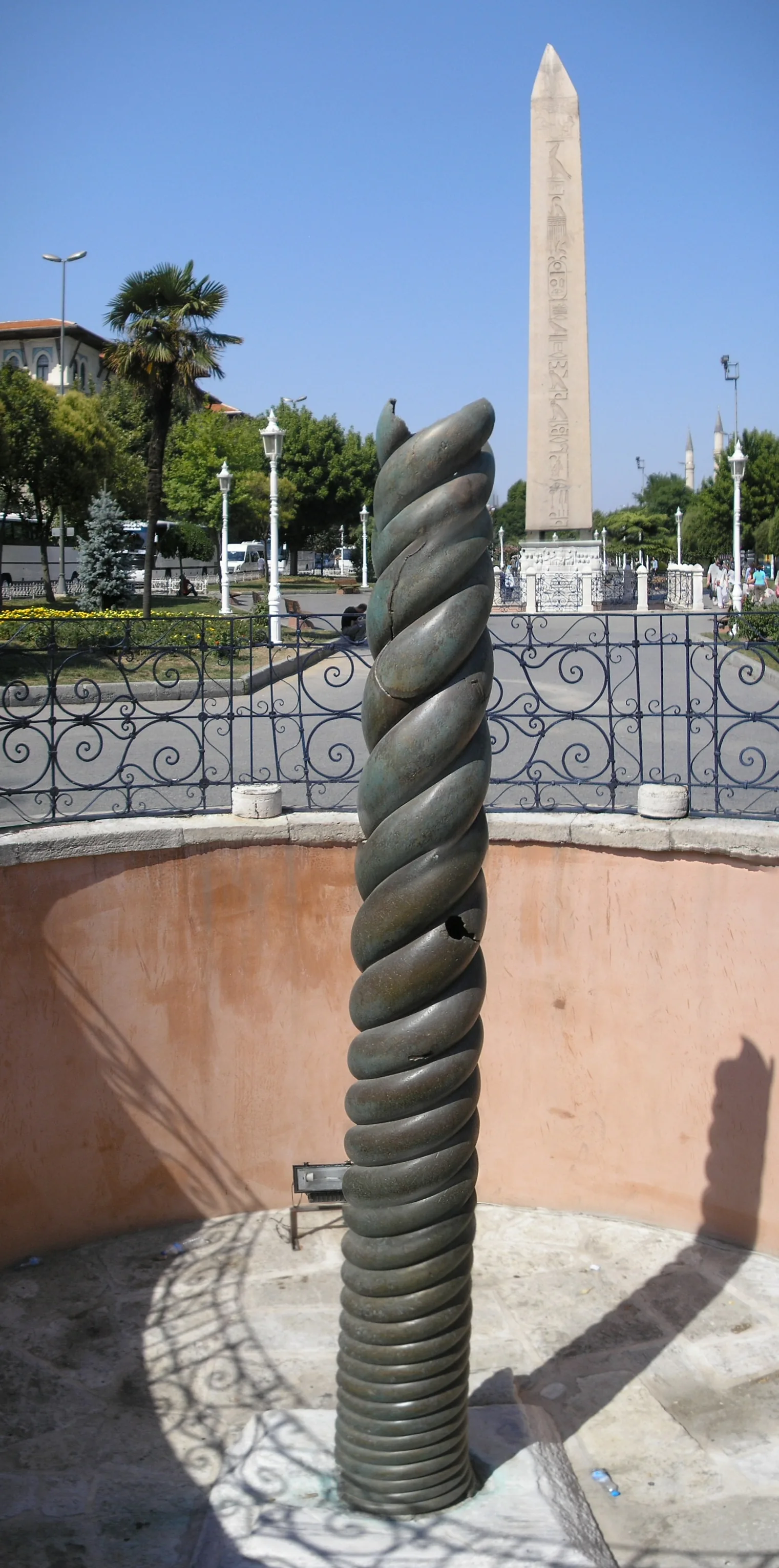
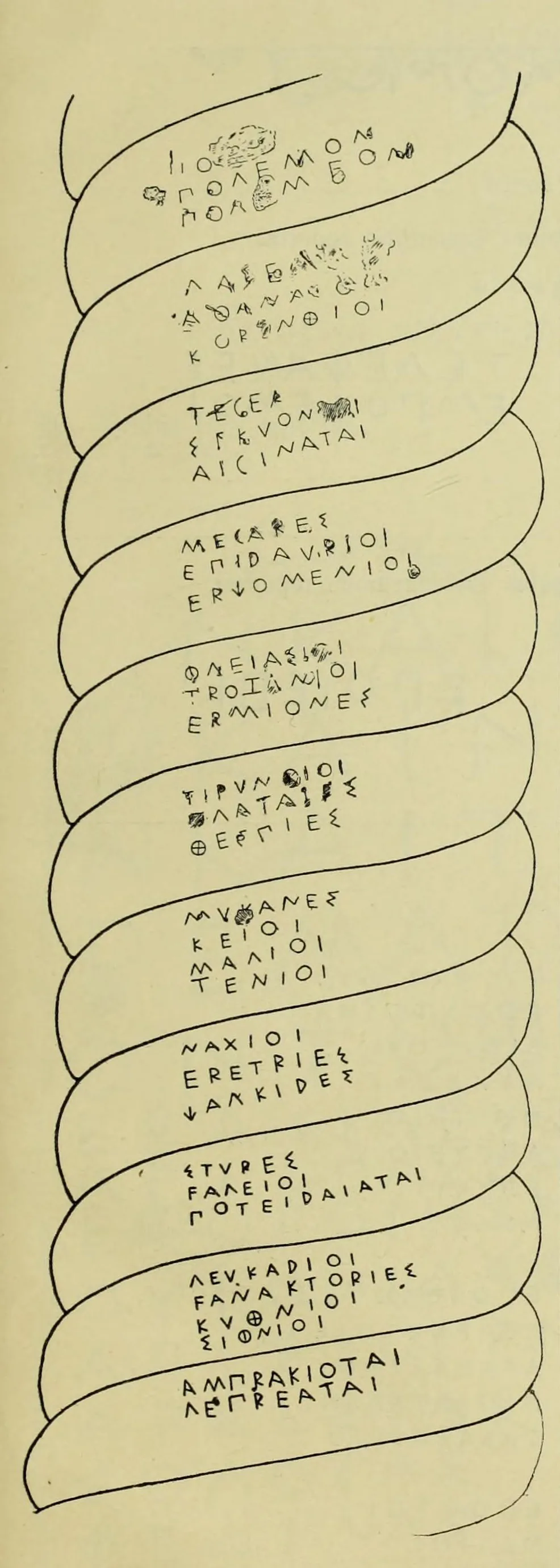
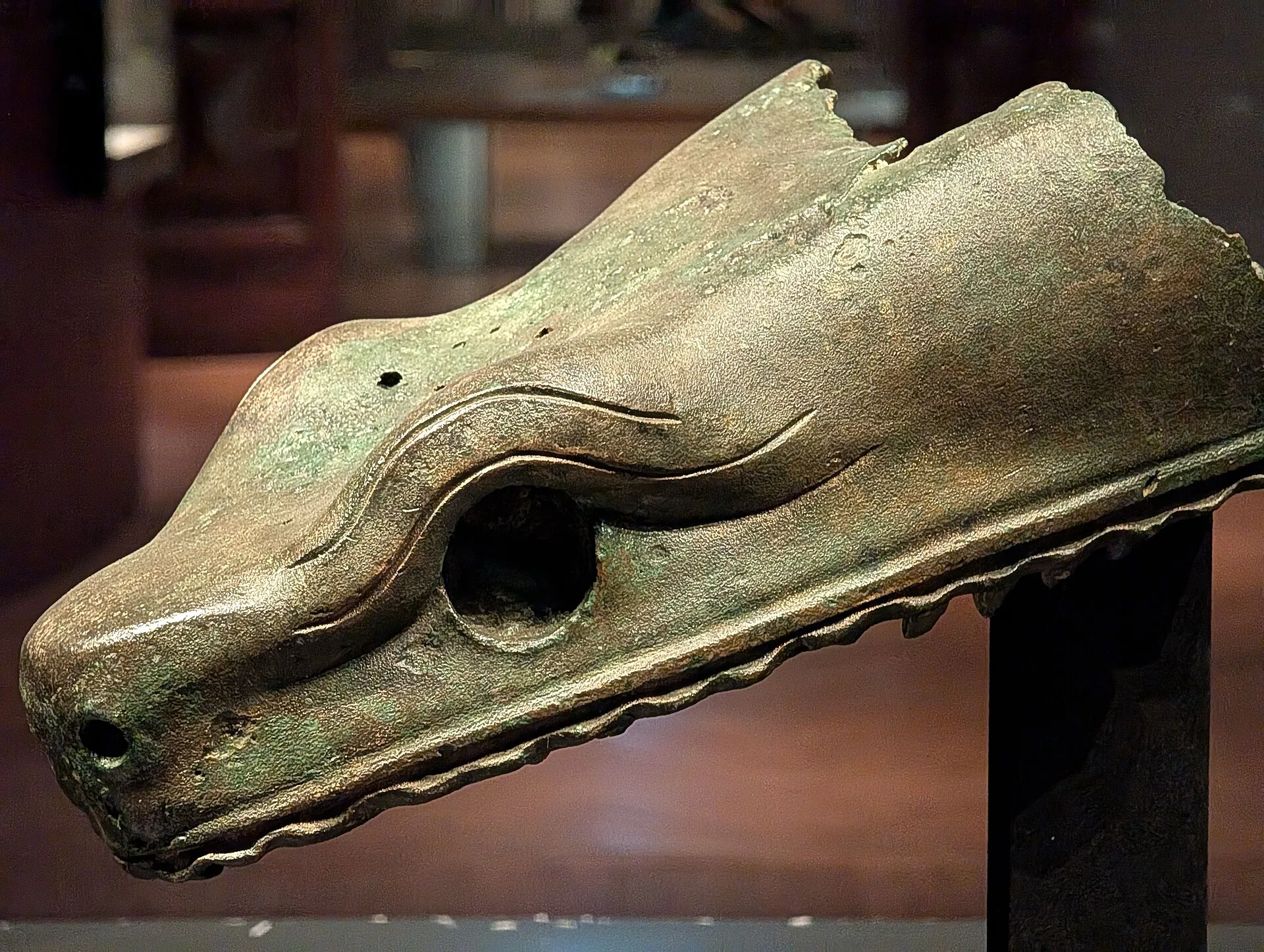
That list survives, because the bronze column itself survives. In the fourth century AD the emperor Constantine moved it to his new capital, Constantinople, where it still stands today in the old Hippodrome of Istanbul, without its golden bowl and without the snakes’ heads. Thirty-one names are engraved on its coils. Herodotus confirms one detail: the islanders of Tenos were added because a Tenian ship deserted from the Persian fleet just before Salamis and brought the Greeks vital news.
The list is not complete. It leaves out the Opuntian Locrians, who fought at Thermopylae and then went over to Xerxes, the Phocians, who held out until they were forced to send men to the Persian army in 479 BC, and the Thebans, who sent four hundred men to Thermopylae. It also leaves out the single ship from Croton in southern Italy, captained by a famous athlete, Phayllus, three times victor at the Pythian games. Some states on it sent very little: the Siphnians and the Seriphians brought one fifty-oared ship each, and Seriphos is not on the column at all. Each city also remembered its own part. On Salamis, the Corinthians who died in the sea battle were buried under an epitaph, probably by Simonides, whose stone has been found on the island: “Once, stranger, we lived in the well-watered city of Corinth; now the island of Ajax, Salamis, holds us.”16Epitaph of the Corinthians buried on Salamis (Simonides?)Inscribed soon after 480 BC; the stone was found on Salamis. Text in J. M. Edmonds, Lyra Graeca II (1924)Read on archive.org ↗ Even counting generously, fewer than forty states fought. Measured against the hundreds of states in the Greek world, “seventy out of seven hundred” is, if anything, a generous way of putting it.
Most of Greece had already submitted
From Sardis, the picture looked very different. The Persian king ruled lands from Egypt and Anatolia to Central Asia and India, and on the stone walls of his palaces he listed the peoples who brought him tribute. Among them were the Yaunā, the Ionians, the Persian name for Greeks. One inscription of Xerxes from Persepolis lists “Ionians, those who dwell by the sea and those who dwell across the sea” among the lands under his rule.17Xerxes, “daiva” inscription (XPh), PersepolisCarved c. 480s–470s BC, in Old Persian, Elamite and BabylonianRead on Livius ↗ Greeks were not a strange enemy to Persia: they were already subjects, in Ionia, on the islands and in Thrace.
The Greeks themselves knew how strange their quarrelling cities looked from the king’s side. In The Persians, performed at Athens in 472 BC by Aeschylus, who had fought in the war, the Persian queen asks who rules the Greeks and is master of their army. The chorus answers: “Of no man are they called the slaves or vassals.”18Aeschylus, The Persians, lines 241–242Performed in 472 BC; Aeschylus fought in the war. Translation by H. W. SmythRead on Perseus ↗ It is a Greek play, written for a Greek audience, but it puts its finger on the difference: there was no king of the Greeks who could give earth and water for all of them, so every city had to be won or beaten one by one.
Seen this way, the embassies of 481 BC were a success. Most of the peoples of northern and central Greece accepted the king without a fight. Exiled Greeks at the court, from the family of Peisistratus of Athens to the Aleuads of Thessaly and the deposed Spartan king Demaratus, offered advice and local knowledge. Argos stayed neutral, the greatest Greek power in the west stayed home, and the remaining enemies were a quarrelling alliance of cities that could not even agree on who should lead them. What remained, from a Persian point of view, was to deal with Athens, which had burned Sardis, and with the few states that still held out.
No Persian account of these negotiations survives. Herodotus is our only detailed witness, writing about fifty years later and relying largely on what the Greek cities said about themselves. Every city had reasons to remember its own choice kindly, and Herodotus says openly that he reports stories he does not believe. The Persian side, here as elsewhere, reaches us mostly through Greek eyes.
How close is our evidence?
For this part of the war the evidence is unusually thin. There are no battle reports and no speeches written at the time. The sources from the time are short: the Serpent Column, set up within months of the end of the invasion, epitaphs such as the Corinthians’ on Salamis, Aeschylus’ play of 472 BC and the Persian kings’ own inscriptions. Everything else comes from writers who lived a lifetime or more later, and who had to rely on what each city chose to remember.
Later writers added their own judgements. Plutarch, around AD 100, accused Herodotus of being unfair to Thebes and to the Corinthians;19Plutarch, On the Malice of Herodotus 29Written c. AD 100. Translation by W. W. Goodwin (1874)Read on Project Gutenberg ↗ Diodorus, following the fourth-century historian Ephorus, adds the pact between Xerxes and Carthage that Herodotus never mentions. Where they go beyond Herodotus, they are rarely closer to the truth.
What the alliance achieved
The alliance of 481 BC was small, quarrelsome and improvised. Its members had been at war with each other months before, it lost its northern line at Tempe without a fight, and it never persuaded Argos, Syracuse, Corcyra or Crete to join. Yet it held together through two campaigning seasons, through the loss of Thermopylae and the burning of Athens, until the victories at Salamis and Plataea. Its leaders learned to fight under one command, Athenians under Spartan admirals and Peloponnesians beside Athenian ships.
The quarrels did not disappear. The arguments over command that sent Gelon’s envoys home were the same arguments that, a few years after the war, would split the alliance in two: Sparta at the head of the Peloponnesian League, Athens at the head of the Delian League. But in 480 BC a few dozen cities had chosen to fight together, and the first test of that choice was waiting on the coast road at Thermopylae. The story continues in Chapter 6: Thermopylae and Artemisium.
- Thucydides 3.56 (speech of the Plataeans)
- Diodorus Siculus, Library of History 11.2.3
- Herodotus, Histories 7.132
- Diodorus Siculus, Library of History 11.3.3
- Grote, History of Greece, vol. 5, ch. 39
- Grundy, The Great Persian War, ch. 6
- Herodotus, Histories 7.140–141
- Grundy, The Great Persian War, ch. 6
- Plutarch, Themistocles 6
- Grote, History of Greece, vol. 5, ch. 39
- Plutarch, On the Malice of Herodotus 28
- Grote, History of Greece, vol. 5, ch. 43
- Grundy, The Great Persian War, ch. 6
- Diodorus Siculus, Library of History 11.2.5
- Pausanias 10.13.9
- Epitaph of the Corinthians buried on Salamis (Simonides?)
- Xerxes, “daiva” inscription (XPh), Persepolis
- Aeschylus, The Persians, lines 241–242
- Plutarch, On the Malice of Herodotus 29
- Herodotus, Histories: 7.6, 7.131–132, 7.133, 7.134–136, 7.138, 7.143, 7.144, 7.145, 7.146–147, 7.147, 7.148–149, 7.150–152, 7.157–158, 7.159–162, 7.163–164, 7.165–166, 7.168, 7.169, 7.172, 7.173–174, 7.175, 8.2–3, 8.44, 8.47, 8.48, 8.66, 8.82, 9.17, 9.81
- Diodorus Siculus, Library of History: 11.1, 11.3, 11.3.4
- Grote, History of Greece, vol. 5: ch. 39, ch. 43
- Grundy, The Great Persian War: ch. 6, ch. 7
- Thucydides, History of the Peloponnesian War: 1.14, 1.18, 1.132, 3.62 (speech of the Thebans, 427 BC)
- Plutarch, Themistocles: 7, 10