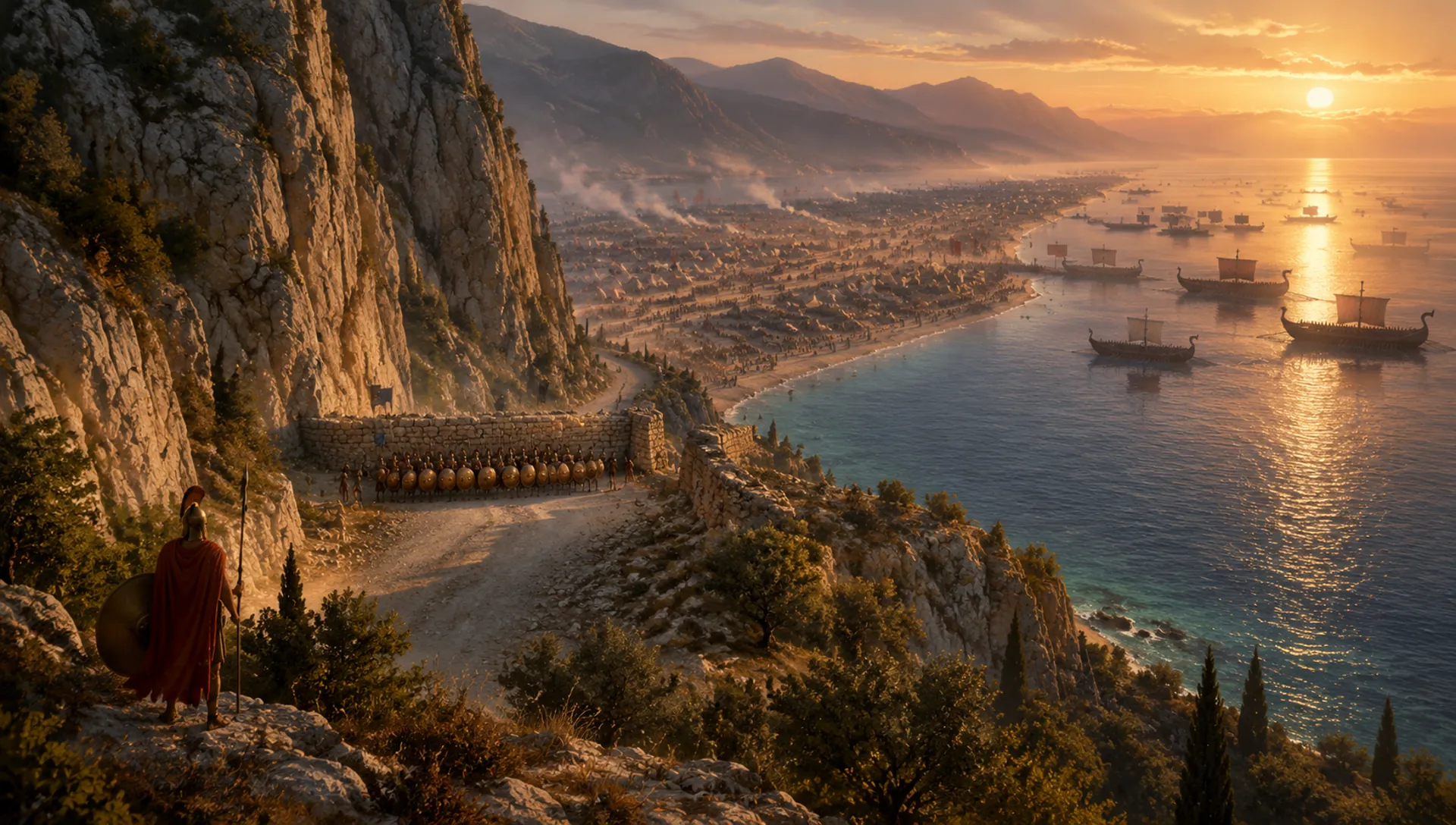
In late summer 480 BC a few thousand Greeks blocked the coast road into central Greece while their fleet held the strait beside it. For three days the largest army the Greeks had ever seen could not get through. Then a local man showed the Persians a path over the mountain, and the defence of Thermopylae turned into one of the most famous last stands in history.
Where this chapter fits
Thermopylae belongs to the third part of the Persian Wars, the second Persian invasion of Greece in 480–479 BC. Twenty years earlier the Greek cities of Ionia had revolted against Persian rule, and Athens and Eretria had sent ships to help them; together the rebels burned Sardis, the seat of the Persian governor of Lydia.1Herodotus, Histories 5.99–102Translation by A. D. GodleyRead on Perseus ↗ Darius crushed the revolt and in 490 BC sent an army to punish Athens and Eretria. Eretria was sacked, but at Marathon the Athenians and Plataeans defeated the Persian landing force. Darius began preparing a far larger campaign, but died in 486 BC. His son Xerxes inherited both the empire and the unfinished war.
In the previous chapter, the Greek cities that were willing to resist met at Corinth and agreed to fight together under Spartan command. Only a small part of the Greek world joined them. Thermopylae was their first real test.
The road to Thermopylae
Xerxes had prepared this invasion for years. His father Darius had sent an army against Athens in 490 BC, and it had been beaten at Marathon. Xerxes would not repeat that mistake with a small force. Herodotus describes a canal dug for three years through the neck of the Athos peninsula, so that the fleet would not have to sail around the cape where Mardonius’ ships had been wrecked in 492 BC.2Diodorus Siculus, Library of History 11.2.4Written c. 30 BC. Translation by C. H. Oldfather (1946)Read on LacusCurtius ↗ Food depots were set up along the route through Thrace and Macedonia. In the spring of 480 BC the army crossed the Hellespont from Asia into Europe on two bridges made of ships tied side by side, and Herodotus says the crossing took seven days and seven nights without a pause.
The Greeks first tried to stop the invasion far to the north, in the Vale of Tempe between Mount Olympus and Mount Ossa. About 10,000 hoplites marched there in the spring, but they soon learned that the pass could be bypassed by other routes, and they withdrew. That left Thessaly with no choice but to go over to Xerxes. Meeting again at the Isthmus of Corinth, the allies looked for a new line of defence and chose a pair of positions that worked together: the pass of Thermopylae on land and the strait of Artemisium at sea. Herodotus notes that the two were close enough for each to know at once what was happening to the other.
The idea was simple. The Persian army needed its fleet: the fleet carried supplies and could land troops behind any Greek line. If the Greek fleet could hold the sea lane at Artemisium, and a Greek army could hold the coast road at Thermopylae, Xerxes would be stopped on both fronts at once, at the two points where his numbers counted least.
Why here? The pass itself
The only good road from Thessaly into central Greece ran along the southern shore of the Malian Gulf. Here the cliffs of Mount Kallidromo came down almost to the water. Herodotus describes the pass in detail. Near the village of Anthela, in the west, there was open ground with a temple of Demeter and the meeting place of the Amphictyonic League. Just beyond it, at the little river Phoenix, the road narrowed to the width of a single cart, and it did the same again in the east, near the village of Alpeni. Alpeni was also the nearest place where the Greeks could get food.3Grote, History of Greece vol. 5, ch. 40G. Grote, History of Greece, vol. 5 (1847). A modern history, written 2,300 years laterRead on Project Gutenberg ↗
Between these two narrows lay Thermopylae itself, the stretch that modern historians call the Middle Gate. Herodotus gives its width as fifty feet, about fifteen metres: wider than the two ends, but still far too narrow for an army to spread out. This is where the Greeks made their stand. Long before, the Phocians had built a wall across the pass here to keep out the Thessalians, and they had let the water of the hot springs run over the road so that the ground became a gully. By 480 BC the old wall had mostly fallen down. The Greeks rebuilt it and made it the base of their position. The hot springs, called “the Pots” by the locals, rose at the foot of the cliff right beside it, next to an altar of Heracles. They gave the place its name: Thermopylae, the Hot Gates.
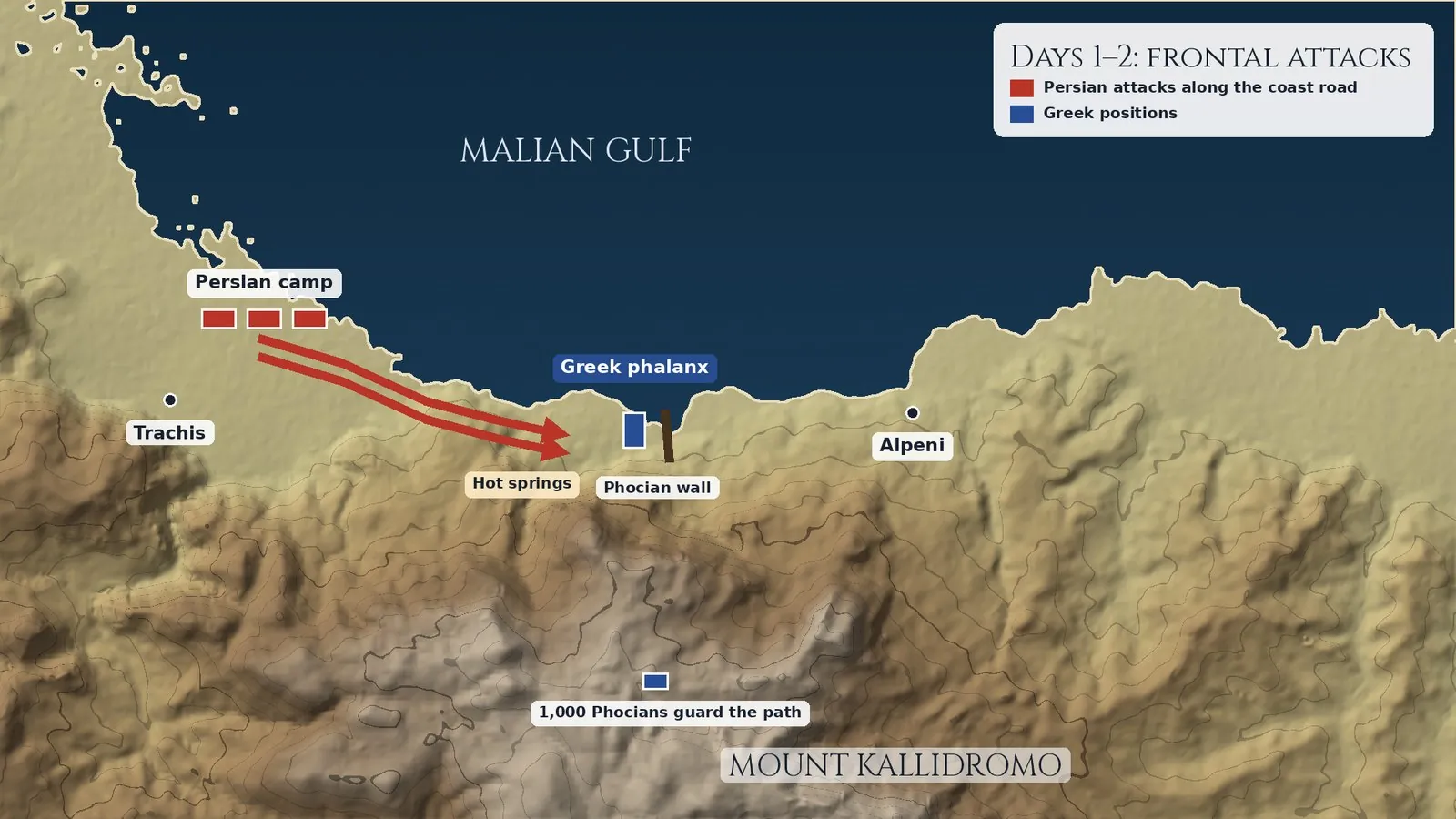
Today the pass looks nothing like this. Over the centuries the river Spercheios has carried so much mud into the Malian Gulf that the coastline now lies several kilometres to the north. The narrow road between cliff and sea has become a wide plain. The maps on this page show the coast as it was in 480 BC, reconstructed from the landscape.
Who were the Spartans?
Sparta was unlike any other Greek city. Its full citizens, the Spartiates, did not farm, trade or practise a craft. From about the age of seven, boys were taken from their families and raised in the state training system, the agoge, where they learned to endure hunger, cold and pain, and to fight as part of a unit. As adults they ate together in military messes and lived as soldiers for most of their lives. In a world where most Greek armies were made up of farmers who fought in summer and went home for the harvest, the Spartans were the closest thing Greece had to professional soldiers.
This way of life rested on the labour of others. The land of the Spartiates was worked by the helots, a large population of state-owned serfs in Laconia and Messenia who greatly outnumbered their masters and were kept down by force. Around Sparta lived the perioikoi, the “dwellers around”, free but without political rights, who were traders and craftsmen and also served in the army. Sparta had two kings at the same time, from two royal families, the Agiads and the Eurypontids, who led the army in war. Five elected magistrates, the ephors, watched over them at home.
By 480 BC Sparta was the leading land power in Greece and stood at the head of an alliance of Peloponnesian cities. That is why the allies gave Sparta the command, on land and at sea, even though Athens supplied far more ships.
The Greek army
Herodotus lists the Greek force contingent by contingent: 300 Spartans, 500 men from Tegea and 500 from Mantinea, 120 from Orchomenus in Arcadia and 1,000 from the rest of Arcadia, 400 Corinthians, 200 from Phlius and 80 from Mycenae.4Grote, History of Greece vol. 5, ch. 40G. Grote, History of Greece, vol. 5 (1847). A modern history, written 2,300 years laterRead on Project Gutenberg ↗ From central Greece came 700 Thespians and 400 Thebans, joined by 1,000 Phocians and the whole levy of the Opuntian Locrians. Herodotus gives no number for the Locrians, and the Spartans were probably accompanied by helots and other Lacedaemonians he does not count. Modern estimates for the whole force run from about 5,000 to 7,000 men.
The commander was Leonidas, one of Sparta’s two kings. He had never expected to rule: he was the third son of King Anaxandridas, and became king only because his elder brothers Cleomenes and Dorieus had died, Cleomenes without a son. He was married to Cleomenes’ daughter Gorgo. Herodotus says that the 300 Spartans he took with him were chosen from men who had sons, so that no family line would die out.
Why so few? Not because the Greeks expected to lose. The Spartans were celebrating the Carneia, a festival during which their army was not allowed to march, and the Olympic Games were being held at the same time. Herodotus says Sparta and its allies sent this advance force to hold the pass and to encourage the other Greeks, and planned to follow with their full strength once the festivals were over. Nobody expected the fight at Thermopylae to be decided so quickly.
The 400 Thebans were a special case. Thebes was suspected of favouring the Persians, and Herodotus says Leonidas took its men along to test where Thebes stood. They came, “but they had other ends in view”.5Herodotus, Histories 7.205Translation by A. D. GodleyRead on Perseus ↗6Grundy, The Great Persian War, ch. 7G. B. Grundy, The Great Persian War (1901). Grundy surveyed the battlefields himselfRead on Project Gutenberg ↗
The Persian army
Facing them was the army of the largest empire the world had yet seen. Herodotus describes how it was counted at Doriscus in Thrace: ten thousand men were packed together, a wall was built around the space they filled, and then the whole army was marched through the enclosure, ten thousand at a time.7Diodorus Siculus, Library of History 11.3.7Written c. 30 BC. Translation by C. H. Oldfather (1946)Read on LacusCurtius ↗ He goes on to list the peoples who marched with Xerxes, each in their own dress and with their own weapons: Persians and Medes, Assyrians and Bactrians, Scythian Sacae, Indians, Arabians, Ethiopians from Africa, and many more.
At the heart of the army were the Persians themselves, and at its core the 10,000 Immortals under their commander Hydarnes, so called because their number was always kept full: when a man died or fell sick, another took his place at once.
Herodotus arrives at 2,641,610 fighting men, and as many servants and camp followers again: more than five million people. No modern historian accepts this. An army that size could not have been fed or watered on the march, and the roads of northern Greece could not have carried it. Modern estimates usually fall between 120,000 and 300,000 for the whole army. Even so, the Greeks at Thermopylae were outnumbered by twenty or forty to one.
Bronze against wicker: how they fought
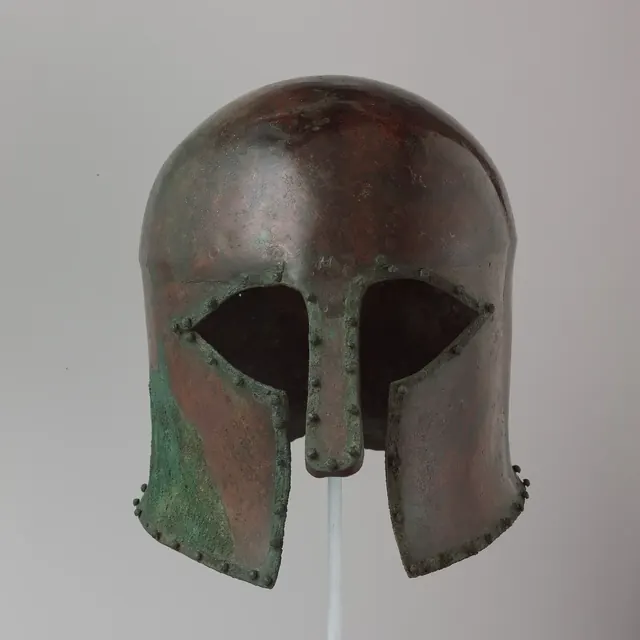
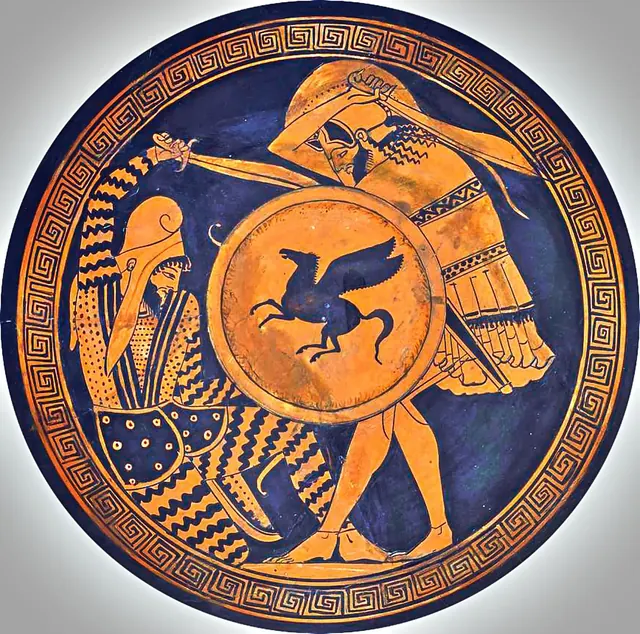
The Greeks at Thermopylae were hoplites: heavy infantry who carried a large round shield, the aspis, nearly a metre across, made of wood and often faced with bronze. They wore a bronze helmet, often of the closed Corinthian type that covered most of the face, a breastplate of bronze or layered linen, and bronze greaves on their shins. Their main weapon was a thrusting spear more than two metres long; a short sword was the backup. In battle they stood in a phalanx, a closed formation several ranks deep, each man’s shield partly covering the man on his left.
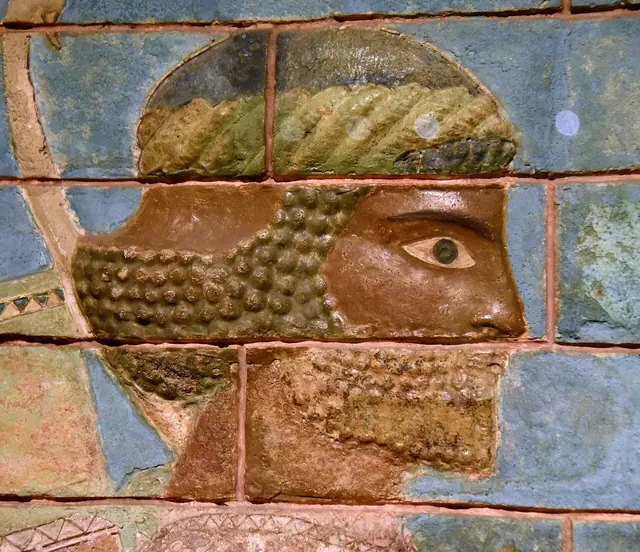
Herodotus describes the Persian infantry quite differently. They wore soft felt caps, sleeved tunics with armour of iron scales, and trousers. They carried wicker shields, short spears, large bows with arrows of cane, and daggers. This was equipment built for open country, where archers could shower an enemy with arrows from a distance and cavalry could ride around his flanks. In the narrow pass at Thermopylae there was no room for either. The Persians had to come to close quarters, where the longer spears, heavier shields and drilled formation of the hoplites gave the Greeks a decisive advantage8Grundy, The Great Persian War, ch. 7G. B. Grundy, The Great Persian War (1901). Grundy surveyed the battlefields himselfRead on Project Gutenberg ↗.
Four days of waiting
When the Persian army appeared on the plain near Trachis, the Greeks panicked. Herodotus says the Peloponnesians wanted to fall back and defend the Isthmus of Corinth instead. The Phocians and Locrians, whose homes lay just behind the pass, were furious. Leonidas decided to stay, and sent messengers to the Greek cities asking for reinforcements.
Xerxes sent a horseman to spy on the Greek camp. The rider could not see behind the wall, but in front of it he saw Spartans exercising naked and combing their long hair. Xerxes found this ridiculous and asked Demaratus, an exiled Spartan king who had joined his court, what it meant. Demaratus told him that this was what Spartans did before they risked their lives, and warned that he now faced the finest kingdom and the bravest men in Greece.9Diodorus Siculus, Library of History 11.6.1Written c. 30 BC. Translation by C. H. Oldfather (1946)Read on LacusCurtius ↗ Xerxes did not believe him. Herodotus says he waited four days, expecting the Greeks to run away.
The battle in three phases
Day one
On the fifth day Xerxes attacked. He first sent in the Medes and the Cissians, with orders to take the Greeks alive and bring them before him. They charged into the narrows and were cut down in great numbers; fresh troops took their place and fared no better. Herodotus remarks that it became clear to everyone, and not least to the king, that he had many men but few real warriors.
When the Medes fell back, Xerxes sent in his best troops, the Immortals under Hydarnes. They did no better. In the narrow space their numbers were useless, and their spears were shorter than those of the Greeks. The Spartans used an old trick: they would turn their backs and pretend to flee, and when the Persians rushed after them with a great shout, they turned around and cut them down. Herodotus says that three times during the fighting Xerxes leapt up from his throne in fear for his army.10Grundy, The Great Persian War, ch. 7G. B. Grundy, The Great Persian War (1901). Grundy surveyed the battlefields himselfRead on Project Gutenberg ↗
Day two
The next day the Persians attacked again, hoping that the Greeks were now too few and too exhausted to fight. But the Greek contingents took turns at the front, so fresh men were always in the line, all except the Phocians, who had been posted on the mountain to guard a path. The Persians made no progress, and Xerxes was at a loss what to do.11Grote, History of Greece vol. 5, ch. 40G. Grote, History of Greece, vol. 5 (1847). A modern history, written 2,300 years laterRead on Project Gutenberg ↗
The path around
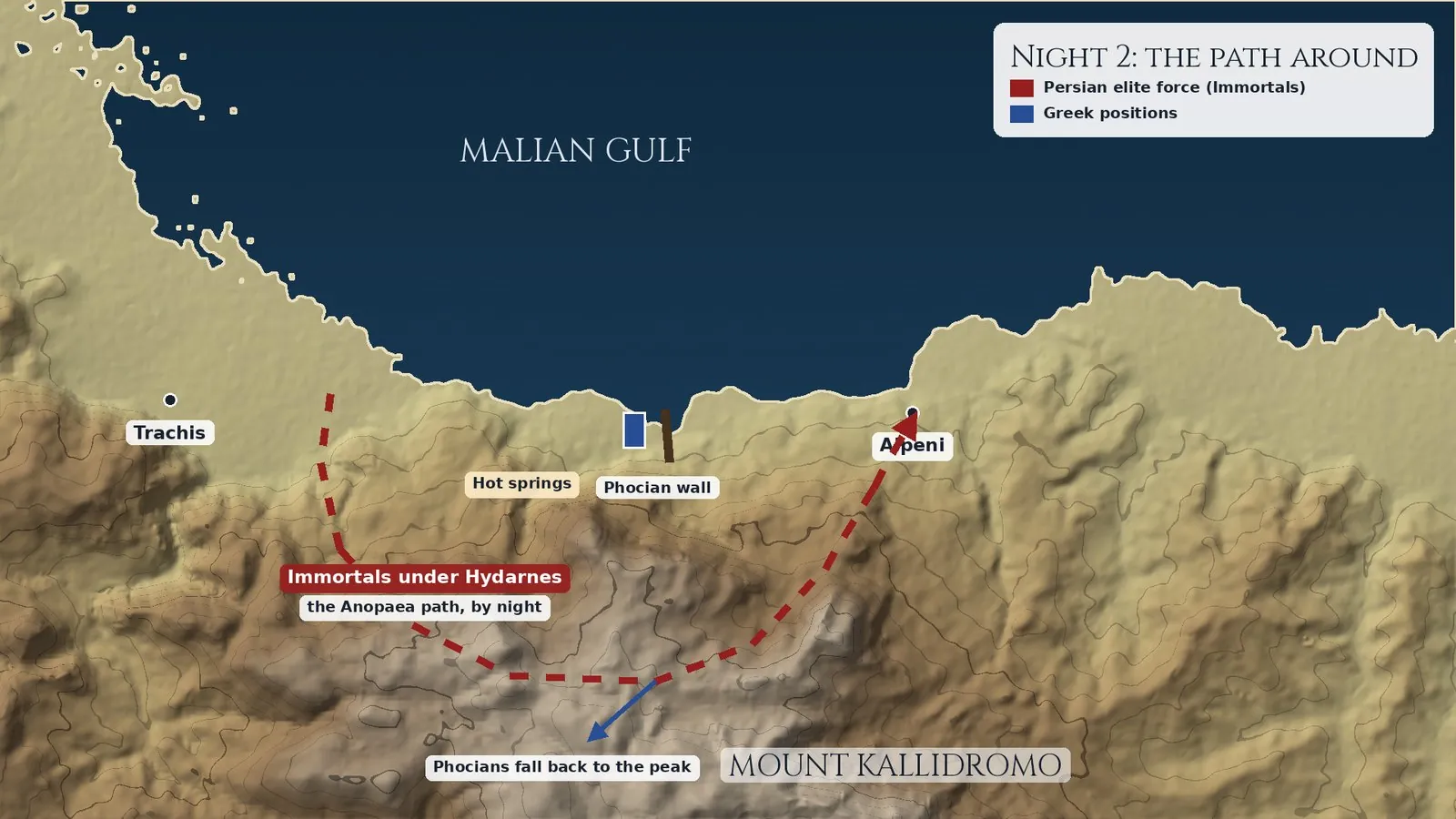
Then a local man came to the king. Ephialtes, son of Eurydemus, from Malis, told Xerxes about a path that led over the mountain and came down behind the Greek position. The Greeks called it the Anopaea. It was no secret to the people of the area: Herodotus says the Malians had once used it to lead the Thessalians into Phocis, around the very wall the Greeks were now defending.12Herodotus, Histories 7.215Translation by A. D. GodleyRead on Perseus ↗ It began in the gorge of the river Asopus, climbed along the ridge of Mount Kallidromo and came down near Alpeni, the village behind the Greek lines. Ephialtes expected a big reward. Later the Greeks put a price on his head, and Herodotus says he was eventually killed for an unrelated quarrel.
Xerxes was delighted. Around the time the lamps were lit, Hydarnes and the Immortals set out with Ephialtes as their guide. They marched through the oak woods all night. At dawn they reached the top, where the 1,000 Phocians were on guard. The morning was still, and the Phocians first noticed the enemy by the noise of thousands of feet on the fallen oak leaves. They ran to arm themselves. Hydarnes feared at first that they were Spartans; when Ephialtes told him they were Phocians, he had his archers shoot at them. The Phocians, thinking they were the target of the whole attack, fell back to the summit to make a stand. The Persians ignored them and hurried down the other side.
The third morning: the choice
Down in the pass, the Greek seer Megistias read the sacrifices and warned that death would come with the dawn. During the night deserters came over with news of the march over the mountain, and at daybreak lookouts came running down from the heights. The Greeks held a council. Some wanted to stay, others to leave, and in the end most of the allies went home.13Diodorus Siculus, Library of History 11.9.1Written c. 30 BC. Translation by C. H. Oldfather (1946)Read on LacusCurtius ↗
Herodotus believes that Leonidas himself sent them away. He wanted to spare their lives, but felt that he and his Spartans could not honourably leave the post they had been sent to hold. Herodotus also links the decision to an oracle Sparta had received at the start of the war: either Sparta would be destroyed by the Persians, or a Spartan king would die. Megistias was told to go too. He refused, but sent away his only son, who was with the army.
Not everyone left. The 700 Thespians, under their commander Demophilus, refused to abandon the Spartans and stayed of their own free will. The 400 Thebans stayed as well, but according to Herodotus Leonidas kept them back against their will, as hostages.
The last stand
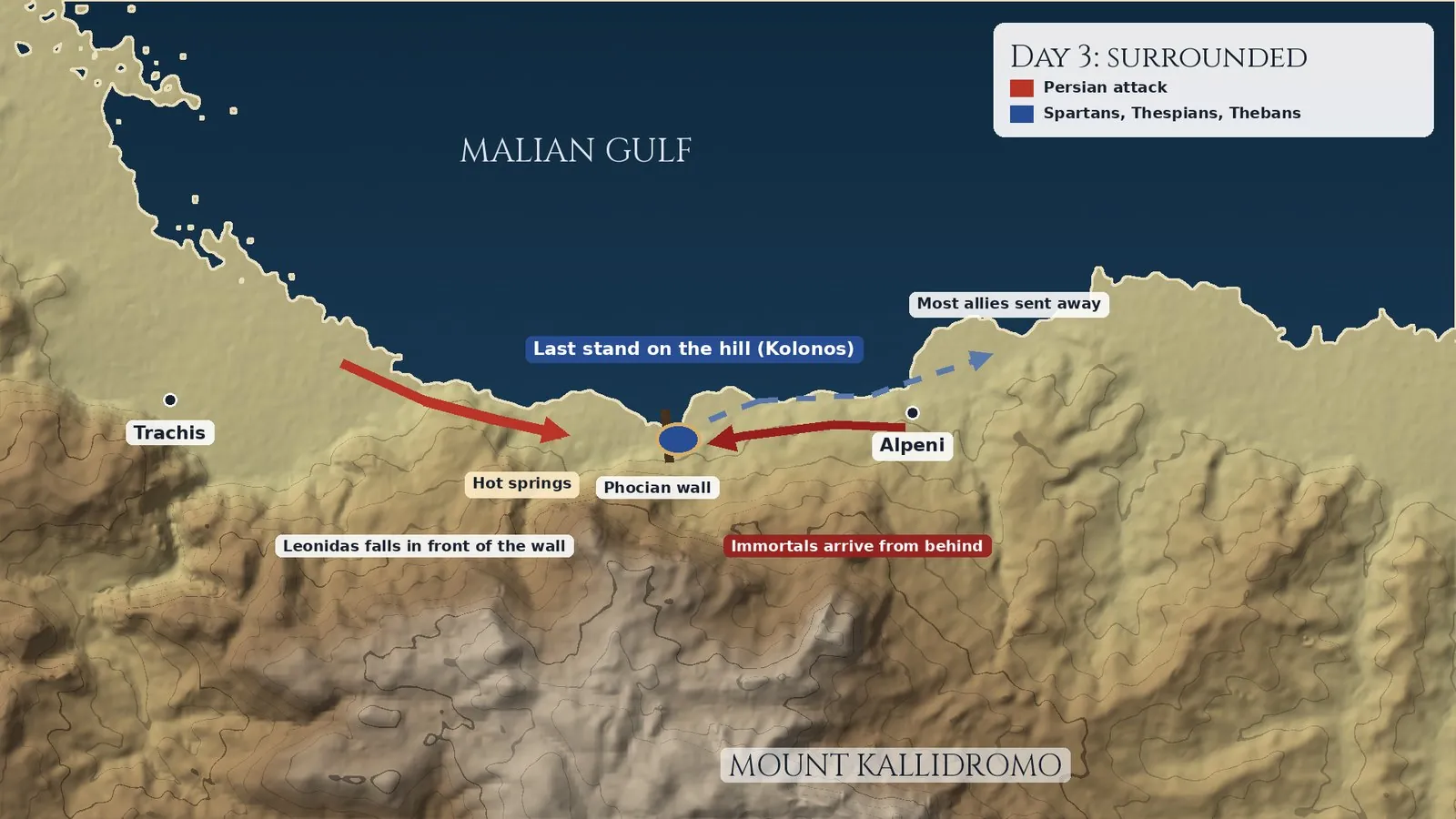
At sunrise Xerxes poured libations, then waited until about the middle of the morning, as Ephialtes had advised, because the way down from the mountain was shorter than the way up. This time the Greeks did not wait behind the wall. Knowing they were going to die, they advanced into the wider part of the pass and fought with everything they had. Behind the Persian ranks, officers drove their men forward with whips. Many fell into the sea and drowned; many more were trampled by their own side.14Grote, History of Greece vol. 5, ch. 40G. Grote, History of Greece, vol. 5 (1847). A modern history, written 2,300 years laterRead on Project Gutenberg ↗
When their spears broke, the Greeks fought on with swords. Leonidas fell, and with him other famous Spartans. On the Persian side two of Xerxes’ own brothers, Abrocomes and Hyperanthes, were killed. Over the body of Leonidas the fighting was fiercest: four times the Greeks drove the enemy back before they could carry it away.
Then the Immortals came down behind them. The Greeks fell back through the narrows, behind the wall, to a small hill at the entrance of the pass. The Thebans broke away and surrendered. The rest made their final stand on the hill, defending themselves with swords if they still had them, and otherwise with their hands and teeth, until the Persians, attacking from both sides, buried them under a hail of arrows.
They say that before the battle a man from Trachis told the Spartan Dieneces that there were so many Persians that their arrows would hide the sun. Dieneces answered that this was good news: they would fight in the shade.
Herodotus, Histories 7.226
Two Spartans did not die in the battle. Eurytus and Aristodemus had been sent back to Alpeni with a severe eye illness. When Eurytus heard what was happening, he made his helot lead him back into the fight and was killed. Aristodemus stayed behind and went home, where he was treated as a coward. A year later, at Plataea, he fought so recklessly that he was killed, though the Spartans refused to give him the honours of the bravest.
Meanwhile, at Artemisium
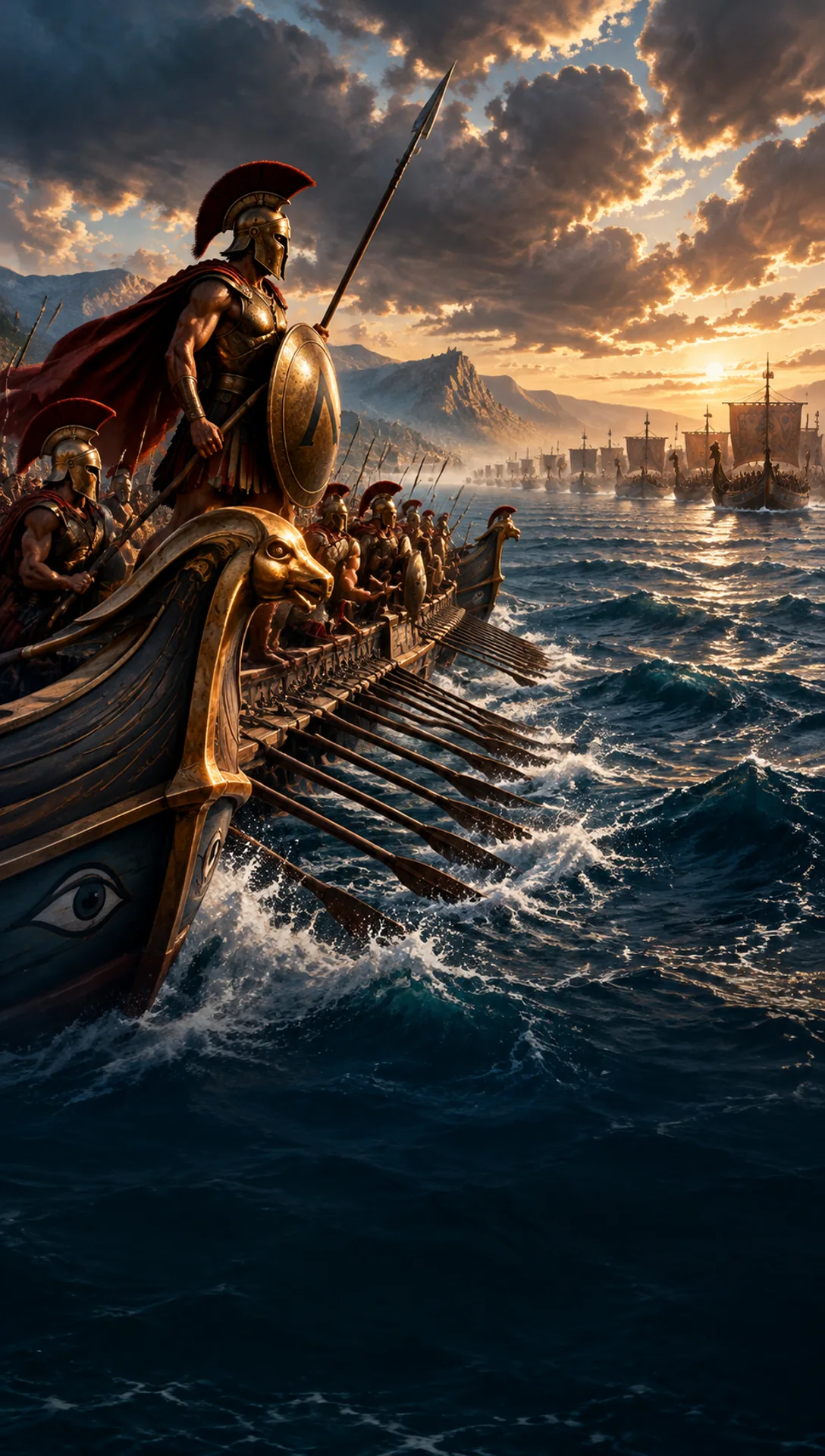
On the same days, 271 Greek triremes lay at Artemisium on the northern tip of Euboea, under the Spartan admiral Eurybiades. The Athenians supplied 127 of them, partly crewed by men from Plataea, and lent twenty more to the Chalcidians.15Herodotus, Histories 8.1Translation by A. D. GodleyRead on Perseus ↗ The Persian fleet had already suffered badly: a storm off the coast of Magnesia had wrecked, according to Herodotus, at least four hundred of its ships, and a squadron sent around Euboea to trap the Greeks from behind was destroyed by another storm.
Even before the main battle there had been a first clash at sea. Ten Persian ships caught three Greek scout ships off the island of Sciathos. One of the Greek crews fought to the end, and a marine from Aegina named Pytheas kept fighting until he was cut almost to pieces. Herodotus says the Persians so admired his courage that they saved his life, dressed his wounds with myrrh and bound them with strips of linen, and showed him with pride to their whole army.
Herodotus says the fleets fought on the same three days as the armies at Thermopylae. Neither side won outright, but the Greeks suffered heavy damage; half of the Athenian ships were damaged. An Athenian named Abronichus waited with a boat near Thermopylae to carry the news. When he brought word that the pass had fallen, the Greek fleet had nothing left to protect. It sailed south that night towards Athens and Salamis. Before leaving, Themistocles had messages cut into the rocks at the watering places, calling on the Ionian Greeks in the Persian fleet to change sides.
After the battle
Xerxes ordered Leonidas’ head to be cut off and set on a stake. Herodotus, who admired the Persians in many ways, calls this unlike anything the Persians usually did to brave enemies. The king also tried to hide his own losses. Of the 20,000 Persian dead, Herodotus says, he left only about 1,000 lying in the open and buried the rest in trenches, before inviting the crews of his fleet to come and see the battlefield. The visitors saw about 4,000 Greek dead, and were not fooled.
The Thebans who had surrendered were spared, but most were branded with the royal mark, starting with their commander Leontiades. The road to central Greece was now open. Within weeks Xerxes was in Athens, which had been evacuated, and his men burned the Acropolis. The story continues in Chapter 7: Salamis.
Later the Greeks buried the dead where they fell and set up memorial stones. One inscription remembered the whole army16Grundy, The Great Persian War, ch. 7G. B. Grundy, The Great Persian War (1901). Grundy surveyed the battlefields himselfRead on Project Gutenberg ↗: “Here once four thousand from the Peloponnese fought against three million.”17Diodorus Siculus, Library of History 11.33.2Written c. 30 BC. Translation by C. H. Oldfather (1946)Read on LacusCurtius ↗ Another, for the Spartans, became the most famous epitaph in the ancient world:
Go tell the Spartans, stranger passing by, that here, obedient to their laws, we lie.
Herodotus, Histories 7.228
Herodotus also mentions a stone lion set up on the hill where the last stand took place, in honour of Leonidas.18Herodotus, Histories 7.225Translation by A. D. GodleyRead on Perseus ↗19Grundy, The Great Persian War, ch. 7G. B. Grundy, The Great Persian War (1901). Grundy surveyed the battlefields himselfRead on Project Gutenberg ↗
Sacrifice or plan gone wrong?
Herodotus tells Thermopylae as a story of chosen sacrifice: Leonidas knew the oracle, sent the others away and stayed to die for Sparta’s glory. Modern historians accept that the last stand happened much as he describes it, but they argue about the reasons behind it.
One view is that Leonidas acted as a rear guard. If the whole Greek force had retreated along the coast road with Persian cavalry and the Immortals close behind, it could have been caught in the open and destroyed. By holding the pass a few hours longer, the Spartans and Thespians gave the allies time to get away, and gave the fleet at Artemisium time to learn the news and slip away south. Another view stresses that the Greeks never meant Thermopylae to be a suicide mission: they expected reinforcements after the festivals, and the plan failed only because the path over the mountain was found so quickly.
Herodotus’ account of the Thebans has also been questioned. He describes them as unwilling hostages who surrendered at the first chance, but Thebes went over to the Persians soon after the battle, and Herodotus wrote at a time when Athenians had little love for Thebes. Some five centuries later Plutarch wrote a whole essay, On the Malice of Herodotus, attacking among other things his treatment of the Thebans at Thermopylae.20Plutarch, On the Malice of HerodotusWritten c. AD 100. Translation by W. W. Goodwin (1874)Read on Project Gutenberg ↗ The truth about their motives is no longer recoverable.
Other ancient versions
Herodotus is not the only ancient writer to tell the story, just the earliest whose account survives in full. Two other versions survive, and they differ in revealing ways.
Ctesias was a Greek doctor at the Persian court around 400 BC, and he said he had used the Persian royal records. His history is lost, but a ninth-century summary by the Byzantine scholar Photius survives. In it, the first Persian attack is led by a general called Artapanus with 10,000 men, followed by attacks with 20,000 and then 50,000, all beaten off. The men who show the way over the mountain are not Ephialtes but Calliades and Timaphernes, two leaders of the Trachinians, and 40,000 Persians go round. Ctesias was already criticised as unreliable in antiquity, and modern historians mostly follow Herodotus. Even so, his version shows that the story was told differently at the Persian court.21Ctesias, Persica, summarised by Photius (Bibliotheca, codex 72)Ctesias wrote c. 400 BC; the summary is from the 9th century AD. Translation by J. H. Freese (1920)Read on Project Gutenberg ↗
Diodorus, writing around 30 BC and probably following the fourth-century historian Ephorus, gives Leonidas 4,000 men: 1,000 Lacedaemonians, among them 300 Spartiates, and 3,000 other Greeks, joined at the pass by Locrians, Malians, Phocians and 400 Thebans. In his account the guide is an unnamed Trachinian, and a deserter from Cyme named Tyrrhastiadas warns the Greeks during the night. Most strikingly, his Spartans do not wait for the end. They attack the Persian camp by night, searching for Xerxes’ tent, and die when daylight shows how few they are. Herodotus has no night attack, and it is usually treated as a later embellishment.
For Xerxes, Thermopylae was a victory
The Greek story is a glorious defeat. Seen from the Persian camp it was a hard but successful battle: the pass was forced in three days, the road to Athens was opened, and the Greek fleet had to give up its position. A few weeks later Xerxes stood on the Acropolis, the goal his father had failed to reach. If the war had ended there, Thermopylae would be remembered as a minor delay in a Persian conquest.
For the Persian Empire, Greece was a frontier problem on the far western edge of a state that reached from Egypt and Anatolia to the Indus. Athens had helped the Ionian rebels burn Sardis and had beaten a Persian army at Marathon. Greek exiles at the Persian court, among them members of the old ruling family of Athens and the Thessalian Aleuadae, encouraged Xerxes to march. The army that came was a picture of the empire itself: dozens of peoples, each fighting in its own way, under Persian command.
The men who forced the pass were the pride of that army. The Immortals were ten thousand picked Persians, kept always at full strength, with their own commander, Hydarnes, whose father of the same name had helped Darius to the throne. Herodotus says they marched with their own baggage train, servants and even women in covered wagons, and received special supplies.22Herodotus, Histories 7.83Translation by A. D. GodleyRead on Perseus ↗ For them, finding and marching the Anopaea path by night was the decisive achievement of the battle. It was a Persian victory of skill, not just of numbers. When Xerxes later went home and left an army behind in Greece, Herodotus says Hydarnes refused to stay: he would not leave the king’s side.
No Persian account of the battle survives. The nearest thing is the version of Ctesias, a Greek who worked at the Persian court a lifetime later. The Persian kings left inscriptions about their power and piety, and the Persepolis tablets show how the empire was run day to day, but no Persian historian told the story of the war in Greece. We see the Persians through Greek eyes. Even so, Herodotus gives them names, voices and reasons, from the Immortals’ commander Hydarnes to Demaratus, the Spartan exile who tried to warn the king.
Why Thermopylae is remembered
Militarily, Thermopylae was a defeat, and it did not stop the invasion. Its importance lay elsewhere. It showed that the Persian army could be held, it cost Xerxes time and men, and it gave the Greeks a story that hardened their will for the battles still to come at Salamis and Plataea. In the centuries since, the name has become a byword for a few holding out against many, used by writers, soldiers and filmmakers far from Greece.
The oldest evidence for Thermopylae is not a history at all. The inscriptions at the pass were put up soon after the battle, and Simonides, the most famous poet of the day, wrote a song for the dead. Only a few lines of it survive, because Diodorus quoted them more than four centuries later:
Of those who perished at Thermopylae
All glorious is the fortune, fair the doom;
Their grave’s an altar, ceaseless memory’s theirs
Instead of lamentation, and their fate
Is chant of praise.
Simonides, quoted by Diodorus 11.11.6, translation by C. H. Oldfather ↗Diodorus Siculus, Library of History 11.11Written c. 30 BC; quotes Simonides (c. 480–470 BC). Translation by C. H. Oldfather (1946)Read on LacusCurtius ↗
Much of what people “know” about Thermopylae comes from later writers. The famous reply molon labe, “come and take them”, which Leonidas is said to have given when Xerxes demanded that the Greeks hand over their weapons, is not in Herodotus. It appears in Plutarch’s collection of Spartan sayings, written around five hundred years after the battle.23Plutarch, Sayings of Spartans (Leonidas)Written c. AD 100. Translation by W. W. Goodwin (1874)Read on Project Gutenberg ↗ Today the words are carved on the modern monument to Leonidas, unveiled at the site in 1955, which stands opposite the hill of the last stand. Where Herodotus is our best witness, we follow him; where a story only appears centuries later, we say so.
- Herodotus, Histories 5.99–102
- Diodorus Siculus, Library of History 11.2.4
- Grote, History of Greece vol. 5, ch. 40
- Grote, History of Greece vol. 5, ch. 40
- Herodotus, Histories 7.205
- Grundy, The Great Persian War, ch. 7
- Diodorus Siculus, Library of History 11.3.7
- Grundy, The Great Persian War, ch. 7
- Diodorus Siculus, Library of History 11.6.1
- Grundy, The Great Persian War, ch. 7
- Grote, History of Greece vol. 5, ch. 40
- Herodotus, Histories 7.215
- Diodorus Siculus, Library of History 11.9.1
- Grote, History of Greece vol. 5, ch. 40
- Herodotus, Histories 8.1
- Grundy, The Great Persian War, ch. 7
- Diodorus Siculus, Library of History 11.33.2
- Herodotus, Histories 7.225
- Grundy, The Great Persian War, ch. 7
- Plutarch, On the Malice of Herodotus
- Ctesias, Persica, summarised by Photius (Bibliotheca, codex 72)
- Herodotus, Histories 7.83
- Plutarch, Sayings of Spartans (Leonidas)
- Herodotus, Histories: 7.22–24, 7.56, 7.60, 7.61, 7.83, 7.173, 7.175, 7.176, 7.181, 7.185–186, 7.190, 7.200, 7.202, 7.203, 7.205, 7.206, 7.209, 7.210, 7.211–212, 7.212, 7.213–214, 7.215–218, 7.219, 7.220, 7.221, 7.222, 7.223, 7.224–225, 7.225, 7.229–231, 7.233, 7.238, 8.22, 8.24–25, 8.113
- Diodorus Siculus, Library of History: 11.2.5, 11.3.6, 11.4.1, 11.4.7, 11.4–10, 11.6.2, 11.6.3, 11.7.3, 11.7.4, 11.12.3
- Grundy, The Great Persian War: ch. 7
- Grote, History of Greece vol. 5: ch. 40