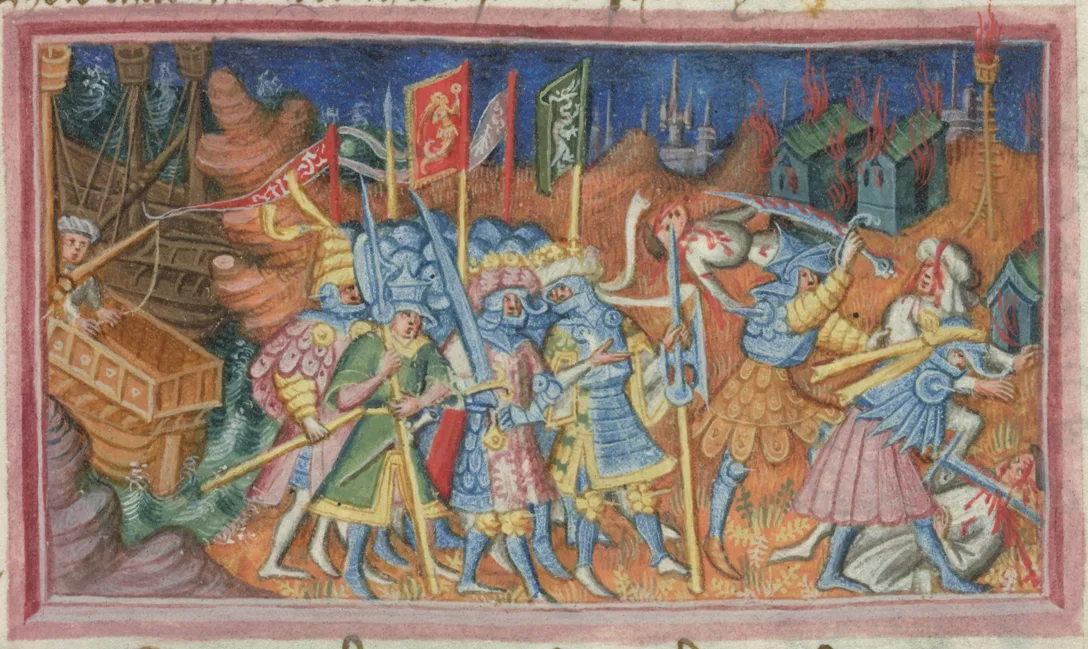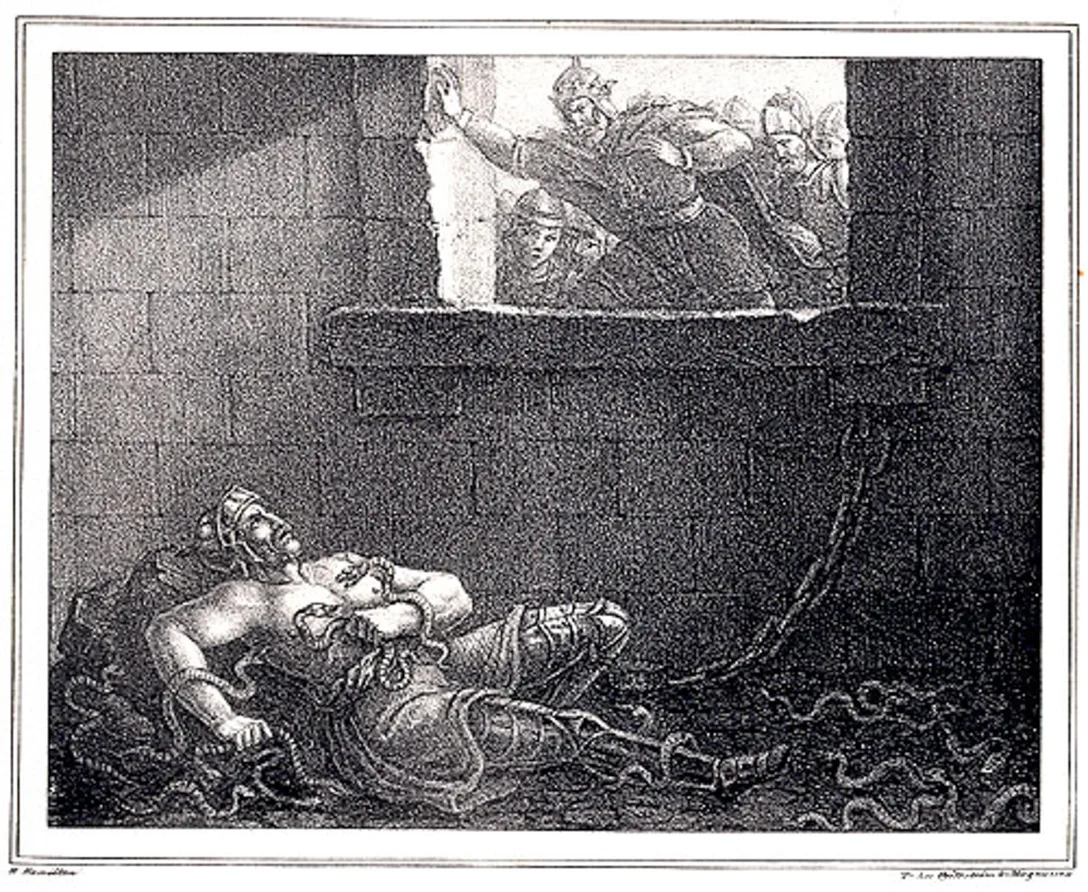
In the autumn of 865 a Danish army landed in East Anglia and did not go home. The English called it the micel here, the great army. It spent the winter collecting horses, rode north and took York on 1 November 866. In March 867 the two rival kings of Northumbria, Osberht and Ælla, joined forces to win the city back; both died in the attempt, and the Danes set up a king of their own. Later Norse stories said the army had come to avenge Ragnar Lothbrok, killed by Ælla in a pit of snakes. The writers of the time say nothing about that.
Where this chapter fits
Northumbria had felt the first blows of the Viking Age: the monastery of Lindisfarne was sacked in 793 and Jarrow, the house of the scholar Bede, the next year. But for seventy years after the raid on Lindisfarne the Vikings in England were raiders. They came in the summer, plundered a monastery or a coastal town, and left; from the 850s some fleets spent the winter on islands in the Thames estuary. The Anglo-Saxon Chronicle, the year-by-year history put together at King Alfred’s court around 890, records the last of these in its entry for 865: “This year sat the heathen army in the isle of Thanet” and made peace with the men of Kent for money, then broke the peace and ravaged eastern Kent by night.1Anglo-Saxon Chronicle, 865Compiled c. 890 under King Alfred, within living memory of these years. Translation by J. Ingram (1823); its years begin in September, so 866 here is autumn 865Read on Project Gutenberg ↗
The next entry describes something different. An army arrived that stayed in England for years, moved from kingdom to kingdom, wintered in royal towns and in the end shared out land and settled. Within a decade three of the four English kingdoms, Northumbria, East Anglia and Mercia, had lost their kings to it. Only Wessex, under Alfred, survived. This chapter covers the first two years, from the landing to the fall of Northumbria.
One warning about dates. The Chronicle began its year in September, so the army that “came into England” in its entry for 866 landed in the autumn of 865 by our reckoning, and its entry for 867 covers both the capture of York in November 866 and the battle of March 867.2Anglo-Saxon Chronicle, 866Compiled c. 890 under King Alfred, within living memory of these years. Translation by J. Ingram (1823); its years begin in September, so 866 here is autumn 865Read on Project Gutenberg ↗ The exact days come from northern annals preserved by Symeon of Durham.
A great heathen army
The Old English words are micel hæþen here, “a great heathen army”, and from them comes the modern name, the Great Heathen Army or simply the Great Army. The Chronicle does not say where it came from, who led it or why. Asser, the Welsh bishop who wrote a life of King Alfred in 893, adds only that “a great fleet of heathen came to Britain from the Danube”.3Asser, Life of King Alfred, ch. 21Written in 893 by Alfred’s Welsh adviser, a generation after the events. Translation by A. S. Cook (1906)Read on Project Gutenberg ↗ The Danube is not a slip of the pen: some medieval writers confused the Latin names for Denmark and the Danube, and Asser’s 19th-century editor William Stevenson thought he meant the mouths of the Rhine, where Danish fleets had been active for decades.4A. S. Cook, note 51 to Asser, ch. 21 (1906)Note in the 1906 translation, following W. H. Stevenson’s edition of Asser (1904)Read on Project Gutenberg ↗
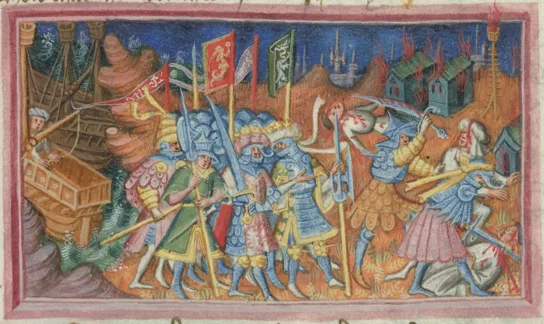
The adjective mattered. The writers of the 890s had lived through what followed and knew this was not one more fleet. The northern annals used by Symeon of Durham describe “a large assembly of the people from all quarters, that is to say, of the Danes and Frisians, and other pagan nations”, arriving “in an immense fleet, under their kings and dukes”,5Symeon of Durham, History of the Church of Durham, 2.6Written c. 1100–1130 at Durham, using older northern annals. Translation by J. Stevenson (1855)Read on archive.org ↗ and later Danish rule over half of England began with it. Modern historians stress the same point: the Great Army was not a single national force but an alliance of war bands, with several kings and many earls, joined over the years by new groups from Scandinavia, Frisia and Ireland.6D. M. Hadley and J. D. Richards, “The winter camp of the Viking Great Army, AD 872–3, Torksey, Lincolnshire”, Antiquaries Journal 96 (2016), p. 55Modern archaeological study of the army’s camp at Torksey (open access, CC BY)Read on Cambridge Core ↗
Horses from East Anglia
The army landed in East Anglia, the kingdom of King Edmund, roughly today’s Norfolk and Suffolk. It made camp for the winter, and the Chronicle adds two short phrases that explain much of what followed: the Danes were “soon horsed; and the inhabitants made peace with them”.7Anglo-Saxon Chronicle, 866Compiled c. 890 under King Alfred, within living memory of these years. Translation by J. Ingram (1823); its years begin in September, so 866 here is autumn 865Read on Project Gutenberg ↗ Asser says they “became in the main an army of cavalry”.8Asser, Life of King Alfred, ch. 21Written in 893 by Alfred’s Welsh adviser, a generation after the events. Translation by A. S. Cook (1906)Read on Project Gutenberg ↗ These were not cavalry in the later medieval sense; they rode to battle and fought on foot. But horses made the army fast. It could cross country between rivers, strike at royal centres far from its ships and get away before the local levies could gather.
The peace with the East Angles was a bargain, not a surrender. The Danes got food, horses and a safe winter; the East Angles were spared, for the moment. Four years later the same army returned, fought King Edmund and killed him, the subject of the next chapter but one. The chronicler Æthelweard, an English nobleman writing around 980 from a lost copy of the Chronicle, is the first to give the invaders a leader. “The fleets of the tyrant Hingwar”, he writes, “arrived in England from the north, and wintered among the East Angles”, took horses and made peace with their neighbours.9Æthelweard, Chronicle 4.2Written c. 980 by an ealdorman descended from King Alfred’s brother, from a lost copy of the Chronicle. Translation by J. A. Giles (1848)Read on Project Gutenberg ↗ Hingwar is the English form of the Norse name Ívarr, Ivar.
Northumbria divided
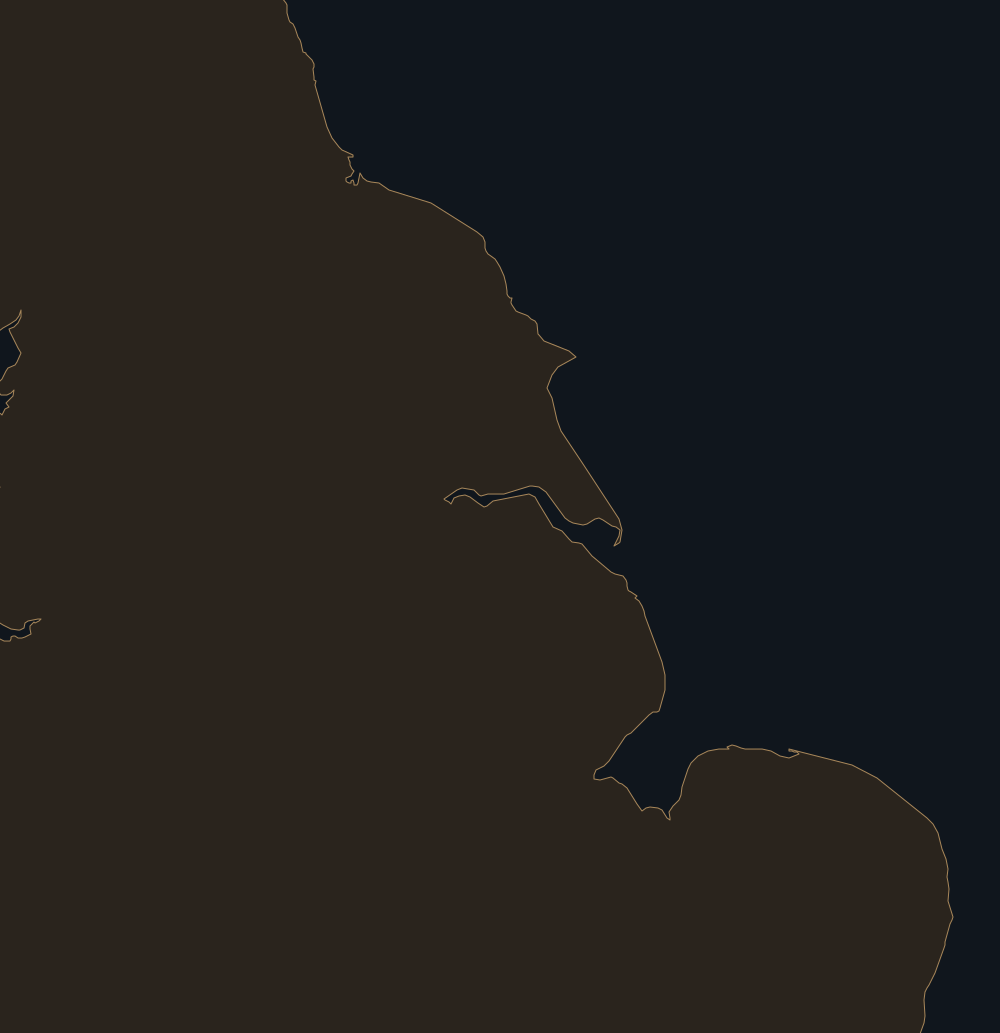
In the autumn of 866 the army rode north, crossed the Humber estuary and made for York, the chief city of Northumbria. Northumbria was the largest English kingdom, stretching from the Humber to the Firth of Forth, rich in monasteries and with the great school and minster of York, where the scholar Alcuin had been trained. It was also at war with itself.
The Chronicle explains: “there was much dissension in that nation among themselves; they had deposed their king Osbert, and had admitted Aella, who had no natural claim”.10Anglo-Saxon Chronicle, 867Compiled c. 890 under King Alfred, within living memory of these years. Translation by J. Ingram (1823); its years begin in September, so 866 here is autumn 865Read on Project Gutenberg ↗ Asser, copying and expanding the Chronicle, calls Ælla “a certain tyrant”, “not of royal birth”.11Asser, Life of King Alfred, ch. 27Written in 893 by Alfred’s Welsh adviser, a generation after the events. Translation by A. S. Cook (1906)Read on Project Gutenberg ↗ Osberht had ruled since about 849 or 850; Ælla seems to have taken power around 862 or 863, though Northumbrian dates of this period can be a year or two out.12Plummer, Two of the Saxon Chronicles Parallel, vol. 2, note on 867C. Plummer, notes to the Anglo-Saxon Chronicle (Oxford, 1899)Read on archive.org ↗ Æthelweard calls Ælla simply “an obscure person”.
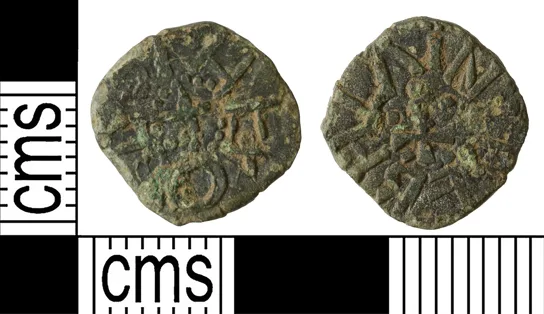
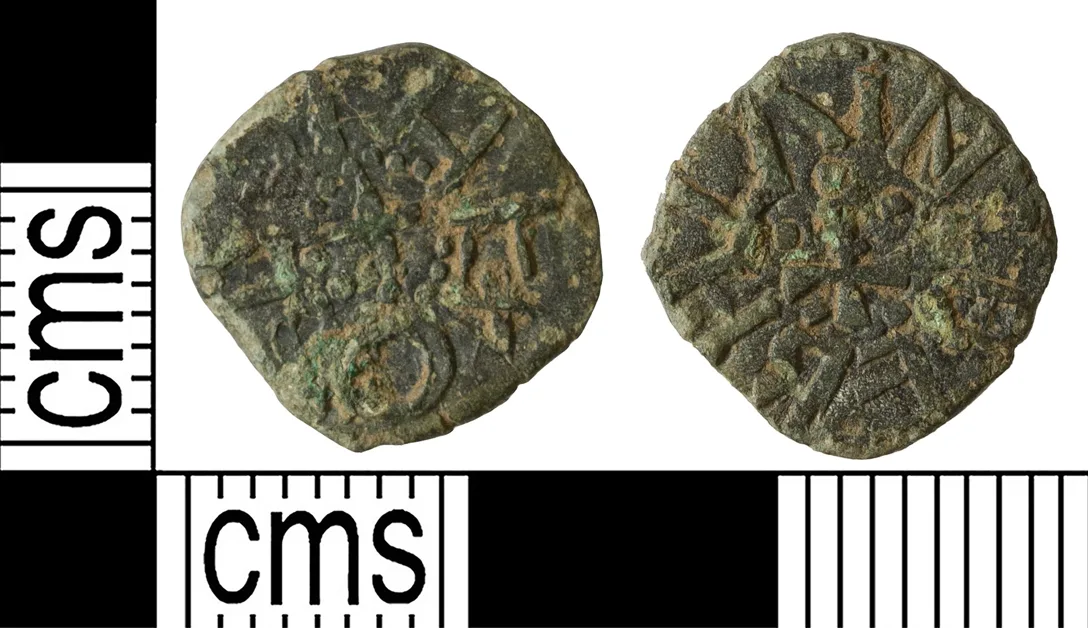
The church writers of Durham, two and a half centuries later, had their own view of the two kings. Osberht, they said, had seized two estates from the church of Saint Cuthbert, and Ælla four more. When both died at York they “paid the penalty for the injuries which they had previously inflicted upon the church of St. Cuthbert”.13Symeon of Durham, History of the Church of Durham, 2.6Written c. 1100–1130 at Durham, using older northern annals. Translation by J. Stevenson (1855)Read on archive.org ↗ Northumbrian coins of these years tell a quieter story of decline: the small stycas struck in Osberht’s name are of copper alloy, a sign of how far the kingdom’s coinage had been debased.
York falls, 1 November 866
The Danes took York on 1 November, the feast of All Saints. The date comes from the Durham writers, who preserved older northern annals: the pagan army, “after having taken York, upon the kalends of November”, spread over the whole country, “and filled all with blood and grief”.14Symeon of Durham, History of the Church of Durham, 2.6Written c. 1100–1130 at Durham, using older northern annals. Translation by J. Stevenson (1855)Read on archive.org ↗ They put it under the year 867, but the battle that followed is dated March 867, so the capture belongs to November 866. Symeon’s History of the Kings adds that the army “devastated the whole country as far Tynemouth”, the mouth of the river Tyne, and then returned to York.15Symeon of Durham, History of the Kings, 867Written c. 1100–1130 at Durham, using older northern annals. Translation by J. Stevenson (1855)Read on archive.org ↗
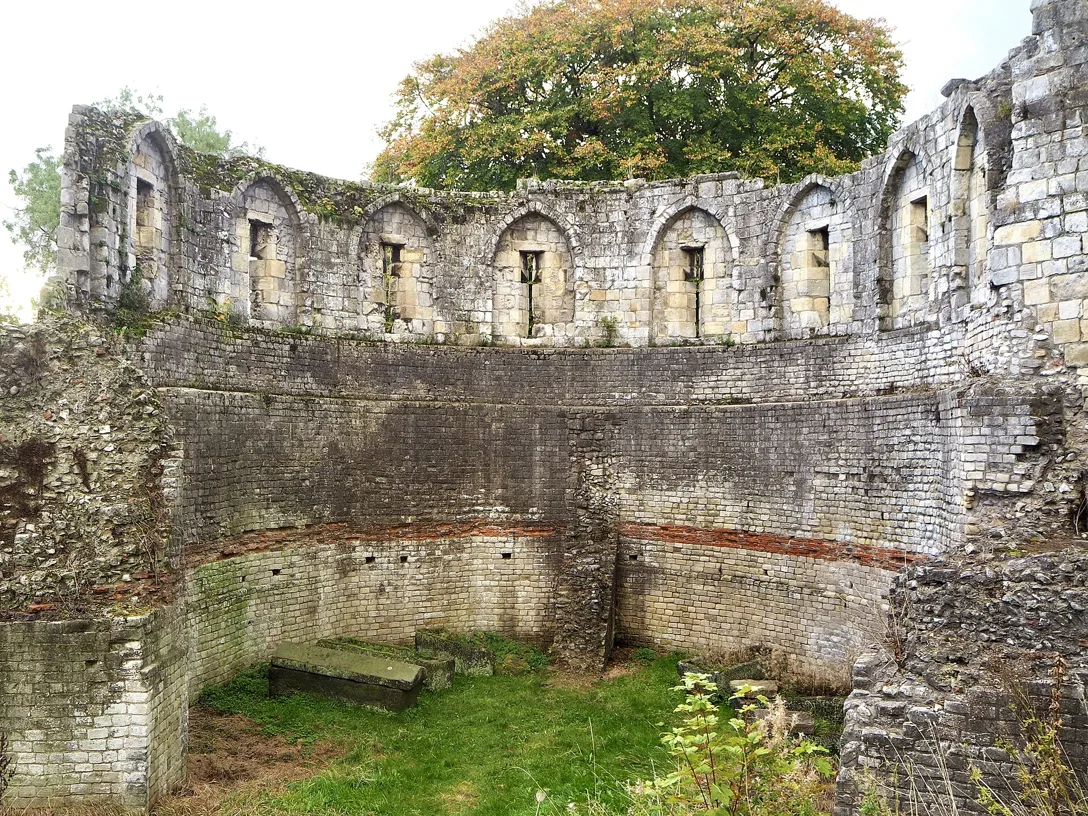
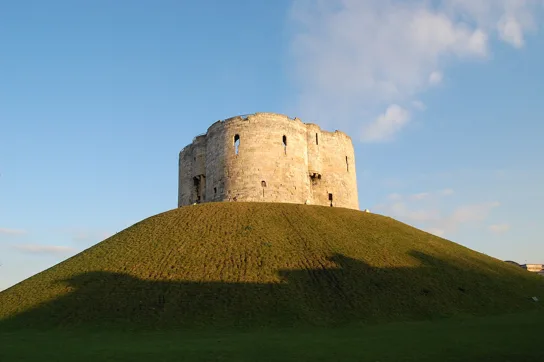
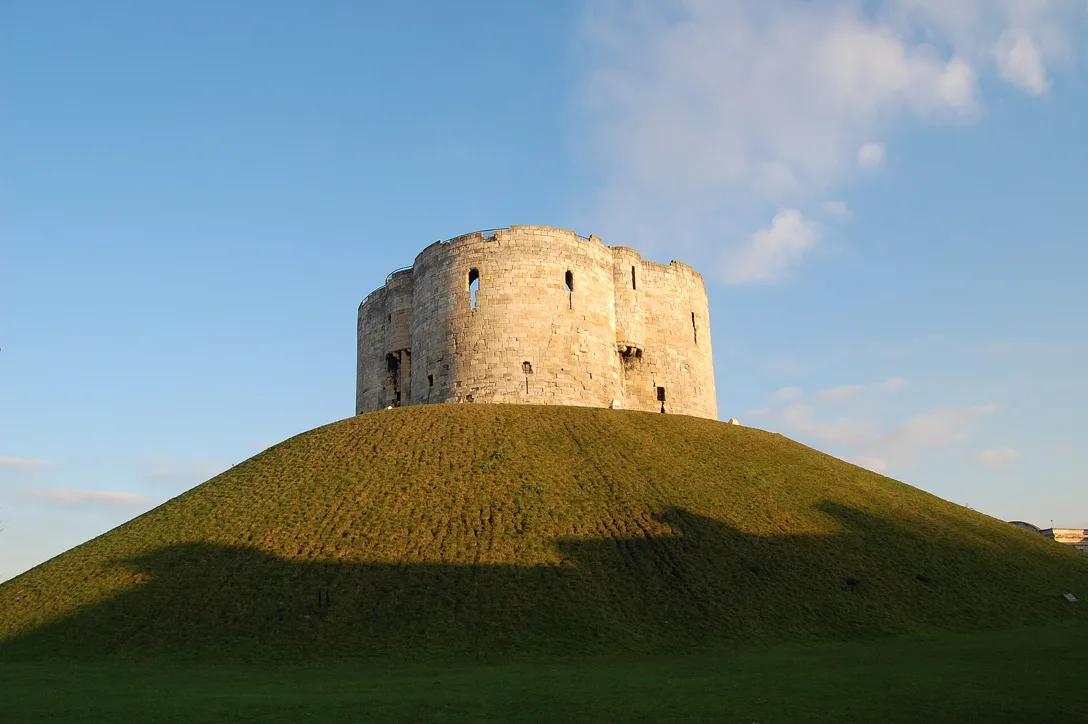
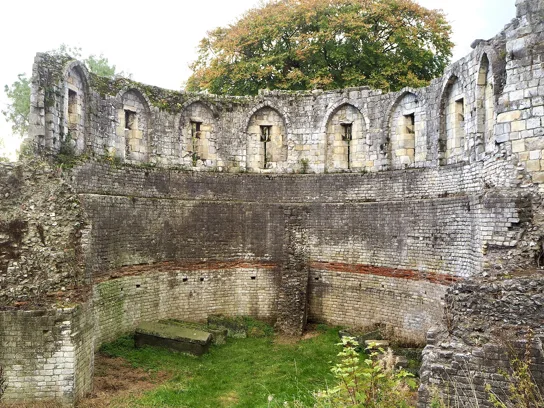
York was a prize. It had been a Roman legionary fortress, Eboracum, and in the 9th century it was a trading town on the Ouse with an archbishop, a minster and a royal residence. An Irish chronicle compiled in the 11th century from older material, the Fragmentary Annals of Ireland, says that when the Danes entered the city “much of every kind of riches was carried out of it, for it was wealthy at this time, and all the good people who were found within it were slain”.16Fragmentary Annals of Ireland, 866Compiled in the 11th century from 9th-century material, partly saga-like. Translation by J. O’Donovan (1860)Read on archive.org ↗ The Fragmentary Annals are partly literary and must be read with care, but here they agree with the English sources.
21 March 867: the battle at York
The loss of York brought the two Northumbrian kings together. Asser tells the story in most detail. “When the heathen approached, by divine providence, and the furtherance of the common weal by the nobles, that discord was a little appeased”, and Osberht and Ælla, “uniting their resources, and assembling an army, marched to the town of York”.18Asser, Life of King Alfred, ch. 27Written in 893 by Alfred’s Welsh adviser, a generation after the events. Translation by A. S. Cook (1906)Read on Project Gutenberg ↗ The Durham writers say the army was led by the two kings and eight earls.19Symeon of Durham, History of the Church of Durham, 2.6Written c. 1100–1130 at Durham, using older northern annals. Translation by J. Stevenson (1855)Read on archive.org ↗
At first the attack went well. The Danes fell back behind the walls, and the Northumbrians decided to follow them in and break down the wall, “and this they succeeded in doing, since the city at that time was not surrounded by firm or strong walls”.20Asser, Life of King Alfred, ch. 27Written in 893 by Alfred’s Welsh adviser, a generation after the events. Translation by A. S. Cook (1906)Read on Project Gutenberg ↗ The Roman defences had decayed. But once many of the attackers were inside, the Danes, “impelled by grief and necessity, made a fierce sally upon them, slew them, routed them, and cut them down, both within and without the walls”. Almost the whole Northumbrian force fell, “and both the kings were slain; the remainder, who escaped, made peace with the heathen”.21Asser, Life of King Alfred, ch. 27Written in 893 by Alfred’s Welsh adviser, a generation after the events. Translation by A. S. Cook (1906)Read on Project Gutenberg ↗
Symeon’s History of the Kings gives the date: “the twelfth of the kalends of April”, 21 March, “being the Friday before Palm Sunday”.22Symeon of Durham, History of the Kings, 867Written c. 1100–1130 at Durham, using older northern annals. Translation by J. Stevenson (1855)Read on archive.org ↗ Easter fell on 30 March in 867, so the day is consistent. The Chronicle confirms the outline in fewer words: they fought the army at York, broke into the town, “then was there an immense slaughter of the Northumbrians, some within and some without; and both the kings were slain on the spot”.23Anglo-Saxon Chronicle, 867Compiled c. 890 under King Alfred, within living memory of these years. Translation by J. Ingram (1823); its years begin in September, so 866 here is autumn 865Read on Project Gutenberg ↗
The Irish sources add one detail the English ones lack. The Fragmentary Annals say the Danes defeated the Saxons and killed their king “through the treachery and deceit of a young man of his own people”.24Fragmentary Annals of Ireland, 866Compiled in the 11th century from 9th-century material, partly saga-like. Translation by J. O’Donovan (1860)Read on archive.org ↗ Nothing else is known about this, and the Irish compiler may be dramatising. But it fits what the English writers say about a kingdom split between two kings.
A king under the Danes
The army did not make one of its own leaders king. Instead, Symeon says, “the aforesaid pagans appointed Egbert king under their own dominion; Egbert reigned for six years after, over the Northumbrians beyond the Tyne”.25Symeon of Durham, History of the Kings, 867Written c. 1100–1130 at Durham, using older northern annals. Translation by J. Stevenson (1855)Read on archive.org ↗ Ecgberht I was an Englishman, presumably from a noble family, who ruled with Danish consent and collected what the Danes demanded. Modern historians call him a puppet or client king; the Durham writers say the Danes “appointed” him “over such of the Northumbrians as survived”.26Symeon of Durham, History of the Church of Durham, 2.6Written c. 1100–1130 at Durham, using older northern annals. Translation by J. Stevenson (1855)Read on archive.org ↗ He was driven out by his own people in 872 and died in exile in Mercia.
The army itself moved on. In 867–868 it wintered at Nottingham in Mercia, where King Æthelred of Wessex and his brother Alfred came to help the Mercians, without a real battle.27Anglo-Saxon Chronicle, 868Compiled c. 890 under King Alfred, within living memory of these years. Translation by J. Ingram (1823); its years begin in September, so 866 here is autumn 865Read on Project Gutenberg ↗ In 868–869 it went back to York “and sat there a year”.28Anglo-Saxon Chronicle, 869Compiled c. 890 under King Alfred, within living memory of these years. Translation by J. Ingram (1823); its years begin in September, so 866 here is autumn 865Read on Project Gutenberg ↗ Then it rode into East Anglia and killed King Edmund. In 876 part of the army returned to Northumbria for good: “Healfden divided the land of the Northumbrians; so that they became afterwards their harrowers and plowers”.29Anglo-Saxon Chronicle, 876Compiled c. 890 under King Alfred, within living memory of these years. Translation by J. Ingram (1823); its years begin in September, so 866 here is autumn 865Read on Project Gutenberg ↗ The kingdom of York, ruled by Scandinavian kings for most of the next eighty years, began here.
The Northumbrian church survived, but not untouched. In 872 the Northumbrians drove out both Ecgberht and their archbishop, Wulfhere, a sign that the archbishop had worked with the king the Danes had chosen. Further north, when Halfdan’s army returned in 875, Bishop Eardwulf of Lindisfarne and Abbot Eadred took the body of Saint Cuthbert from the island and “wandered about for seven years” before the community settled at Chester-le-Street.30Symeon of Durham, History of the Kings, 875Written c. 1100–1130 at Durham, using older northern annals. Translation by J. Stevenson (1855)Read on archive.org ↗ The monastery that had suffered the first great raid of 793 was finally abandoned because of the Great Army.
Who led the army?
Popular history says the Great Army was led by three sons of Ragnar Lothbrok: Ivar the Boneless, Halfdan and Ubba. The sources of the time are much thinner. The Chronicle names no leader in 865, 866 or 867. Its first names come in 870, in a version of the Chronicle copied at Canterbury around 1100, which says that “the leaders who slew the king”, Edmund of East Anglia, “were Hingwar and Hubba”.31Anglo-Saxon Chronicle, 870Compiled c. 890 under King Alfred, within living memory of these years. Translation by J. Ingram (1823); its years begin in September, so 866 here is autumn 865Read on Project Gutenberg ↗ The sentence is not in the oldest manuscript but only in that late copy, the bilingual manuscript F, as Charles Plummer pointed out in his edition of 1899.32Plummer, Two of the Saxon Chronicles Parallel, vol. 2, note on 866C. Plummer, notes to the Anglo-Saxon Chronicle (Oxford, 1899)Read on archive.org ↗ Halfdan first appears in 871, as one of two kings, with Bagsecg, who led the army against Wessex.33Anglo-Saxon Chronicle, 871Compiled c. 890 under King Alfred, within living memory of these years. Translation by J. Ingram (1823); its years begin in September, so 866 here is autumn 865Read on Project Gutenberg ↗
The one link between the three men comes from the Chronicle’s entry for 878. That winter, while Alfred was hiding at Athelney, “the brother of Ingwar and Healfden landed in Wessex, in Devonshire, with three and twenty ships”, and was killed with eight hundred men; there the English took “the war-flag, which they called the RAVEN”.34Anglo-Saxon Chronicle, 878Compiled c. 890 under King Alfred, within living memory of these years. Translation by J. Ingram (1823); its years begin in September, so 866 here is autumn 865Read on Project Gutenberg ↗ The brother is not named. Later writers, from the 12th-century Anglo-Norman poet Geffrei Gaimar onwards, call him Ubba. So the evidence of the time shows that Ivar and Halfdan were brothers and that they had another brother. It says nothing about their father.
The Chronicle also shows that the brothers were not the only leaders, and perhaps not the most important ones. At Ashdown in 871 it lists, on the Danish side, two kings, Bagsecg and Halfdan, and the earls Sidroc the Elder, Sidroc the Younger, Osbern, Fræna and Harald, all of whom except Halfdan were killed that day. In 875 the army split, and three other kings, Guthrum, Oscetel and Anwend, led the larger part south. The Great Army was a coalition of war leaders, each with his own following; the sons of one famous father are a simplification of later storytellers.
There is another trail, in Ireland. From the 850s the Irish annals name a leader of the “Foreigners” of Dublin called Ímar, the Irish form of Ívarr. He disappears from the Irish record between 864 and 870, exactly the years when an Ivar was leading the army in England. In 870 Ímar and Amlaíb (Olaf) besieged Dumbarton, the fortress of the Britons of Strathclyde, for four months,35Annals of Ulster, 870Kept year by year in Irish monasteries: contemporary. Translation by W. M. Hennessy (1887), who prints this entry under 869Read on archive.org ↗ and in 871 they came back to Dublin “with two hundred ships”, bringing “a great multitude of men, English, Britons, and Picts”, as captives.36Annals of Ulster, 871Kept year by year in Irish monasteries: contemporary. Translation by W. M. Hennessy (1887), who prints this entry under 870Read on archive.org ↗ In 873 the Annals of Ulster record his death: “Imhar, King of the Norsemen of all Ireland and Britain, ended life.”37Annals of Ulster, 873Kept year by year in Irish monasteries: contemporary. Translation by W. M. Hennessy (1887), who prints this entry under 872Read on archive.org ↗
Many historians now think Ímar of Dublin and Ivar of the Great Army were one man. Clare Downham, in her study of the dynasty that later ruled both Dublin and York, argues that they were identical; others, including Alex Woolf, accept the link, while some remain unconvinced, because no source says so directly.38C. Downham, Viking Kings of Britain and Ireland: The Dynasty of Ívarr to A.D. 1014 (Edinburgh, 2007), pp. 64–67Modern study that argues the English Ivar and the Irish Ímar were the same manFind in a library (WorldCat) ↗ The main objection is Æthelweard, who says that Ivar died in 870, “the same year” as King Edmund, three years before Ímar’s death in Ireland.39Æthelweard, Chronicle 4.2Written c. 980 by an ealdorman descended from King Alfred’s brother, from a lost copy of the Chronicle. Translation by J. A. Giles (1848)Read on Project Gutenberg ↗ Æthelweard was writing a century later and may have been wrong, but the two dates cannot both be right. If the identification is right, the army that took York had a leader with one foot in Ireland, and the Irish title “king of all Ireland and Britain” described a sea-borne power reaching from Dublin to York.
How big was the army?
No source of the time gives a number for the Great Army. That has left room for a long debate. In 1962 the historian Peter Sawyer argued that the Viking armies were small. The word here could mean a band of a few dozen men, the Chronicle exaggerated the size of fleets, and keeping a large army in the field for years was hardly possible, so the armies cannot have numbered more than a few hundred men.40D. M. Hadley and J. D. Richards, “The winter camp of the Viking Great Army, AD 872–3, Torksey, Lincolnshire”, Antiquaries Journal 96 (2016), p. 25Modern archaeological study of the army’s camp at Torksey (open access, CC BY)Read on Cambridge Core ↗ Nicholas Brooks replied in 1979 that the Chronicle’s figures for fleets are restrained and match Frankish, Irish and Spanish ones, and that the places the Great Army chose for its winter bases would make no sense unless the armies “were numbered in thousands rather than hundreds”.41D. M. Hadley and J. D. Richards, “The winter camp of the Viking Great Army, AD 872–3, Torksey, Lincolnshire”, Antiquaries Journal 96 (2016), p. 26Modern archaeological study of the army’s camp at Torksey (open access, CC BY)Read on Cambridge Core ↗
Archaeology has now moved the debate. The winter camp at Repton, excavated in the 1970s and 1980s, enclosed only about 0.4 hectares, which seemed to support a small army. Then, between 2011 and 2015, Dawn Hadley and Julian Richards traced the camp of 872–873 at Torksey on the Trent through finds made by metal-detectorists and their own fieldwork. It covered about 55 hectares, larger than any Scandinavian town of the period. They concluded that the camp’s population “numbered in the thousands, not the hundreds”, and that if a fleet of 50 to 100 ships carried 30 to 50 warriors each, “an army within the range 1,500–5,000 is not implausible”.42D. M. Hadley and J. D. Richards, “The winter camp of the Viking Great Army, AD 872–3, Torksey, Lincolnshire”, Antiquaries Journal 96 (2016), p. 59Modern archaeological study of the army’s camp at Torksey (open access, CC BY)Read on Cambridge Core ↗ The camp held warriors, but also traders and craftworkers, and probably women and children.
The Repton mass grave points the same way. Under a mound beside the church archaeologists found the bones of at least 264 people, most of them men aged 18 to 45. For decades the radiocarbon dates seemed too early for the Great Army. In 2018 Cat Jarman and her colleagues showed that the old dates had been thrown off by the fish in the diet of the dead, and that, once corrected, all of them fit “a single late ninth-century event”, the army’s winter at Repton in 873–874.43C. L. Jarman, M. Biddle, T. Higham and C. Bronk Ramsey, “The Viking Great Army in England: new dates from the Repton charnel”, Antiquity 92 (2018), p. 183Modern radiocarbon study of the Repton mass grave (open access, CC BY)Read on Cambridge Core ↗ The army that took York was probably a few thousand strong, possibly more, and grew as new bands joined it.
It was not an army of men only. Frankish writers and the Chronicle itself, in its entries for the 890s, mention women and children travelling with Viking armies, and Hadley and Richards point out that “women and children may also have been present” at Torksey, where tools for spinning and sewing were found among the weapons and weights.44D. M. Hadley and J. D. Richards, “The winter camp of the Viking Great Army, AD 872–3, Torksey, Lincolnshire”, Antiquaries Journal 96 (2016), p. 54Modern archaeological study of the army’s camp at Torksey (open access, CC BY)Read on Cambridge Core ↗ Women are also among the dead in the Repton mass grave and in the army’s cremation cemetery at Heath Wood, a few kilometres away. A force that stayed in a foreign country for more than ten years, moving its camp every winter, was a travelling community, and that helps explain how it could turn so quickly into a population of settlers.
Revenge for Ragnar? The snake pit and the blood eagle
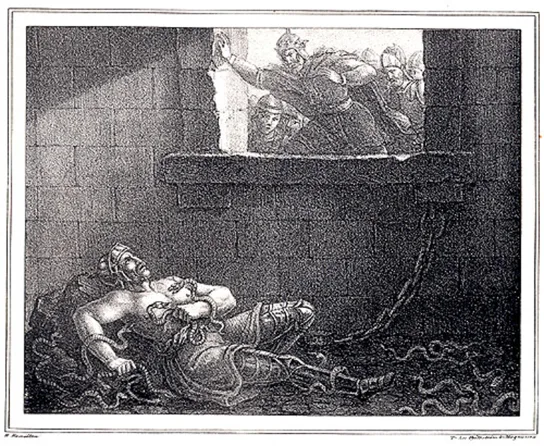
Why did the Great Army come? The sources of the time give no reason beyond plunder, land and the weakness of the English kingdoms. Later stories gave a better one: revenge. In the version best known today, Ragnar Lothbrok invaded Northumbria with too few men, was captured by King Ælla and thrown into a pit of snakes; as he died he warned that his sons would avenge him, and they came to avenge him, took York and killed Ælla with the “blood eagle”, cutting his back open in the shape of an eagle.
This story is first told in full by Saxo Grammaticus, a Danish churchman writing around 1200, more than three centuries after the battle of York. In Saxo, Ælla’s men are killed in Ireland; Ragnar attacks him, is taken, and “his guilty limbs were given to serpents to devour”.45Saxo Grammaticus, Gesta Danorum 9Written c. 1200 in Denmark, three and a half centuries after the events. Translation by O. Elton (1894)Read on Project Gutenberg ↗ His sons Sigurd and Björn later capture Ælla, and “ordered the figure of an eagle to be cut in his back”, then “salted the mangled flesh”.46Saxo Grammaticus, Gesta Danorum 9Written c. 1200 in Denmark, three and a half centuries after the events. Translation by O. Elton (1894)Read on Project Gutenberg ↗ Before he dies, Saxo’s Ragnar says: “If the porkers knew the punishment of the boar-pig, surely they would break into the sty”.47Saxo Grammaticus, Gesta Danorum 9Written c. 1200 in Denmark, three and a half centuries after the events. Translation by O. Elton (1894)Read on Project Gutenberg ↗ The Icelandic Ragnars saga and the Tale of Ragnar’s Sons, written in the 13th century, tell it again with more detail: in the Tale, it is Ivar who has the eagle carved and Ælla’s ribs cut from the spine.
England had its own revenge story, and it is completely different. Roger of Wendover, a monk of St Albans writing around 1230, says that “a certain man named Lothbroc”, of the royal family of the Danes, was blown across the sea in a small boat while hawking and landed in Norfolk, where King Edmund of East Anglia received him with honour.48Roger of Wendover, Flowers of History, 870Written c. 1230 at St Albans, about 360 years after the events. Translation by J. A. Giles (1849)Read on archive.org ↗ Edmund’s jealous huntsman Berne murdered him; when Berne was set adrift in the same boat and reached Denmark, he “falsely asserted that their father had chanced to land in England” and been killed on Edmund’s orders, so Lothbroc’s sons, Hinguar and Hubba, invaded East Anglia to punish an innocent king.49Roger of Wendover, Flowers of History, 870Written c. 1230 at St Albans, about 360 years after the events. Translation by J. A. Giles (1849)Read on archive.org ↗ In this version Lothbrok dies in East Anglia, not York, and the victim of revenge is Edmund, not Ælla. Two late legends, one Danish and one English, explain the same invasion in incompatible ways. That is a good reason to doubt both.
That stanza is the heart of the modern debate. In 1984 Roberta Frank argued that it meant only that Ivar had cut Ælla down and left him lying face down for the eagles, a common image in skaldic poetry for killing an enemy, and that later saga writers, no longer understanding the old poetic language, turned it into a torture ritual, adding details borrowed from Christian stories of martyrs.51R. Frank, “Viking atrocity and skaldic verse: the rite of the blood-eagle”, English Historical Review 99 (1984), pp. 332–343Modern study arguing that the blood eagle grew out of a misreading of skaldic verseRead on Oxford Academic ↗ Others have defended the ritual as a real form of sacrifice. In 2022 a team of a historian and anatomists asked a narrower question: could the procedure described in the sagas be carried out with Viking-Age tools? They concluded that it could, and that the victim would have died within moments, but they did not claim that it ever happened.52L. J. Murphy, H. R. Fuller, P. L. T. Willan and M. A. Gates, “An anatomy of the blood eagle: the practicalities of Viking torture”, Speculum 97 (2022), pp. 1–39Modern study by a historian and anatomists of whether the saga descriptions could be carried outRead on the publisher’s site ↗
What the sources of the time say is plainer. Ælla and Osberht were killed in battle at York on 21 March 867, together with most of their army: the Chronicle, Asser and the Irish annals all agree on that. None of them mentions Ragnar, a snake pit or a ritual killing, and none says that the army came to avenge anyone’s father. The revenge story may contain a memory of a real bitterness between Danes and Northumbrians, but as history it is legend, written down three to four centuries after the event.
A kingdom won, and remembered as revenge
No member of the Great Army left a written account. What survives from their side is archaeology and later memory. The finds from the winter camps show what the army was: a moving town of warriors, traders and craftsmen, weighing silver on small scales, cutting up brooches and arm-rings as money, melting metal and repairing ships. At Torksey archaeologists have found 124 Arabic silver coins, dirhams, brought from the Islamic world through the trade routes of the east, beside English and Frankish coins.53D. M. Hadley and J. D. Richards, “The winter camp of the Viking Great Army, AD 872–3, Torksey, Lincolnshire”, Antiquaries Journal 96 (2016), p. 43Modern archaeological study of the army’s camp at Torksey (open access, CC BY)Read on Cambridge Core ↗ For the men in the army, York was not a holy city sacked but a rich town and a kingdom to rule.
And they did rule it. Within a decade of the battle Halfdan was sharing out Northumbrian land among his men, and for much of the next eighty years York was ruled by Scandinavian kings, who minted coins, made deals with the archbishops and, in time, became Christians. The Norse word for the city, Jórvík, comes from the English Eoforwic. When the skalds of the 11th century and the saga writers of the 13th looked back, they remembered the conquest as the deed of famous brothers avenging a famous father. Ari Þorgilsson, the first historian of Iceland, writing around 1125, dated the settlement of his own country by the year when “Ívarr, son of Ragnarr loðbrók, had St Edmund, king of the Angles, killed”, and Icelandic families, Ari’s among them, traced their descent from Ragnar’s sons.54Ari Þorgilsson, Íslendingabók, ch. 1Written c. 1122–1133, the first history of Iceland. Translation by S. Grønlie (Viking Society, 2006; copyrighted, quoted briefly)Read at the Viking Society ↗ The Great Army had become a family story.
How close is our evidence?
The fall of York is reported by sources that were close to it: the Irish annals in the same year, the Chronicle and Asser within about twenty-five years, by men who had lived through the wars. They agree on the essentials: the landing in East Anglia, the horses, the divided Northumbrians, the failed attack and the death of both kings. The exact days come from northern annals that survive only inside Symeon of Durham’s 12th-century histories, but they fit the calendar. The names of the leaders appear a century later, and the story of Ragnar, the snake pit and the blood eagle three and four centuries later. The further a source is from 867, the more it knows, and the less it should be trusted.
- Anglo-Saxon Chronicle, 865
- Anglo-Saxon Chronicle, 866
- Asser, Life of King Alfred, ch. 21
- A. S. Cook, note 51 to Asser, ch. 21 (1906)
- Symeon of Durham, History of the Church of Durham, 2.6
- D. M. Hadley and J. D. Richards, “The winter camp of the Viking Great Army, AD 872–3, Torksey, Lincolnshire”, Antiquaries Journal 96 (2016), p. 55
- Anglo-Saxon Chronicle, 866
- Asser, Life of King Alfred, ch. 21
- Æthelweard, Chronicle 4.2
- Anglo-Saxon Chronicle, 867
- Asser, Life of King Alfred, ch. 27
- Plummer, Two of the Saxon Chronicles Parallel, vol. 2, note on 867
- Symeon of Durham, History of the Church of Durham, 2.6
- Symeon of Durham, History of the Church of Durham, 2.6
- Symeon of Durham, History of the Kings, 867
- Fragmentary Annals of Ireland, 866
- Annals of Ulster, 867
- Asser, Life of King Alfred, ch. 27
- Symeon of Durham, History of the Church of Durham, 2.6
- Asser, Life of King Alfred, ch. 27
- Asser, Life of King Alfred, ch. 27
- Symeon of Durham, History of the Kings, 867
- Anglo-Saxon Chronicle, 867
- Fragmentary Annals of Ireland, 866
- Symeon of Durham, History of the Kings, 867
- Symeon of Durham, History of the Church of Durham, 2.6
- Anglo-Saxon Chronicle, 868
- Anglo-Saxon Chronicle, 869
- Anglo-Saxon Chronicle, 876
- Symeon of Durham, History of the Kings, 875
- Anglo-Saxon Chronicle, 870
- Plummer, Two of the Saxon Chronicles Parallel, vol. 2, note on 866
- Anglo-Saxon Chronicle, 871
- Anglo-Saxon Chronicle, 878
- Annals of Ulster, 870
- Annals of Ulster, 871
- Annals of Ulster, 873
- C. Downham, Viking Kings of Britain and Ireland: The Dynasty of Ívarr to A.D. 1014 (Edinburgh, 2007), pp. 64–67
- Æthelweard, Chronicle 4.2
- D. M. Hadley and J. D. Richards, “The winter camp of the Viking Great Army, AD 872–3, Torksey, Lincolnshire”, Antiquaries Journal 96 (2016), p. 25
- D. M. Hadley and J. D. Richards, “The winter camp of the Viking Great Army, AD 872–3, Torksey, Lincolnshire”, Antiquaries Journal 96 (2016), p. 26
- D. M. Hadley and J. D. Richards, “The winter camp of the Viking Great Army, AD 872–3, Torksey, Lincolnshire”, Antiquaries Journal 96 (2016), p. 59
- C. L. Jarman, M. Biddle, T. Higham and C. Bronk Ramsey, “The Viking Great Army in England: new dates from the Repton charnel”, Antiquity 92 (2018), p. 183
- D. M. Hadley and J. D. Richards, “The winter camp of the Viking Great Army, AD 872–3, Torksey, Lincolnshire”, Antiquaries Journal 96 (2016), p. 54
- Saxo Grammaticus, Gesta Danorum 9
- Saxo Grammaticus, Gesta Danorum 9
- Saxo Grammaticus, Gesta Danorum 9
- Roger of Wendover, Flowers of History, 870
- Roger of Wendover, Flowers of History, 870
- M. Townend (ed.), “Sigvatr Þórðarson, Knútsdrápa 1”, in D. Whaley (ed.), Poetry from the Kings’ Sagas 1 (Turnhout, 2012), p. 651
- R. Frank, “Viking atrocity and skaldic verse: the rite of the blood-eagle”, English Historical Review 99 (1984), pp. 332–343
- L. J. Murphy, H. R. Fuller, P. L. T. Willan and M. A. Gates, “An anatomy of the blood eagle: the practicalities of Viking torture”, Speculum 97 (2022), pp. 1–39
- D. M. Hadley and J. D. Richards, “The winter camp of the Viking Great Army, AD 872–3, Torksey, Lincolnshire”, Antiquaries Journal 96 (2016), p. 43
- Ari Þorgilsson, Íslendingabók, ch. 1