In the autumn of 844 a Viking fleet sailed up the Guadalquivir and took Seville, one of the great cities of Muslim Spain. Fifteen years later another fleet went further still: through the Straits of Gibraltar, to Morocco, the Balearic Islands, southern France and Italy. Christian annals, Arab historians and an Irish saga each saw a piece of these voyages. Later tradition gave the second one famous leaders, Hastein and Björn Ironside. The sources show how much of that is record and how much is story.
Where this chapter fits
By the 840s Viking fleets had been raiding the coasts of Britain, Ireland and the Frankish kingdoms for half a century. In the previous chapter a fleet of 120 ships went up the Seine and was paid 7,000 pounds of silver to leave Paris in 845. The Frankish rivers were the raiders’ main roads. From the mouth of the Loire or the Garonne it was only a short step south along the Bay of Biscay to the Iberian peninsula, and to a different world.
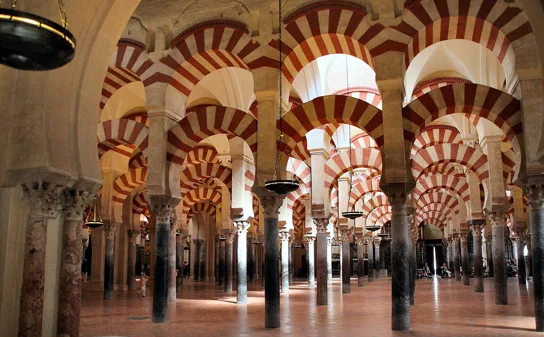
Most of that peninsula was then al-Andalus, the emirate of the Umayyad dynasty, ruled from Córdoba. Its emir in 844 was Abd al-Rahman II (822–852). Al-Andalus was richer, more populous and more urban than any Christian kingdom of the West: Córdoba and Seville were large cities with mosques, markets and paved streets. In the far north, between the mountains and the sea, lay the small Christian kingdom of Asturias, whose king Ramiro I (842–850) ruled Galicia and the Cantabrian coast. The Arab writers called the newcomers al-Majus, and the Christian chroniclers of Asturias called them Lordomani or Nordomanni, “Northmen”.
Two raids in this period are well recorded. The first, in 844, struck Lisbon, Cádiz and Seville. The second, from 859 to 861 or 862, went round Spain into the Mediterranean and was remembered for centuries. Both are told mainly by writers on the receiving end: the Frankish court annalists, who knew the fleets from the Loire and the Seine, and the historians of al-Andalus, most of whom wrote one to four centuries later. No Scandinavian of the time wrote anything about either voyage.
From the Garonne to Lisbon, 844
The Annals of St-Bertin, the royal annals of the West Frankish court, give the start of the story. In 844 Northmen sailed up the Garonne as far as Toulouse, plundering on the way. On their return some of them attacked Galicia and were lost, partly to the crossbowmen sent against them and partly to a storm at sea. Others went on to “the further parts of Spain”, where they fought the Saracens for a long time before they were beaten and turned back.1Annals of St-Bertin, s.a. 844Frankish royal annals, written up year by year at the time (Prudentius of Troyes, then Hincmar of Reims). Latin, ed. G. Waitz (1883); our own paraphraseRead on archive.org ↗ The annalist wrote within a year or two of the events, but from far away; he knew only the outline.
The Asturian side is told in the chronicles of the Christian north, written later in the same century. They say that a people “never before seen in our parts” attacked the coast in the reign of Ramiro I.2Asturian chronicles, in J. Stefánsson, “The Vikings in Spain” (1909), p. 32Spanish chronicle of the late 9th century, from the Christian kingdom of Asturias. English version in Saga-Book of the Viking Club 6 (1908–09), pp. 31–46Read the scan (Viking Society) ↗ Ramiro gathered men from Galicia and Asturias and beat them near the old Roman lighthouse at A Coruña, the Tower of Hercules, and the chronicle claims that seventy of their ships were burnt. That number may be inflated; the Viking fleet left and sailed south along the coast of what is now Portugal.
Here the Arabic sources take over. Ibn Idhari, who wrote about 1300 but copied historians of the 10th century, quotes a letter sent to Córdoba by the governor of Lisbon, Wahb Allah ibn Hazm: the Majus had appeared off his coast with 54 ships and as many smaller boats.3Ibn Idhari, in J. Stefánsson, “The Vikings in Spain” (1909), p. 35Ibn Idhari wrote in Morocco about 1300, copying 10th-century historians. English version in Saga-Book of the Viking Club 6 (1908–09), pp. 31–46Read the scan (Viking Society) ↗ Al-Nuwayri, writing in Egypt in the 14th century from older Andalusian books, says they were first seen at Lisbon in the month of Dhu al-Hijja, that is between 20 August and 17 September 844, and stayed thirteen days, fighting several battles with the Muslims. Then they sailed on to the south.

The sack of Seville
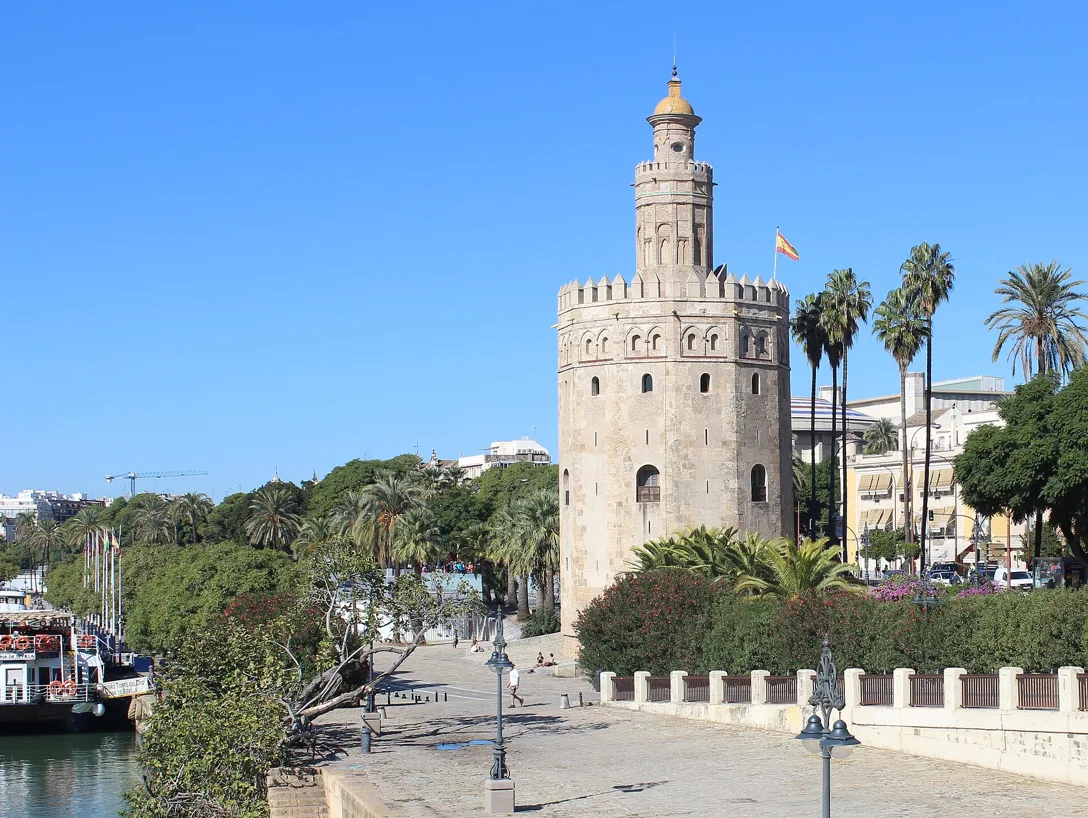
From Lisbon the fleet sailed to Cádiz and to Medina Sidonia, and then to the mouth of the Guadalquivir. Ibn Idhari gives the route in one sentence: “After landing at Lisbon, they sailed to Cadiz, then to Sidona, then to Seville.”4Ibn Idhari, in J. Stefánsson, “The Vikings in Spain” (1909), p. 35Ibn Idhari wrote in Morocco about 1300, copying 10th-century historians. English version in Saga-Book of the Viking Club 6 (1908–09), pp. 31–46Read the scan (Viking Society) ↗ He puts the fleet at about eighty ships, and says the sea looked as if it were filled with dark red birds, a picture of the sails. The river was navigable for sea-going ships as far as Seville, about 80 km inland, and the city had no strong walls.
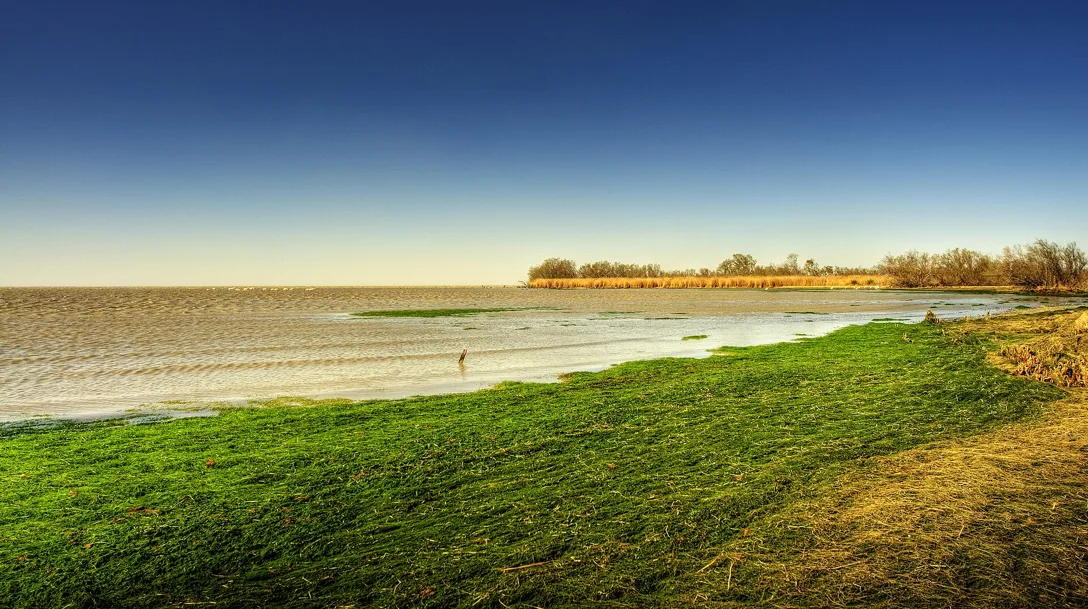
The raiders set up a base on an island in the marshes of the lower river, which the Arabic texts call Qabtil, and stayed there three days. Al-Nuwayri gives the dates. On 25 September 844 they camped twelve parasangs from Seville; on 29 September they beat a local force that came out against them; and on 1 October they took the city, after its people had come out to fight and lost.5al-Nuwayri, in J. Stefánsson, “The Vikings in Spain” (1909), p. 36Al-Nuwayri (1284–1332) wrote in Egypt, about 450 years later, from older Andalusian sources. English version in Saga-Book of the Viking Club 6 (1908–09), pp. 31–46Read the scan (Viking Society) ↗ Only the citadel held out. The raiders spent about a week in Seville, by Ibn Idhari’s account, plundering and taking captives, and used it as a base for raids into the countryside.
Ibn al-Qutiyya, the earliest of the Andalusian historians, who died in Córdoba in 977 and whose family lived in Seville, adds a story he had heard from old men of the city. Abd al-Rahman had just finished building the great mosque of Seville. The Majus shot burning arrows at its roof, and parts of the roof fell in, but the mosque did not burn: they piled wood and reeds in the hall and tried again, and a young man of great beauty came out of the prayer niche and drove them away. The miracle is a pious story, but the scorch marks on the roof beams were, he says, still to be seen in his own day.

The emir strikes back: the battle at Talyata
The emir’s response was slow but thorough. Abd al-Rahman gave command of the cavalry to his chief minister, the hajib Isa ibn Shuhayd, and ordered the governors of the provinces to send their men to Córdoba. The army gathered on the Aljarafe, the high ground west of Seville. Musa ibn Musa, the head of the Banu Qasi family of the Ebro valley, who was often in revolt against the emir, came with his own troops and kept his own camp. Ibn al-Qutiyya gives the plan. Scouts reported that the Majus sent out raiding parties every day, towards Lacant, Córdoba and Morón. The commanders set an ambush at a village south-east of Seville; at dawn a lookout in the village church tower signalled that a large band, which he numbers at 16,000, was marching on Morón. The Muslims let it pass, cut it off from the city and destroyed it.
The decisive battle was fought at Talyata, near the ruins of Roman Italica, a few kilometres from Seville. Ibn Idhari dates it to 25 Safar 230, that is 11 November 844. The Muslim army had been reinforced from Córdoba and used war engines against the ships. By the Arab accounts the raiders lost about five hundred men in the fighting, and thirty of their ships were burnt. Many prisoners were executed; the writers say they were hanged in Seville and from the palm trees of Talyata. Al-Nuwayri adds a second fight on 17 November, in which the raiders lost about five hundred more men and four ships.6al-Nuwayri, in J. Stefánsson, “The Vikings in Spain” (1909), p. 37Al-Nuwayri (1284–1332) wrote in Egypt, about 450 years later, from older Andalusian sources. English version in Saga-Book of the Viking Club 6 (1908–09), pp. 31–46Read the scan (Viking Society) ↗
Modern historians accept the outline: a sack of Seville in early October 844 and a heavy defeat of the raiders in November. The numbers are another matter. Ibn al-Qutiyya’s 16,000 men for one raiding column would mean a larger army than any Viking force recorded anywhere in the 9th century, and the figures of the later writers do not agree with each other. Ann Christys, who has studied all the sources, notes that the details grew in the retelling and that even the names of the commanders may have been added later; for her the safest summary is that the Vikings raided Lisbon and Seville.7A. Christys, Vikings in the South: Voyages to Iberia and the Mediterranean (2015), pp. 33–45Modern study of all the sources for the Vikings in Iberia and the Mediterranean (Bloomsbury Academic). Ibn al-Qutiyya is the earliest and most important source; much detail in the later writers is doubtfulView at the publisher ↗
Prisoners, ransom and retreat
The survivors took to their ships, joined by the bands that had been raiding up-river, and sailed down the Guadalquivir while people on the banks cursed them and threw stones. Ibn al-Qutiyya then records a remarkable exchange. About a league below Seville the raiders shouted to the people on the bank to leave them in peace if they wanted to buy back prisoners. The stones stopped, and most of the captives were ransomed; the Majus “refused both gold and silver” and took only clothes and food.8Ibn al-Qutiyya, in J. Stefánsson, “The Vikings in Spain” (1909), p. 34Ibn al-Qutiyya (died 977) wrote in Córdoba about a century after the raid. English version in Saga-Book of the Viking Club 6 (1908–09), pp. 31–46Read the scan (Viking Society) ↗ A fleet far from home, short of supplies and facing winter, had more use for food than for coin.
The fleet did not leave Spain at once. It sailed to Niebla on the Río Tinto, west of Seville, then raided the district of Medina Sidonia again, and went on to Ossonoba (Faro), Beja and Lisbon before it was last seen. “After this,” the account ends, “no more was heard of them, and men’s minds were quiet.” In Córdoba the emir had the victory announced in the provinces and wrote to the Berber Sanhaja of Tangier in Morocco, an ally across the straits, that God had helped him destroy the Majus.9Ibn Idhari, in J. Stefánsson, “The Vikings in Spain” (1909), p. 36Ibn Idhari wrote in Morocco about 1300, copying 10th-century historians. English version in Saga-Book of the Viking Club 6 (1908–09), pp. 31–46Read the scan (Viking Society) ↗
The longer-lasting result was a navy. Ibn al-Qutiyya says that after the raid the emir “built an arsenal in Seville, ordered ships to be built”, and recruited sailors from the coasts of al-Andalus on high pay, equipping them with war engines and naphtha, a burning liquid like the Byzantines’ “Greek fire”.10Ibn al-Qutiyya, in J. Stefánsson, “The Vikings in Spain” (1909), p. 34Ibn al-Qutiyya (died 977) wrote in Córdoba about a century after the raid. English version in Saga-Book of the Viking Club 6 (1908–09), pp. 31–46Read the scan (Viking Society) ↗ Seville also got new walls. Modern historians see this as the start of a real Umayyad fleet, which mattered when the Vikings came back in 859 and again in the 960s.11H. Kennedy, Muslim Spain and Portugal: A Political History of al-Andalus (1996), p. 47Modern history of al-Andalus (Longman; reprinted by Routledge 2014)View on Google Books ↗
The embassy of al-Ghazal: history or legend?
One of the most charming stories in all Viking history follows the raid of 844, and it may not be history at all. It comes from Ibn Dihya, a scholar from Valencia who died in Cairo in 1235, nearly four hundred years later. He says he took it from Tammam ibn Alqama, a courtier who died in 896, who had heard it from the poet Yahya ibn al-Hakam, nicknamed al-Ghazal, “the gazelle”, for his good looks. After the defeat at Seville, the story goes, the king of the Majus sent envoys to make peace, and Abd al-Rahman sent al-Ghazal back with them.
Al-Ghazal sailed to a great island in the ocean, three days from the mainland, with running water and gardens, among many other islands of the Majus. He refused to bow to the king, sliding into the low doorway of the hall feet first. He flattered the queen, Nud, with a poem, and visited her so often that his companions grew worried, until she told him that jealousy was not the custom of her people. He came home after twenty months by way of Santiago de Compostela.
Older historians took this as an eyewitness account. Kendrick in 1930 thought al-Ghazal had most probably visited the Danish king Horik, though he allowed that the island might be Ireland and the king the Viking leader Turgeis; even then he noted that nothing in Andalusian history suggests that the mission had any result.12Kendrick, A History of the Vikings, p. 202T. D. Kendrick, A History of the Vikings (1930). An older survey; dated in placesRead on archive.org ↗ Modern scholars are much more doubtful. Sara Pons-Sanz has shown that the text cannot be tied clearly to the Vikings and reads more like court literature than a report; Neil Price concludes that the embassy probably did not happen.13S. Pons-Sanz, “Whom did al-Ghazāl meet? An exchange of embassies between the Arabs from al-Andalus and the Vikings”, Saga-Book 28 (2004), pp. 5–28Modern article (Viking Society for Northern Research): the embassy story cannot be shown to be about the Vikings, and is probably literaryRead the record ↗14N. Price, “The Vikings in Spain, North Africa and the Mediterranean”, in S. Brink and N. Price (eds), The Viking World (2008), p. 464Modern survey chapter (Routledge). The al-Ghazal embassy probably did not take placeView on Google Books ↗
The great raid of 859
Fifteen years later the Majus came back, and this time they did not stop at Seville. Ibn Idhari says that in the year 245 of the Hijra, which began on 8 April 859, they appeared off the western coasts “with 62 ships”.15Ibn Idhari, in J. Stefánsson, “The Vikings in Spain” (1909), p. 40Ibn Idhari wrote in Morocco about 1300, copying 10th-century historians. English version in Saga-Book of the Viking Club 6 (1908–09), pp. 31–46Read the scan (Viking Society) ↗ The Asturian chronicles report that they raided Galicia again under King Ordoño I and were driven off. The Annals of St-Bertin place the fleet’s origin among the Danish pirates of the Frankish rivers: they sailed “a long way round the sea, between Spain and Africa”, and then into the Rhône.16Annals of St-Bertin, s.a. 859Frankish royal annals, written up year by year at the time (Prudentius of Troyes, then Hincmar of Reims). Latin, ed. G. Waitz (1883); our own paraphraseRead on archive.org ↗
The coast was now watched. Ibn Idhari says that Muslim ships patrolled from the Mediterranean coast to Galicia, and that two ships of the vanguard were chased by the guard ships and taken in a harbour in the district of Beja, in southern Portugal: they held silver, gold, prisoners and food. The rest of the fleet reached the mouth of the Guadalquivir, but an army under the hajib Isa ibn al-Hasan was sent against it, and it did not go up the river. The navy built after 844 had done its work.
Instead the fleet sailed on, round the southern tip of Spain. It took Algeciras, on the bay opposite Gibraltar, and burnt its great mosque. Then, for the first time that any record shows, a Viking fleet entered the Mediterranean. Keary in 1891 called the passage of the Pillars of Hercules a deed no northern fleet had done before, and that is still the usual view.17Keary, The Vikings in Western Christendom, ch. XIIC. F. Keary, The Vikings in Western Christendom (1891). A Victorian narrative from the annals; datedRead on archive.org ↗
Nekor and the “blue men”
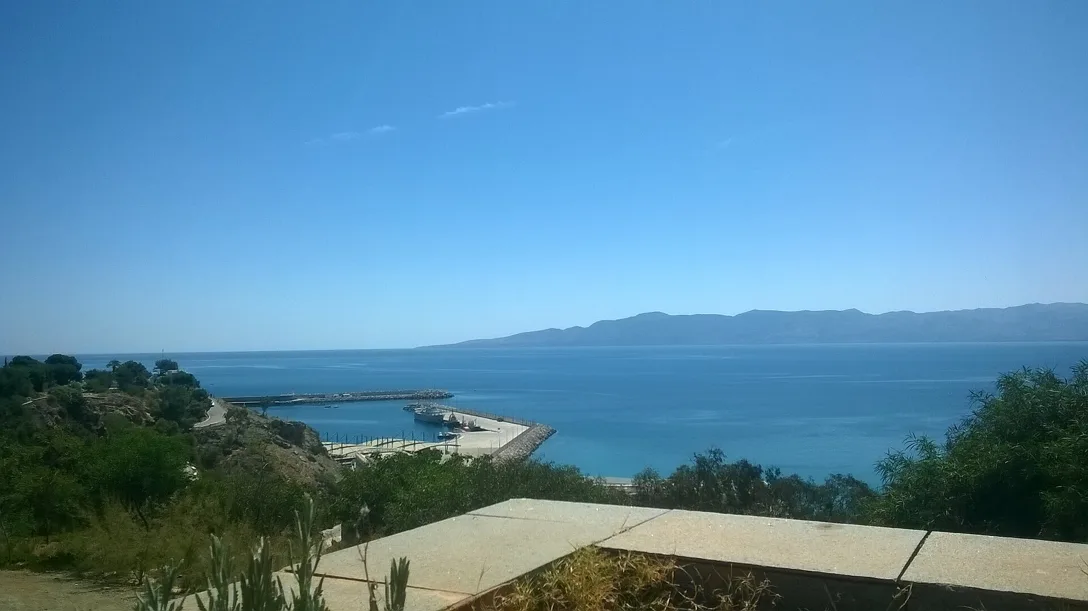
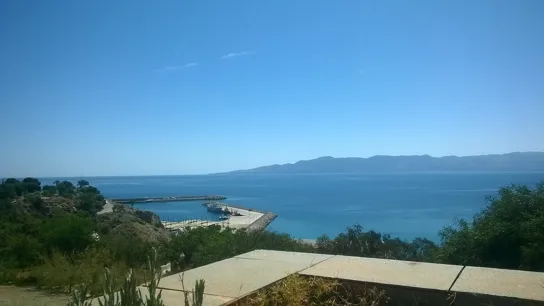
From Algeciras the raiders crossed to Africa. Their target was Nekor, the capital of a small Muslim emirate on the Mediterranean coast of what is now northern Morocco, near today’s Al Hoceima. The geographer al-Bakri, writing about 1068, tells what happened: the Majus landed at Nekor, took the town, plundered it, and carried off its people, except those who escaped by flight. Among the captives were two women of the ruling family, Ama al-Rahman and Khanula, daughters of Waqif ibn Mu’tasim ibn Salih; the emir of Córdoba, Muhammad I, paid their ransom. The raiders stayed eight days in Nekor.18al-Bakri, in J. Stefánsson, “The Vikings in Spain” (1909), p. 41Al-Bakri (died 1094), geographer, wrote about 230 years later. English version in Saga-Book of the Viking Club 6 (1908–09), pp. 31–46Read the scan (Viking Society) ↗
Al-Bakri dates the landing to the year 244, a year earlier than Ibn Idhari’s date for the fleet’s arrival in Spain, and the Arabic writers disagree about the order of events. Ibn al-Qutiyya, for instance, says the fleet went to Nekor after leaving Seville and captured an ancestor of the Banu Salih, whom the emir ransomed. He then claims that this expedition lasted fourteen years and reached Italy and Alexandria, which no other source supports. The ransom by the emir of Córdoba shows how closely the small emirate of Nekor was tied to the Umayyads.
The Morocco raid is also remembered in Ireland, in a source of a very different kind. The Fragmentary Annals of Ireland, compiled in the 11th century from older material and full of saga-like episodes, tell of two sons of a Norse king called Ragnall son of Albdann. Driven from Lochlann, their homeland, they sailed across the “Cantabrian Sea” to Spain, through the straits into the Mediterranean, and fought “the Mauritani” in Africa. One brother, the annals say, cut off the hand of the king of Mauritania in the battle, and the Moors fled. Then the Norsemen carried off many captives to Ireland: “these are the blue men [of Erin]”, the annalist explains, for the Moors are black men.19Fragmentary Annals of Ireland (Three Fragments), pp. 159–163Irish annals compiled in the 11th century from 9th-century material, partly saga-like. Translation by J. O’Donovan (1860)Read on archive.org ↗
The Irish account is late and literary, and it names leaders who appear nowhere else: Ragnall son of Albdann is not Ragnar Lothbrok, though some Victorian writers merged the two. But it shows that the raid on Morocco was known in the Viking world of the Irish Sea, and that African captives were brought north. The Old Norse word blámenn, “blue” or “black men”, used in the sagas for Africans, echoes the same idea. The captives were almost certainly meant for the slave markets.
The Balearics, Roussillon and the Camargue
After Nekor the fleet went back to the Spanish coast. Ibn Idhari says it landed in the province of Tudmir, around Murcia, and advanced to the fortress of Orihuela; then it sailed for France and spent the winter there. The Chronicle of Alfonso III adds that they attacked the Balearic Islands, Majorca, Formentera and Minorca, and killed the people there. Frankish and later sources record raids in Roussillon, in the far south of France, and some say they took Narbonne.
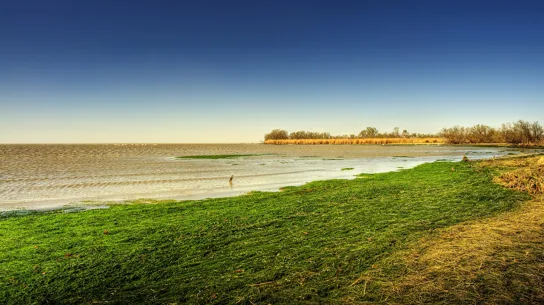
The winter camp is recorded by the Annals of St-Bertin, written at the time. The Danes entered the Rhône, plundered some cities and monasteries, and set up their base on the island called the Camargue, in the delta at the river’s mouth.20Annals of St-Bertin, s.a. 859Frankish royal annals, written up year by year at the time (Prudentius of Troyes, then Hincmar of Reims). Latin, ed. G. Waitz (1883); our own paraphraseRead on archive.org ↗ The Camargue was a world of marsh, lagoons and sandbanks, easy to defend and close to the rich old Roman cities of Provence, Arles and Nîmes. In 860, the same annals say, the Danes in the Rhône raided up the river as far as Valence and then went back to their island.
The southern French coast had its own raiders. Muslim corsairs from al-Andalus and North Africa had used the same coasts for years; in 849, the annals record, “Moors and Saracens” sacked the Italian town of Luna and ravaged the shore as far as Provence.21Annals of St-Bertin, s.a. 849Frankish royal annals, written up year by year at the time (Prudentius of Troyes, then Hincmar of Reims). Latin, ed. G. Waitz (1883); our own paraphraseRead on archive.org ↗ The Viking fleet of 859 was not the only danger in these waters, and later writers did not always keep the two apart.
Pisa and Luna: “mistaken for Rome”
In 860 the fleet left the Rhône for Italy. The Annals of St-Bertin give one short sentence: the Danes who had been on the Rhône went to Italy and took Pisa and other cities, plundering and laying them waste. That is the only contemporary record of the Vikings in Italy, and it is enough to show that the fleet reached Tuscany.
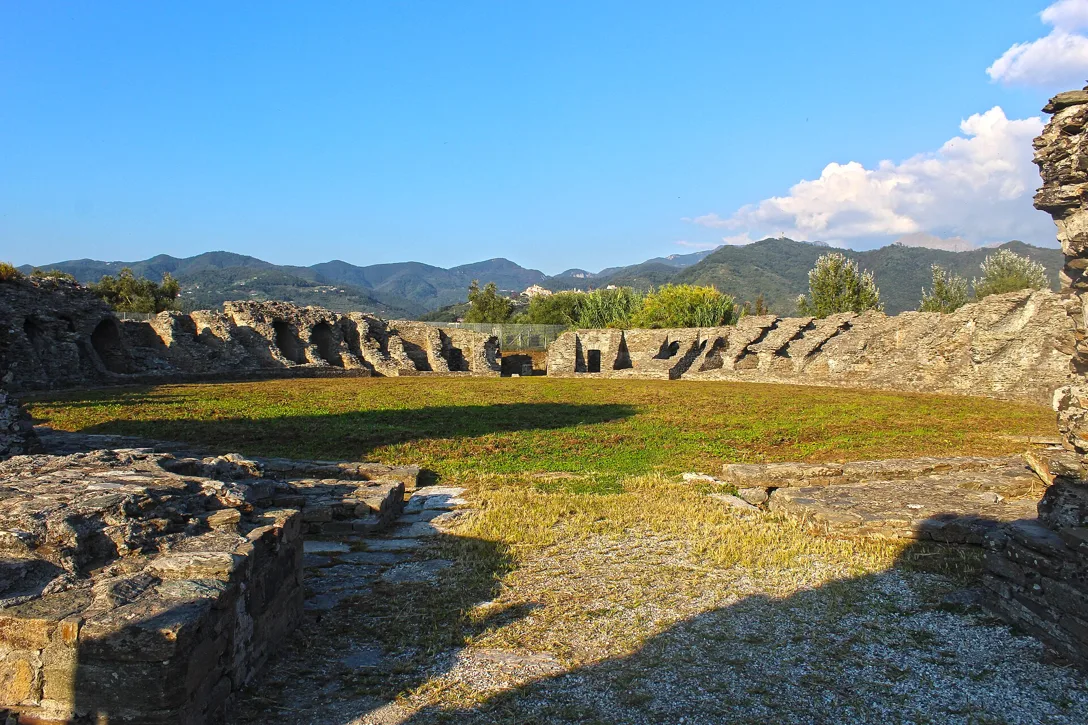
The famous story belongs to a later age. About 1015 Dudo of Saint-Quentin, writing a history of the dukes of Normandy, told how the Viking chief Hastingus sailed to conquer Rome but came instead to Luna, a town on the coast of Liguria, and thought it was Rome. Its walls were too strong, so he pretended to be dying and asked for baptism; then his men announced his death and asked to bury him in the town. The coffin was carried in with a procession of mourners, Hastingus leapt out sword in hand, and his men took the town.22Dudo of St Quentin, History of the Normans, tr. E. Christiansen (1998), book 1Modern translation (Boydell). Dudo wrote c. 1015, about 150 years after the raidFind in a library (WorldCat) ↗ Around 1070 William of Jumièges repeated the story and made the expedition the work of Björn and his tutor Hastingus. Keary in 1891 retold it at length and called it “the story preserved in Norman tradition”.23Keary, The Vikings in Western Christendom, ch. XIIC. F. Keary, The Vikings in Western Christendom (1891). A Victorian narrative from the annals; datedRead on archive.org ↗
Modern historians treat the Luna trick as legend. It was written down about 150 years after the event by a writer who wanted to make the Normans’ ancestors look cunning and terrible, and the same trick of a feigned death and a coffin full of warriors is told of other leaders in other places, among them Robert Guiscard and Harald Hardrada. Kendrick even wondered whether the attack on Luna was really the work of Saracen pirates, who had sacked the town in 849.24Kendrick, A History of the Vikings, p. 209T. D. Kendrick, A History of the Vikings (1930). An older survey; dated in placesRead on archive.org ↗ Pisa, at least, is attested at the time. Whether the raiders also took Luna, or Fiesole as some later texts say, cannot be checked. Several Arabic and Spanish sources say the fleet went on to “Greece”, Alexandria or Byzantine lands; Christys thinks that possible but unproven.25A. Christys, Vikings in the South: Voyages to Iberia and the Mediterranean (2015), pp. 47–64Modern study of all the sources for the Vikings in Iberia and the Mediterranean (Bloomsbury Academic). The 859–861 raid is told mainly by Ibn Hayyan (11th century) and later writers; where the fleet went after Italy is uncertainView at the publisher ↗

The way home, 861–862
The return journey is told mainly by the Arabic writers, and it was costly. Ibn Idhari says that by the time the fleet came back to the coast of Spain it had already lost more than forty ships in a storm, and when it fought the emir Muhammad’s fleet off the coast of Medina Sidonia it lost two more, “laden with great riches”.26Ibn Idhari, in J. Stefánsson, “The Vikings in Spain” (1909), p. 41Ibn Idhari wrote in Morocco about 1300, copying 10th-century historians. English version in Saga-Book of the Viking Club 6 (1908–09), pp. 31–46Read the scan (Viking Society) ↗ Al-Nuwayri also says that four ships were lost in that sea fight, two burnt and two captured with their cargo.27al-Nuwayri, in J. Stefánsson, “The Vikings in Spain” (1909), p. 41Al-Nuwayri (1284–1332) wrote in Egypt, about 450 years later, from older Andalusian sources. English version in Saga-Book of the Viking Club 6 (1908–09), pp. 31–46Read the scan (Viking Society) ↗ If the fleet left with 62 ships, only about twenty can have come home.
One more raid is reported on the way. According to al-Nuwayri the Majus went all the way to Pamplona, in the Pyrenees, and took prisoner its ruler García Íñiguez; he was ransomed for 90,000 dinars, or 70,000 according to Ibn Khaldun.28al-Nuwayri, in J. Stefánsson, “The Vikings in Spain” (1909), p. 41Al-Nuwayri (1284–1332) wrote in Egypt, about 450 years later, from older Andalusian sources. English version in Saga-Book of the Viking Club 6 (1908–09), pp. 31–46Read the scan (Viking Society) ↗ Where and how they reached Pamplona, far inland, is not clear: perhaps up the Ebro from the Mediterranean, perhaps from the Bay of Biscay. The capture of García is also known from Spanish sources, but the ransom figures are late and should be read as an indication of a large sum, not an exact one.
The Annals of St-Bertin record the end. In spring 862 the Danes of the Seine went down to the sea and split into several fleets; most of them went to Brittany, “and they were joined by those who had been in Spain”.29Annals of St-Bertin, s.a. 862Frankish royal annals, written up year by year at the time (Prudentius of Troyes, then Hincmar of Reims). Latin, ed. G. Waitz (1883); our own paraphraseRead on archive.org ↗ After two and a half or three years the survivors of the great raid were back in the Frankish rivers they had left. Their voyage had circled the Iberian peninsula and reached Italy, but by the Arab accounts it cost two thirds of the fleet.
Björn Ironside: what the sources really say
Today the great raid is usually told as the voyage of Björn Ironside and Hastein. None of the sources written at the time names its leaders. The Annals of St-Bertin speak only of “Danish pirates”; the Arab writers of the Majus; the Irish annals of two sons of Ragnall son of Albdann. The names come from Normandy, more than a century later. Christys calls the identification of the leaders a modern extrapolation from unreliable sources.30A. Christys, Vikings in the South: Voyages to Iberia and the Mediterranean (2015), pp. 60–61Modern study of all the sources for the Vikings in Iberia and the Mediterranean (Bloomsbury Academic). The leaders of the 859–861 raid are not named by any contemporary sourceView at the publisher ↗
There was a real Viking leader called Björn in the Seine valley at about this time. The Annals of St-Bertin say that in 858 “Berno, leader of a part of the pirates who were on the Seine”, came to King Charles the Bald at his palace at Verberie, put himself in the king’s hands and swore loyalty to him.31Annals of St-Bertin, s.a. 858Frankish royal annals, written up year by year at the time (Prudentius of Troyes, then Hincmar of Reims). Latin, ed. G. Waitz (1883); our own paraphraseRead on archive.org ↗ Berno is a Latin form of the Norse name Björn, and a Norman chronicle names a Berno with a Sidroc on the Seine in 855. These are the only times a Björn appears in a source of the time. Nothing in them links him with Spain, with Hastein or with Ragnar. Older historians such as Mawer simply assumed that “Berno … was Björn Ironside”.32Mawer, The Vikings, ch. 4A. Mawer, The Vikings (1913). A short older survey; dated in placesRead on Project Gutenberg ↗
The first writer to tie the name to the raid is William of Jumièges, a monk of Normandy, about 1070. In his Deeds of the Dukes of the Normans he calls the leader Bier Costae ferreae, “Björn Ironside”, son of King Lothbroc. By Danish custom, he says, the younger sons of the king were sent abroad to win land by the sword, so Björn was sent off with his tutor Hastingus. William gives him the voyage round Spain and the trick at Luna, and says that on the way home Björn was shipwrecked on the English coast, escaped to Frisia and died there.33E. M. C. van Houts (ed. and tr.), The Gesta Normannorum Ducum of William of Jumièges, Orderic Vitalis and Robert of Torigni, vol. 1 (1992), book 1Modern edition and translation (Oxford Medieval Texts). William wrote c. 1070Find in a library (WorldCat) ↗ William wrote two centuries after the events, building on Dudo, and his Björn has no confirmed facts beyond the name.
The Scandinavian tradition is later again. Saxo Grammaticus, writing in Denmark about 1200, makes Björn one of the sons of Ragnar Lodbrok and explains the nickname: after he cut down many enemies in a fight without being wounded, he “gained from the strength of his sides, which were like iron, a perpetual name (Ironsides)”.34Saxo Grammaticus, Gesta Danorum, book 9Written c. 1200–1210 in Denmark, three and a half centuries after the events; mostly legend. Translation by O. Elton (1894)Read on Project Gutenberg ↗ Saxo gives him the rule of Sweden, and the 13th- and 14th-century Icelandic sagas, such as the Tale of Ragnar’s Sons, make him king at Uppsala and an ancestor of later Swedish kings. Modern scholars treat this family of sons as a later literary construction that gathered real and legendary Vikings around the figure of Ragnar.35R. McTurk, Studies in Ragnars saga loðbrókar and its Major Scandinavian Analogues (1991)Modern study of the Ragnar legend and how his “sons” were collected from different traditions (Medium Ævum Monographs)Find in a library (WorldCat) ↗
Hastein, at least, is a real figure. Under the name Hasting he appears in the Frankish annals from the 860s on the Loire, and in the Anglo-Saxon Chronicle as a leader of the great Viking army that attacked Alfred’s England in 892–896. That he was on the Mediterranean raid is first said by Dudo, and is possible but not proven. The story of Björn Ironside, then, rests on one Frankish entry with no link to Spain and on Norman and Scandinavian writers of the 11th to 14th centuries. It is best told as what later centuries believed.
Silver, captives and a long way home
Not one line written by the raiders themselves survives about these voyages. There is no runestone for Seville and no skaldic poem about the Camargue. Everything said about the crews comes from people who feared or fought them. What the sources do allow is a guess at what the raiders wanted, from what they did. At Seville they took captives and offered them back for ransom; off Beja the captured ships held gold, silver and prisoners; at Nekor two women of the ruling family were ransomed by the emir; in Ireland men remembered African captives brought home. Captives meant ransom or sale, and the trade in people was a large part of the Viking economy.
The raiders also came looking for a place to winter, as the fleets on the Frankish rivers did. On the Seine they had the island of Oissel, on the Loire the island near Nantes; in the south they chose the island of Qabtil in the Guadalquivir and the Camargue. Ibn al-Qutiyya’s story that they refused gold and silver at Seville and took only clothes and food shows a fleet thinking about the winter ahead.36Ibn al-Qutiyya, in J. Stefánsson, “The Vikings in Spain” (1909), p. 34Ibn al-Qutiyya (died 977) wrote in Córdoba about a century after the raid. English version in Saga-Book of the Viking Club 6 (1908–09), pp. 31–46Read the scan (Viking Society) ↗ Ibn al-Qutiyya himself names no leader of the Majus, and neither does any other Arab writer.
The Norse memory of these voyages, when it appears, is two or three centuries later and comes through Normandy and the sagas. By then the crews had become the companions of famous kings’ sons, Rome had replaced Pisa as the goal, and Björn had become a son of Ragnar and a king of Sweden. The Old Norse words for the south, Serkland, “land of the Saracens”, and blámenn for Africans, show that the Mediterranean world was known in the north, but they do not take us back to 859.
How close is our evidence?
Only the Frankish annals were written at the time, and they are brief and distant. The Arab historians knew the country and the city of Seville, but the earliest of them wrote about 130 years after 844, and the fullest accounts survive only in compilations of about 1300. The Irish annals and the Norman writers add colour, names and stories, and most of what made the raids famous, the leaders, the coffin at Luna, the city mistaken for Rome, comes from them. A careful history keeps to what the annals and the earliest Arab writers agree on: two fleets, a sack of Seville in 844, a defeat at Talyata, and a second voyage that reached Morocco, the Rhône and Pisa before limping home in 862.
- Annals of St-Bertin, s.a. 844
- Asturian chronicles, in J. Stefánsson, “The Vikings in Spain” (1909), p. 32
- Ibn Idhari, in J. Stefánsson, “The Vikings in Spain” (1909), p. 35
- Ibn Idhari, in J. Stefánsson, “The Vikings in Spain” (1909), p. 35
- al-Nuwayri, in J. Stefánsson, “The Vikings in Spain” (1909), p. 36
- al-Nuwayri, in J. Stefánsson, “The Vikings in Spain” (1909), p. 37
- A. Christys, Vikings in the South: Voyages to Iberia and the Mediterranean (2015), pp. 33–45
- Ibn al-Qutiyya, in J. Stefánsson, “The Vikings in Spain” (1909), p. 34
- Ibn Idhari, in J. Stefánsson, “The Vikings in Spain” (1909), p. 36
- Ibn al-Qutiyya, in J. Stefánsson, “The Vikings in Spain” (1909), p. 34
- H. Kennedy, Muslim Spain and Portugal: A Political History of al-Andalus (1996), p. 47
- Kendrick, A History of the Vikings, p. 202
- S. Pons-Sanz, “Whom did al-Ghazāl meet? An exchange of embassies between the Arabs from al-Andalus and the Vikings”, Saga-Book 28 (2004), pp. 5–28
- N. Price, “The Vikings in Spain, North Africa and the Mediterranean”, in S. Brink and N. Price (eds), The Viking World (2008), p. 464
- Ibn Idhari, in J. Stefánsson, “The Vikings in Spain” (1909), p. 40
- Annals of St-Bertin, s.a. 859
- Keary, The Vikings in Western Christendom, ch. XII
- al-Bakri, in J. Stefánsson, “The Vikings in Spain” (1909), p. 41
- Fragmentary Annals of Ireland (Three Fragments), pp. 159–163
- Annals of St-Bertin, s.a. 859
- Annals of St-Bertin, s.a. 849
- Dudo of St Quentin, History of the Normans, tr. E. Christiansen (1998), book 1
- Keary, The Vikings in Western Christendom, ch. XII
- Kendrick, A History of the Vikings, p. 209
- A. Christys, Vikings in the South: Voyages to Iberia and the Mediterranean (2015), pp. 47–64
- Ibn Idhari, in J. Stefánsson, “The Vikings in Spain” (1909), p. 41
- al-Nuwayri, in J. Stefánsson, “The Vikings in Spain” (1909), p. 41
- al-Nuwayri, in J. Stefánsson, “The Vikings in Spain” (1909), p. 41
- Annals of St-Bertin, s.a. 862
- A. Christys, Vikings in the South: Voyages to Iberia and the Mediterranean (2015), pp. 60–61
- Annals of St-Bertin, s.a. 858
- Mawer, The Vikings, ch. 4
- E. M. C. van Houts (ed. and tr.), The Gesta Normannorum Ducum of William of Jumièges, Orderic Vitalis and Robert of Torigni, vol. 1 (1992), book 1
- Saxo Grammaticus, Gesta Danorum, book 9
- R. McTurk, Studies in Ragnars saga loðbrókar and its Major Scandinavian Analogues (1991)
- Ibn al-Qutiyya, in J. Stefánsson, “The Vikings in Spain” (1909), p. 34
- al-Nuwayri, in J. Stefánsson, “The Vikings in Spain” (1909), p.: 36
- Ibn Idhari, in J. Stefánsson, “The Vikings in Spain” (1909), p.: 35, 36, 40
- Ibn al-Qutiyya, in J. Stefánsson, “The Vikings in Spain” (1909), p.: 33, 34, 41
- Ibn Dihya, in J. Stefánsson, “The Vikings in Spain” (1909), p.: 37, 38
- Fragmentary Annals of Ireland (Three Fragments), pp.: 159–163
- Annals of St-Bertin, s.a.: 860