In March 845 a fleet of about 120 ships sailed up the Seine. Its men hanged their prisoners in sight of the Frankish army, walked into an empty Paris on Easter Sunday and plundered the abbey of Saint-Germain. King Charles the Bald paid them 7,000 pounds of silver to leave. Their leader was a Dane the Frankish monks called Reginheri or Ragenarius, in Norse Ragnar. He is the only Ragnar of the Viking Age who can be dated by writers of his own time, and almost everything they say about him comes from the people he robbed.
Where this chapter fits
The first Viking raids on the Frankish kingdoms in the 790s and 800s were small and scattered. Charlemagne had guarded his coasts with fleets and watch-posts, and his son Louis the Pious kept the Danes busy with diplomacy and with a Danish ally, the exiled king Harald. That system broke in the 830s. Louis faced revolts by his own sons, and after his death in 840 the sons fought each other until the Treaty of Verdun in 843 split the empire three ways: Lothar took the middle kingdom, Louis “the German” the east, and the youngest, Charles the Bald, the west, roughly today’s France.
The raiders used the civil war well. In May 841 Danish pirates came up the Seine to Rouen, “raging with plunder, sword and fire”, killed or captured monks and townspeople, and burned or ransomed the monasteries along the river.1Annals of St-Bertin, 841Written year by year at the West Frankish court, this part by Prudentius (later bishop of Troyes): contemporary. Latin text ed. G. Waitz (1883)Read on archive.org ↗ In 842 they surprised the trading town of Quentovic on the Channel coast at dawn. In 843 another fleet stormed Nantes on the Loire, killed the bishop in his church, and then did something new: it settled for the winter on an island at the mouth of the Loire, bringing houses over from the mainland, “as if for a permanent home”.2Annals of St-Bertin, 843Written year by year at the West Frankish court, this part by Prudentius (later bishop of Troyes): contemporary. Latin text ed. G. Waitz (1883)Read on archive.org ↗ A Viking fleet that could winter in Francia no longer had to go home in the autumn.
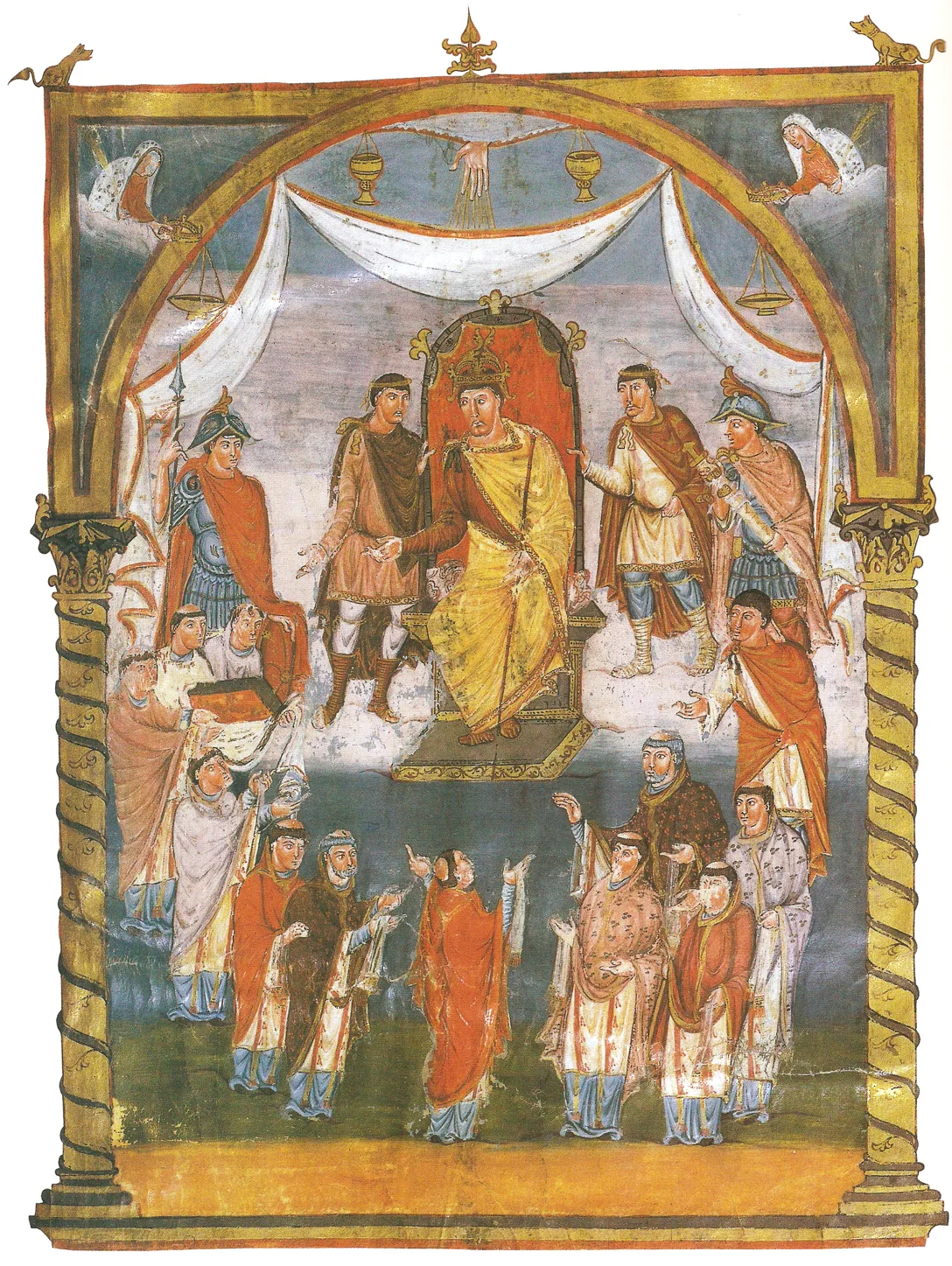
Charles the Bald was twenty-one in the spring of 845, king of a realm he had only just won, with rebels in Aquitaine and Brittany and nobles who served him when it suited them. That is the background to the most famous raid of the early Viking Age.
A hard winter and 120 ships
The court annals of Charles’s kingdom, the Annals of St-Bertin, begin the year with the weather: “Hiems asperrima”, a very hard winter. Then: “The ships of the Northmen, one hundred and twenty of them, in the month of March, came up the Seine, laying waste everything on both sides, and reached Paris with no one at all resisting them.”3Annals of St-Bertin, 845Written year by year at the West Frankish court, this part by Prudentius (later bishop of Troyes): contemporary. Latin text ed. G. Waitz (1883)Read on archive.org ↗ The writer of these lines was Prudentius, a Spanish-born churchman at Charles’s court who later became bishop of Troyes. He was writing in the same year, close to the king and his advisers.
A second account comes from the victims themselves. Within a few years of the raid a monk of Saint-Germain-des-Prés, the great abbey just outside the walls of Paris, wrote down what had happened to his house and its patron saint, at the order of his abbot Ebroin. This text, the Translatio of Saint Germanus, is our closest witness. It says the Danes first went “plundering through various islands of the sea” before entering the Seine,4Translatio S. Germani, ch. 3Written c. 850 by a monk of Saint-Germain-des-Prés who lived through the raid. Latin text in Analecta Bollandiana 2 (1883), pp. 69–98Read on archive.org ↗ that they found no army to resist them, and that they took Rouen “and did in it whatever they wanted”.5Translatio S. Germani, ch. 3Written c. 850 by a monk of Saint-Germain-des-Prés who lived through the raid. Latin text in Analecta Bollandiana 2 (1883), pp. 69–98Read on archive.org ↗ From Rouen they spread out over the countryside, taking captives, burning churches and villages and driving off cattle, and moved slowly upstream towards Paris. The monk calls the invaders “the people of the Danes, that is, a large army of Northmen”.6Translatio S. Germani, ch. 2Written c. 850 by a monk of Saint-Germain-des-Prés who lived through the raid. Latin text in Analecta Bollandiana 2 (1883), pp. 69–98Read on archive.org ↗ No writer of the time says how many men were in the ships. Archaeologists working on the later Great Army in England reckon thirty to fifty warriors to a ship, which would make the fleet of 845 an army of several thousand; that is a calculation, not a record.7D. M. Hadley and J. D. Richards, “The winter camp of the Viking Great Army, AD 872–3, Torksey, Lincolnshire”, Antiquaries Journal 96 (2016), p. 59Modern archaeological study of the army’s camp at Torksey (open access, CC BY)Read on Cambridge Core ↗

Charles divides his army
Charles did raise an army. According to the Translatio he ordered “the whole army of his kingdom” to gather, and a great crowd came, “but not all, as he had ordered”.8Translatio S. Germani, ch. 12Written c. 850 by a monk of Saint-Germain-des-Prés who lived through the raid. Latin text in Analecta Bollandiana 2 (1883), pp. 69–98Read on archive.org ↗ He met the fleet at Charlevanne, a royal estate on the Seine west of Paris, near today’s Bougival. He then made a decision that every account of the raid repeats: he split his force in two. One half stayed with him on the bank where the royal abbey of Saint-Denis lay; the other was sent to hold the opposite bank. The monk adds bitterly that not everyone who was ordered to go went, and that some, he believed, did not keep faith with the king.
What followed was meant to terrify. With both Frankish divisions watching from the banks, the Northmen “hanged one hundred and eleven captives before their eyes”, to mock the king, his nobles and all the Christians standing there, and killed others in houses and streets and hanged some from trees, “with no one out of so great a multitude resisting”.9Translatio S. Germani, ch. 12Written c. 850 by a monk of Saint-Germain-des-Prés who lived through the raid. Latin text in Analecta Bollandiana 2 (1883), pp. 69–98Read on archive.org ↗ Then a small party landed on the bank where the king was not. The monk describes the Frankish soldiers, “helmeted and in mail, protected by shields and lances”, running away over hills, valleys, fields and woods before “naked and almost unarmed and very few men”. The army “turned to flight”, and Charles, “sad and grieving and beating his breast”, withdrew.10Translatio S. Germani, ch. 12Written c. 850 by a monk of Saint-Germain-des-Prés who lived through the raid. Latin text in Analecta Bollandiana 2 (1883), pp. 69–98Read on archive.org ↗
The Annals of St-Bertin tell the same story in one diplomatic sentence: Charles tried to meet them, “but saw that his men could in no way prevail”.11Annals of St-Bertin, 845Written year by year at the West Frankish court, this part by Prudentius (later bishop of Troyes): contemporary. Latin text ed. G. Waitz (1883)Read on archive.org ↗ The king retired to Saint-Denis, a few kilometres north of Paris. The road up the river was open.
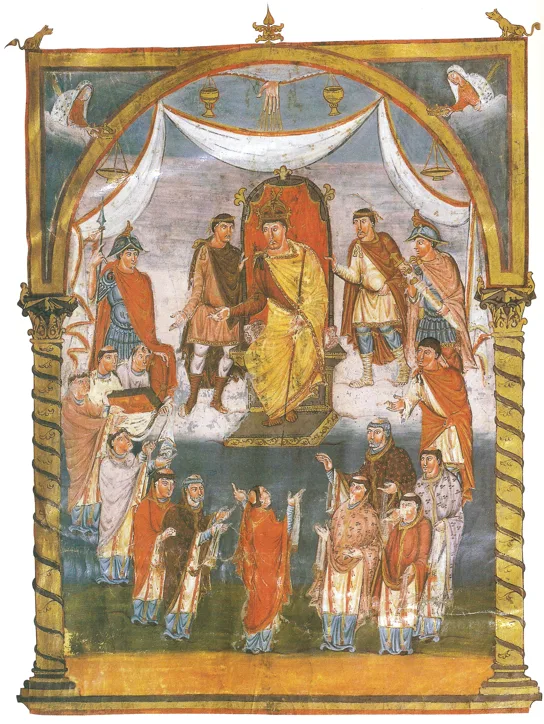
Easter in Paris
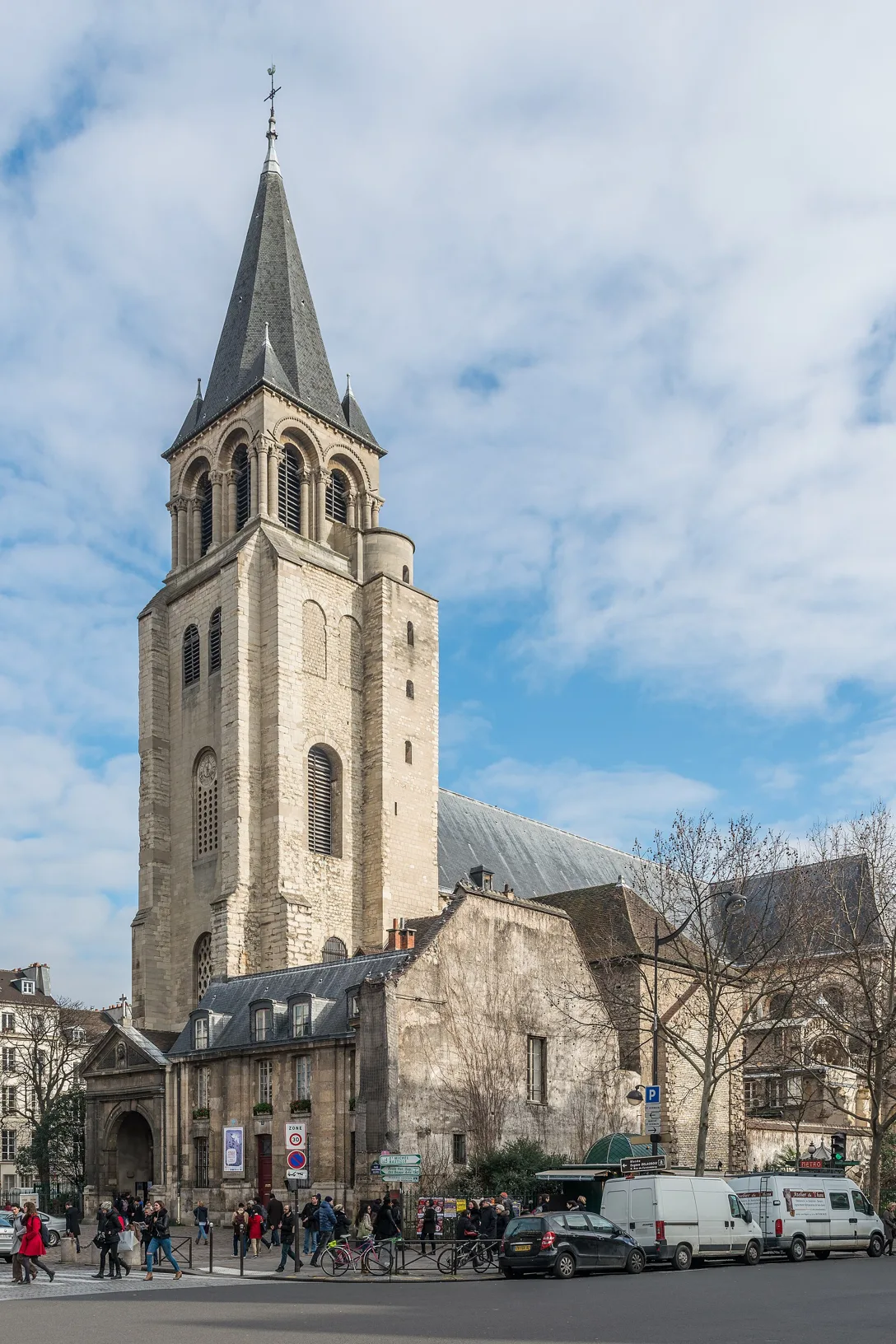
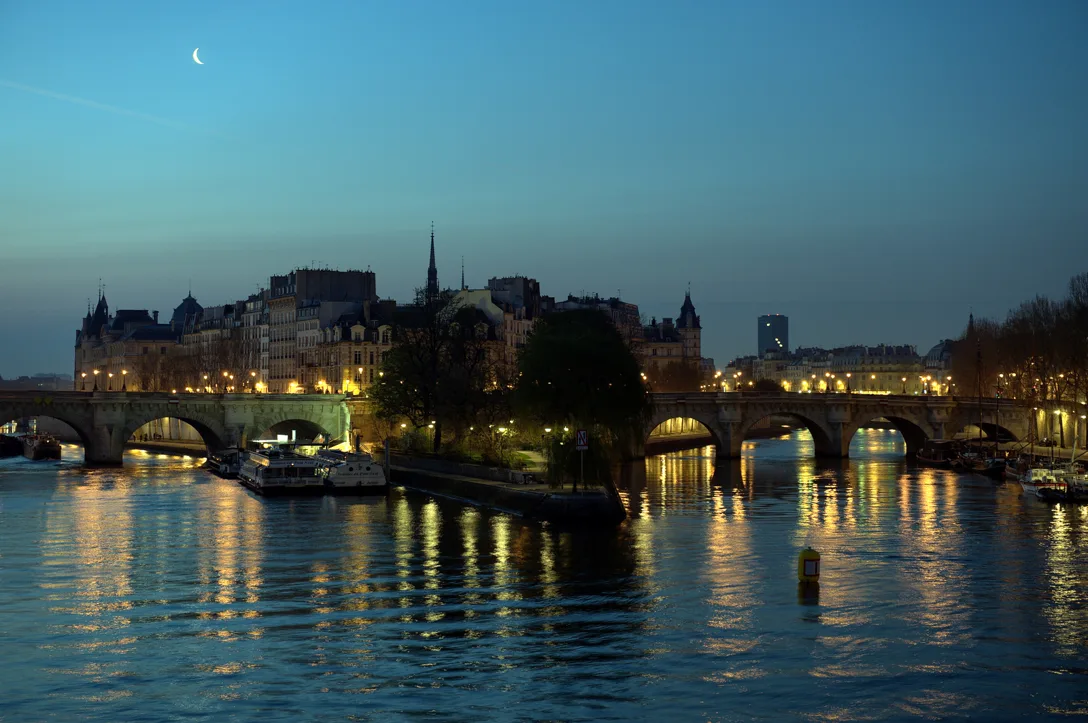
Paris in 845 was not the capital of France. It was a walled town on the Île de la Cité, the island in the Seine, with its bishop’s church, a merchant population and, around it, a ring of rich abbeys: Saint-Germain-des-Prés and Sainte-Geneviève on the left bank, Saint-Germain-l’Auxerrois on the right, and Saint-Denis further north. Those abbeys held the town’s real treasures: gold and silver altar plate, reliquaries and the bodies of saints.
The monks of Saint-Germain had seen the danger coming. Messengers kept telling them that the fleet was on its way, the king was absent and their abbot Ebroin was away on a peace mission in Aquitaine. On the advice of the bishop of Paris and their neighbours they did what other houses were doing: they dug up the body of their patron, Saint Germanus, a 6th-century bishop of Paris, so that “the Northmen” would not carry it off.12Translatio S. Germani, ch. 6Written c. 850 by a monk of Saint-Germain-des-Prés who lived through the raid. Latin text in Analecta Bollandiana 2 (1883), pp. 69–98Read on archive.org ↗ The writer describes old men and boys weeping as the gold, jewelled and silver tomb was taken apart. The church treasure was loaded on boats and some of the monks fled upriver; the saint’s body was carried on the monks’ own shoulders to the abbey’s estate at Combs, south-east of Paris. Only Saint-Denis kept its relics, because Charles himself forbade them to be moved.
The fleet arrived “on Holy Saturday of the Easter feast” and waited quietly through the night.13Translatio S. Germani, ch. 14Written c. 850 by a monk of Saint-Germain-des-Prés who lived through the raid. Latin text in Analecta Bollandiana 2 (1883), pp. 69–98Read on archive.org ↗ At sunrise on Easter morning the Northmen poured out of their ships and took Paris, which they found “empty and without inhabitants” from fear of them,14Translatio S. Germani, ch. 14Written c. 850 by a monk of Saint-Germain-des-Prés who lived through the raid. Latin text in Analecta Bollandiana 2 (1883), pp. 69–98Read on archive.org ↗ and went straight into Saint-Germain. In 845 Easter Sunday fell on 29 March. The Annals of St-Bertin confirm that the raiders entered Paris “with no one at all resisting”.15Annals of St-Bertin, 845Written year by year at the West Frankish court, this part by Prudentius (later bishop of Troyes): contemporary. Latin text ed. G. Waitz (1883)Read on archive.org ↗

Miracles at Saint-Germain
The monks had saved their saint, but the Northmen found the church, its fittings and whatever had been left behind. The Translatio says they tried to set fire to the churches of Saint Peter and Saint Germanus “three or four times” at the monks’ cell near Charlevanne and failed, burning only a barn, and that inside the abbey they began cutting the roof beams of the church. Three men fell from the beams and died in front of the altar of Saint Stephen. This is a saint’s story, written to show Germanus protecting his house, and the monk is honest that he was not there: he heard about these events years later.
His source is unusual. Louis the German, Charles’s brother, sent an embassy to the Danish king Horik after the raid, led by a count named Cobbo. More than four years later Cobbo stopped at Saint-Germain on a pilgrimage to Tours and, lying in tears before the tomb, told the monks what he had seen at Horik’s court. One of the raiders had struck a marble column next to Saint Germanus’ tomb thirteen times with his sword, and his right hand had withered and stuck to the hilt. Cobbo had seen this man standing before Horik and heard the story from his own mouth. The monks went to the column and found thirteen cuts in it, which were still there when the Translatio was written.
The text then tells of a thick fog that filled the church, so dense that the plunderers “could hardly find the doors through which they had come in”, after which none of them dared to enter it again.16Translatio S. Germani, ch. 19Written c. 850 by a monk of Saint-Germain-des-Prés who lived through the raid. Latin text in Analecta Bollandiana 2 (1883), pp. 69–98Read on archive.org ↗ Soon afterwards the Northmen began to fall ill with dysentery and other diseases, “so that some of them died every day”, while none of their Christian captives did.17Translatio S. Germani, ch. 19Written c. 850 by a monk of Saint-Germain-des-Prés who lived through the raid. Latin text in Analecta Bollandiana 2 (1883), pp. 69–98Read on archive.org ↗ The disease is the part of the miracle story that other sources confirm. Victorian writers such as Charles Keary explained it as an outbreak in a camp of men who had come through a very hard winter; the monks saw the hand of their saint.18Keary, The Vikings in Western Christendom, p. 309C. F. Keary, The Vikings in Western Christendom (1891). A Victorian narrative from the annals; datedRead on archive.org ↗
Seven thousand pounds of silver
How the raid ended depends on which source you read. The Annals of St-Bertin say Charles, unable to fight, “by certain agreements, and by a gift of seven thousand pounds given to them, held them back from going further and persuaded them to return”.19Annals of St-Bertin, 845Written year by year at the West Frankish court, this part by Prudentius (later bishop of Troyes): contemporary. Latin text ed. G. Waitz (1883)Read on archive.org ↗ The Annals of Xanten, written in the Rhineland and hostile to Charles, say that “owing to his indolence” he gave them “many thousand pounds of gold and silver” if they would leave Gaul, “and this they did”.20Annals of Xanten, 845Written up in the Rhineland at the time of the events. English translation in J. H. Robinson, Readings in European History (1904)Read on archive.org ↗ The Translatio mentions no money at all. In its version the sick and frightened Northmen sent envoys to Charles at Saint-Denis asking to be allowed home, and “Ragenarius, leader of the unbelievers, and all his chiefs” swore by their gods that if he let them go unharmed they would never enter his kingdom again.21Translatio S. Germani, ch. 20Written c. 850 by a monk of Saint-Germain-des-Prés who lived through the raid. Latin text in Analecta Bollandiana 2 (1883), pp. 69–98Read on archive.org ↗ For the monk, the saint had won; payment would have spoiled the story.
Seven thousand pounds was a huge sum. A Frankish pound of account was divided into 240 silver pennies (deniers), so the payment was worth about 1.68 million pennies, although the Annals of Xanten and other texts say part of it was paid in gold. Simon Coupland, who studied all the Frankish payments, calls this “the first recorded royal tribute paid to Scandinavian invaders”, and argues that such payments were not simply cowardice: they bought time, the Franks could afford them, and the Northmen usually kept their side of the bargain.22S. Coupland, “The Frankish tribute payments to the Vikings and their consequences”, Francia 26/1 (1999), pp. 57–75Modern study of the Frankish payments to Viking armies, 845–926Read on Francia (Heidelberg) ↗ In 845 they did. The fleet went back down the Seine and the river was left alone for several years.
Charles had other reasons to pay. The same entry in the Annals of St-Bertin reports that a severe famine was consuming the lower parts of Gaul that year, “so that many thousands of people” died of it; that Charles had to come to terms with his nephew Pippin and leave him most of Aquitaine; and that later in the year he attacked Brittany “with few men, too carelessly”, and had to fall back.23Annals of St-Bertin, 845Written year by year at the West Frankish court, this part by Prudentius (later bishop of Troyes): contemporary. Latin text ed. G. Waitz (1883)Read on archive.org ↗ A king facing rebels on two fronts and a hungry country, who could not be sure his nobles would turn out when called, had good reasons to buy time.
The road home: plague and darkness
The Annals of St-Bertin describe the return voyage. The Northmen went back down the Seine, “sought the sea again” and plundered, burned and laid waste all the places along the coast.24Annals of St-Bertin, 845Written year by year at the West Frankish court, this part by Prudentius (later bishop of Troyes): contemporary. Latin text ed. G. Waitz (1883)Read on archive.org ↗ Then the writer turns preacher. God had allowed the pagans to wear down the Christian kingdoms because of their sins, but would not let the pagans go on thinking him powerless. As they were sailing home with ships full of loot from a monastery (a note in the margin of the manuscript names it as Sithiu, the abbey of Saint-Bertin itself, where these annals were later kept) they were struck by “divine judgement” with blindness or madness, “so that hardly a very few escaped to tell the others of the wrath of almighty God”.25Annals of St-Bertin, 845Written year by year at the West Frankish court, this part by Prudentius (later bishop of Troyes): contemporary. Latin text ed. G. Waitz (1883)Read on archive.org ↗
The Annals of Xanten, written far away on the Rhine, tell it as a plague. “Thereafter the robbers were afflicted by a terrible pestilence, during which the chief sinner among them, by the name of Reginheri, who had plundered the Christians and the holy places, was struck down by the hand of God.”26Annals of Xanten, 845Written up in the Rhineland at the time of the events. English translation in J. H. Robinson, Readings in European History (1904)Read on archive.org ↗ The survivors cast lots to find out which of their gods would save them, and the lots did not fall well. On the advice of a Christian captive they cast a lot before the God of the Christians, and it fell well. Then their king and all his people fasted for fourteen days, abstaining, the Latin says, from meat and from mead, until the plague stopped, and they sent all their Christian prisoners home.27Annals of Xanten, 845Written up in the Rhineland at the time of the events. Latin text ed. B. von Simson (1909)Read on archive.org ↗
The Translatio gives the fullest and most dramatic version, and the only one that describes Ragnar himself. When the survivors reached home, “Ragenarius, the leader and author of all the evil” done to the Christians, came before King Horik “with great pride”, showed him the gold and silver he had brought back and boasted that he had taken Paris, entered the abbey of Germanus and made the whole kingdom of Charles subject to him.28Translatio S. Germani, ch. 30Written c. 850 by a monk of Saint-Germain-des-Prés who lived through the raid. Latin text in Analecta Bollandiana 2 (1883), pp. 69–98Read on archive.org ↗ Horik did not believe him, so Ragnar had a beam from the abbey brought in as proof, and “the bolt of the gate of the city of Paris”.29Translatio S. Germani, ch. 30Written c. 850 by a monk of Saint-Germain-des-Prés who lived through the raid. Latin text in Analecta Bollandiana 2 (1883), pp. 69–98Read on archive.org ↗
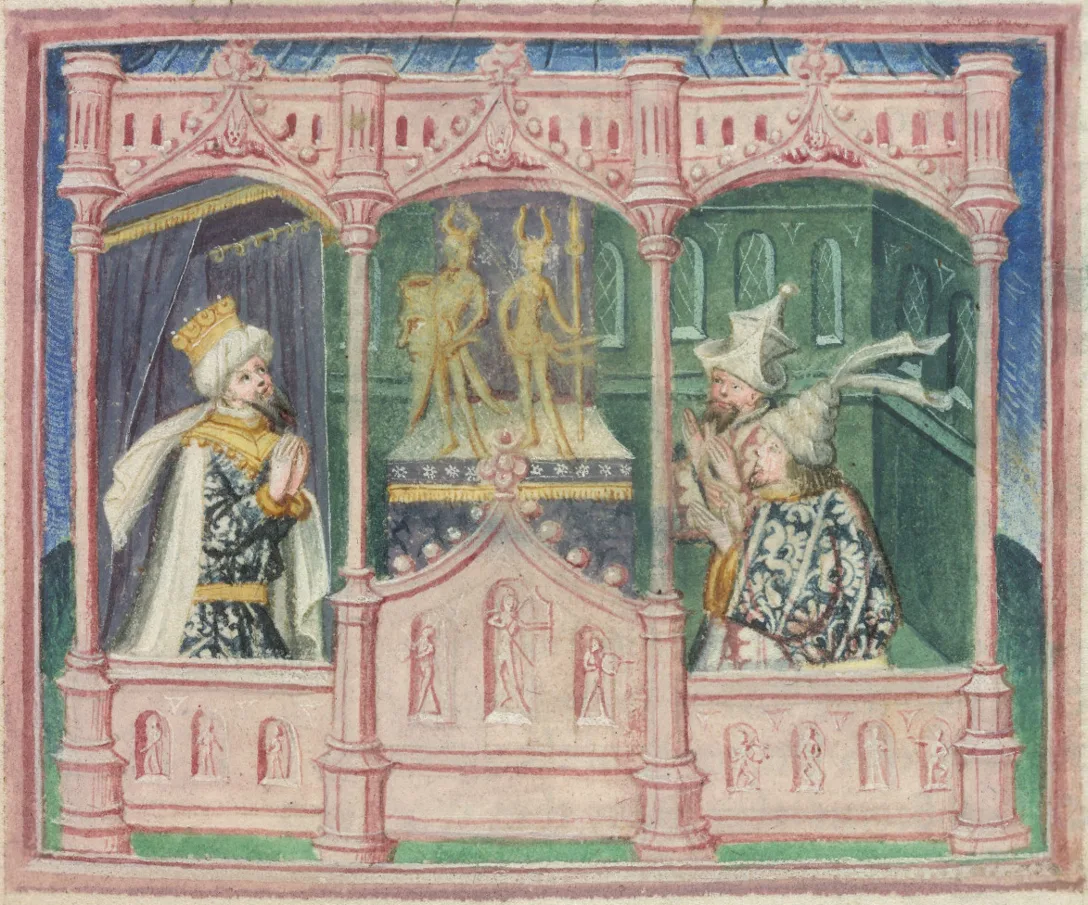
Ragnar then told the king that the land he had found was fertile and full of everything, and its people more frightened of fighting than any other, but that in the land of the Christians “the dead had more power than the living”: nobody had resisted him except one old man called Germanus, whose body he had had dug up after it had lain in its tomb for more than three hundred years.30Translatio S. Germani, ch. 30Written c. 850 by a monk of Saint-Germain-des-Prés who lived through the raid. Latin text in Analecta Bollandiana 2 (1883), pp. 69–98Read on archive.org ↗ As he said this he fell to the ground shaking, crying out that Germanus was standing over him and beating him with his staff. He was carried home and, after three days of torment, ordered a golden statue to be made and sent to Saint Germanus by Louis the German’s envoy, who was present, and swore to become a Christian if he recovered. It did not help. His body swelled until he could neither hear nor see, and at last he burst, “and all his entrails poured out onto the ground. And so the wretch ended his life.”
Stripped of the miracles, the three accounts agree on a hard core: the fleet was hit by a deadly epidemic, probably dysentery, during or after the raid; many men died; the leader, Reginheri or Ragenarius, was among them; and the Danish king released Christian captives. The details of Ragnar’s boast and his death came to the monks second-hand, through Cobbo’s embassy, and were shaped to glorify their saint.
Horik of Denmark
The king Ragnar reported to was Horik I, who ruled the Danes from the 820s until he was killed in a civil war in 854. In 845 he was not only receiving raiders; he was leading his own. The same entry in the Annals of St-Bertin says that “Horik, king of the Northmen”, sent six hundred ships up the Elbe against Louis the German, and that the Saxons defeated them.31Annals of St-Bertin, 845Written year by year at the West Frankish court, this part by Prudentius (later bishop of Troyes): contemporary. Latin text ed. G. Waitz (1883)Read on archive.org ↗ On the way they took a fortified town. Rimbert’s Life of Anskar, written about twenty-five years later by Anskar’s pupil, describes how “pirates suddenly arrived and surrounded the town of Hamburg”, how Bishop Anskar barely escaped with the relics, and how the town and its new church were burned.32Rimbert, Life of Anskar, ch. 16Written c. 870 by Anskar’s pupil and successor. Translation by C. H. Robinson (1921)Read on archive.org ↗ Paris and Hamburg were attacked in the same spring.
By the autumn Horik wanted peace. According to the Annals of St-Bertin he sent envoys to Louis the German “for the sake of peace”, ready to free the captives and to return the treasures as far as he could.33Annals of St-Bertin, 845Written year by year at the West Frankish court, this part by Prudentius (later bishop of Troyes): contemporary. Latin text ed. G. Waitz (1883)Read on archive.org ↗ The Translatio adds, from Cobbo’s report, that Horik was afraid he would die the same terrible death as the others, ordered all the survivors of Ragnar’s fleet to be beheaded and their heads handed over to the Christians, so that only four men escaped, and had all the Christian captives in his kingdom sought out and sent home with honour.34Translatio S. Germani, ch. 31Written c. 850 by a monk of Saint-Germain-des-Prés who lived through the raid. Latin text in Analecta Bollandiana 2 (1883), pp. 69–98Read on archive.org ↗
Modern historians read this with care. The Danish historian Niels Lund argued that the Saint-Germain writers bent the story to glorify their saint, and that Horik’s envoys and promises are better explained by politics: after the failure on the Elbe, the king needed peace with his powerful southern neighbour.35N. Lund, “Horik den Førstes udenrigspolitik” (The foreign policy of Horik I), Historisk Tidsskrift 102:1 (2002)Modern Danish study of King Horik I and the events of 845Read on tidsskrift.dk ↗ Horik did make peace, and in the following years he welcomed Anskar, allowed a church at Hedeby and corresponded with Frankish rulers. Whatever happened to Ragnar’s men, the raid of 845 ended with a Danish king anxious to show that he was not responsible for it.
The Seine after 845
For a while the oath held. Thomas Kendrick noted that after Ragnar’s raid “for six years the Seine, also, was not visited by” pirates.36Kendrick, A History of the Vikings, p. 204T. D. Kendrick, A History of the Vikings (1930). An older survey; some of its identifications are no longer acceptedRead on archive.org ↗ When the monks of Saint-Germain came home with their treasure they found their abbey largely wrecked, but also, to their astonishment, so much wine left in the cellars that it lasted the whole community until the next vintage.37Translatio S. Germani, ch. 21Written c. 850 by a monk of Saint-Germain-des-Prés who lived through the raid. Latin text in Analecta Bollandiana 2 (1883), pp. 69–98Read on archive.org ↗
Then the fleets came back, and they had learned the lesson of 845. In 857 Danes based on the Seine attacked Paris again and burned the churches of Saint Peter and Saint Genevieve and all the others except the cathedral of Saint Stephen, Saint-Germain and Saint-Denis, which were spared only because a large sum of money was paid.38Annals of St-Bertin, 857Written year by year at the West Frankish court, this part by Prudentius (later bishop of Troyes): contemporary. Latin text ed. G. Waitz (1883)Read on archive.org ↗ In 858 one of the Seine leaders, Berno, came to Charles at his palace of Verberie and swore loyalty to him; some modern writers have connected this Berno with the legendary Björn Ironside, “son of Ragnar”, but no source of the time does.39Annals of St-Bertin, 858Written year by year at the West Frankish court, this part by Prudentius (later bishop of Troyes): contemporary. Latin text ed. G. Waitz (1883)Read on archive.org ↗ In January 861 the Danes burned Saint-Germain itself and chased the merchants who were fleeing upriver by boat.40Annals of St-Bertin, 861Written year by year at the West Frankish court, this part by Prudentius (later bishop of Troyes): contemporary. Latin text ed. G. Waitz (1883)Read on archive.org ↗
The raids on the Seine ended only when a Viking leader was given the lower valley to hold for the Frankish king: Rollo, whose grant is traditionally dated to 911, the beginning of Normandy. By then Paris had become a different place. When a far larger army came up the river in 885, the walls and fortified bridges of the island held out for almost a year, and the defence made the reputation of the family that later gave France its kings. Both stories are told in Part III.
Who was Reginheri?
The contemporary sources give the leader of 845 only a name. The Annals of Xanten call him Reginheri, “prince of the wicked”,41Annals of Xanten, 845Written up in the Rhineland at the time of the events. Latin text ed. B. von Simson (1909)Read on archive.org ↗ and the Translatio Ragenarius, “leader of the unbelievers”. Both are Latin spellings of a common Germanic name, in Old Norse Ragnarr. The Annals of St-Bertin, the best-informed source, do not name him at all. Nobody at the time calls him Lothbrok, gives his father or his sons, or says where in the Danish lands he came from. All we know is that he commanded a large fleet, answered to King Horik, and died soon after the raid.
Older historians were sure they knew more. In 1891 Charles Keary wrote that only in the expedition of 845 “do we find Ragnar figuring in authentic history”, meaning the legendary Ragnar Lothbrok of the sagas,42Keary, The Vikings in Western Christendom, p. 307C. F. Keary, The Vikings in Western Christendom (1891). A Victorian narrative from the annals; datedRead on archive.org ↗ and Thomas Kendrick in 1930 began his account of the raid with “one of the most renowned vikings of all time, Ragnar Lodbrok, a scion of the Danish royal family”.43Kendrick, A History of the Vikings, p. 203T. D. Kendrick, A History of the Vikings (1930). An older survey; some of its identifications are no longer acceptedRead on archive.org ↗ The editor of the Annals of Xanten in 1909 noted in the same way that Reginheri “is believed to be Ragnar Lodbrok, famous in legend”.44B. von Simson, note to the Annals of Xanten, 845 (1909)Note by the modern editor of the Annals of Xanten (MGH, 1909)Read on archive.org ↗
Modern scholars are much more cautious. The name Ragnar was common; the Frankish writers never link Reginheri to the men later called Ragnar’s sons; and the saga Ragnar, who fights Charlemagne, marries the daughter of the dragon-slayer Sigurd and dies in an English snake pit, belongs to stories written down three and four centuries later. Elizabeth Ashman Rowe, in the fullest modern study of the legend, put it bluntly: “I do not think that there was ever a historical figure known as ‘Ragnarr Loðbrók’.” She suggested that reports of the dysentery death of the leader of 845, like the one in the Translatio, may even have given rise to the later nickname Loðbrók, “shaggy breeches”.45E. A. Rowe, Vikings in the West: The Legend of Ragnarr Loðbrók and His Sons (Vienna, 2012)Modern study of the Ragnar legend (Studia Medievalia Septentrionalia 18)Find in a library (WorldCat) ↗ That idea cannot be proved, but it shows how far the debate has moved: Reginheri of 845 is history, Ragnar Lothbrok is a legend, and the link between them is at best a possibility.
Not every scholar goes that far. Siân Grønlie, in her translation of Ari Þorgilsson’s Book of the Icelanders, describes the historical Ragnar as “probably identical with the Reginheri who sacked Paris in 845”, a man who in later tradition “became a legendary hero and ancestor of kings”.46S. Grønlie, note 10 to Íslendingabók (2006)Notes to the Viking Society translation of Ari’s Book of the Icelanders (copyrighted, quoted briefly)Read at the Viking Society ↗ The disagreement is about the legend, not about 845: everyone agrees that a Ragnar took Paris, and that nobody at the time called him Lothbrok.
The question of whether Ragnar Lothbrok was a real person, and what is known about the men called his sons, has its own page: Was Ragnar Lothbrok a real person?
A rich land where the dead fight back
No Scandinavian of the 9th century wrote about the raid on Paris. There are no runestones for it and no skaldic poem survives about it. The nearest thing to a Norse voice is Ragnar’s own report to Horik, as Cobbo heard it and the monks wrote it down: a fertile land full of everything, people who were afraid to fight, and a dead saint more dangerous than the living. Even filtered through Christian writers, it reads like a raider’s view of Francia in the 840s: rich, divided and badly defended.
That view explains why the raid happened. For a leader like Reginheri, a fleet of 120 ships was a large investment of men and loyalty, and it had to pay. The Frankish civil wars had shown that kings could be bargained with. A raid that ended with seven thousand pounds handed over, rather than a battle, was a success in the terms that mattered to the men in the ships: silver to share out, captives to ransom or sell, and a reputation. The plague turned the success into a disaster, but the lesson about Frankish wealth and weakness was not forgotten. Viking fleets were back on the Seine in the 850s, and in 885 a far larger army besieged Paris for almost a year.
Later Scandinavian tradition remembered a Ragnar who humbled a Frankish emperor, but not this one. Saxo Grammaticus, writing in Denmark around 1200, has Ragnar defeat “Karl”, the “tireless conqueror of almost all Europe”, that is Charlemagne, who had died in 814, after a prophetess warned that Ragnar’s fleet “had moored at the mouth of the river Seine”.47Saxo Grammaticus, Gesta Danorum 9Written c. 1200 in Denmark, three and a half centuries after the events. Translation by O. Elton (1894)Read on Project Gutenberg ↗ It is impossible history, since Ragnar’s supposed sons were still fighting in England in the 870s, but it may be a faint memory of 845: a Danish fleet in the Seine and a Frankish king who did not dare to fight it.
How close is our evidence?
For a Viking raid, 845 is unusually well documented. Three independent texts were written within a few years: a court annal, a Rhineland annal and the story of the victims of Saint-Germain, whose author lived through the flight of his community. They disagree on the payment and on how Ragnar died, but agree on the fleet, the season, the taking of Paris, the epidemic and the leader’s death. The modern English translation of the court annals, with notes on every entry, is Janet Nelson’s.48J. L. Nelson, The Annals of St-Bertin (Manchester, 1991)Modern English translation with notes of the Annals of St-BertinFind in a library (WorldCat) ↗ What none of these texts offers is the man behind the name. Everything people now associate with “Ragnar Lothbrok” was added between the 11th and the 13th centuries.
- Annals of St-Bertin, 841
- Annals of St-Bertin, 843
- Annals of St-Bertin, 845
- Translatio S. Germani, ch. 3
- Translatio S. Germani, ch. 3
- Translatio S. Germani, ch. 2
- D. M. Hadley and J. D. Richards, “The winter camp of the Viking Great Army, AD 872–3, Torksey, Lincolnshire”, Antiquaries Journal 96 (2016), p. 59
- Translatio S. Germani, ch. 12
- Translatio S. Germani, ch. 12
- Translatio S. Germani, ch. 12
- Annals of St-Bertin, 845
- Translatio S. Germani, ch. 6
- Translatio S. Germani, ch. 14
- Translatio S. Germani, ch. 14
- Annals of St-Bertin, 845
- Translatio S. Germani, ch. 19
- Translatio S. Germani, ch. 19
- Keary, The Vikings in Western Christendom, p. 309
- Annals of St-Bertin, 845
- Annals of Xanten, 845
- Translatio S. Germani, ch. 20
- S. Coupland, “The Frankish tribute payments to the Vikings and their consequences”, Francia 26/1 (1999), pp. 57–75
- Annals of St-Bertin, 845
- Annals of St-Bertin, 845
- Annals of St-Bertin, 845
- Annals of Xanten, 845
- Annals of Xanten, 845
- Translatio S. Germani, ch. 30
- Translatio S. Germani, ch. 30
- Translatio S. Germani, ch. 30
- Annals of St-Bertin, 845
- Rimbert, Life of Anskar, ch. 16
- Annals of St-Bertin, 845
- Translatio S. Germani, ch. 31
- N. Lund, “Horik den Førstes udenrigspolitik” (The foreign policy of Horik I), Historisk Tidsskrift 102:1 (2002)
- Kendrick, A History of the Vikings, p. 204
- Translatio S. Germani, ch. 21
- Annals of St-Bertin, 857
- Annals of St-Bertin, 858
- Annals of St-Bertin, 861
- Annals of Xanten, 845
- Keary, The Vikings in Western Christendom, p. 307
- Kendrick, A History of the Vikings, p. 203
- B. von Simson, note to the Annals of Xanten, 845 (1909)
- E. A. Rowe, Vikings in the West: The Legend of Ragnarr Loðbrók and His Sons (Vienna, 2012)
- S. Grønlie, note 10 to Íslendingabók (2006)
- Saxo Grammaticus, Gesta Danorum 9
- J. L. Nelson, The Annals of St-Bertin (Manchester, 1991)
- Translatio S. Germani: ch. 8, ch. 15, ch. 17, ch. 30