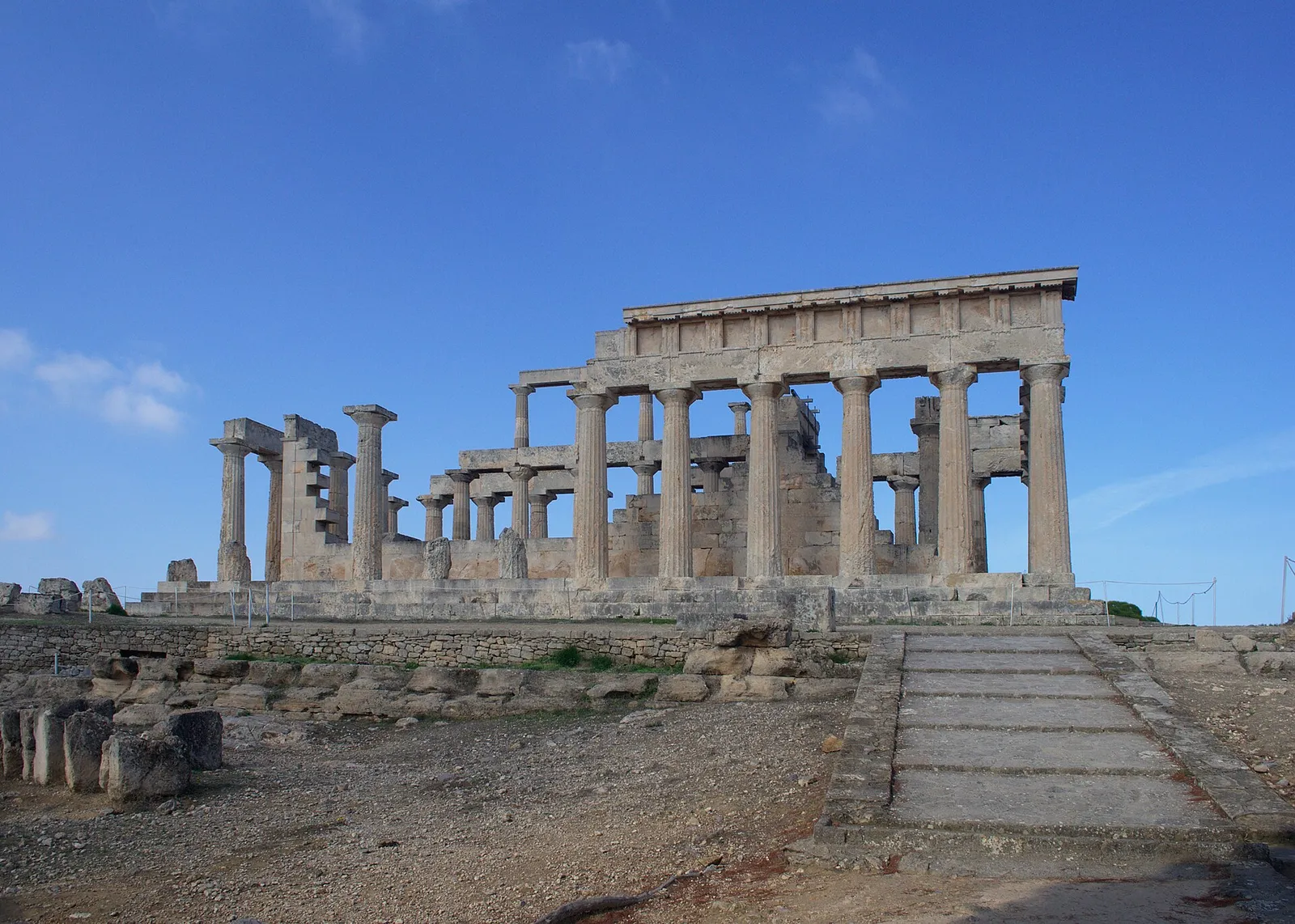
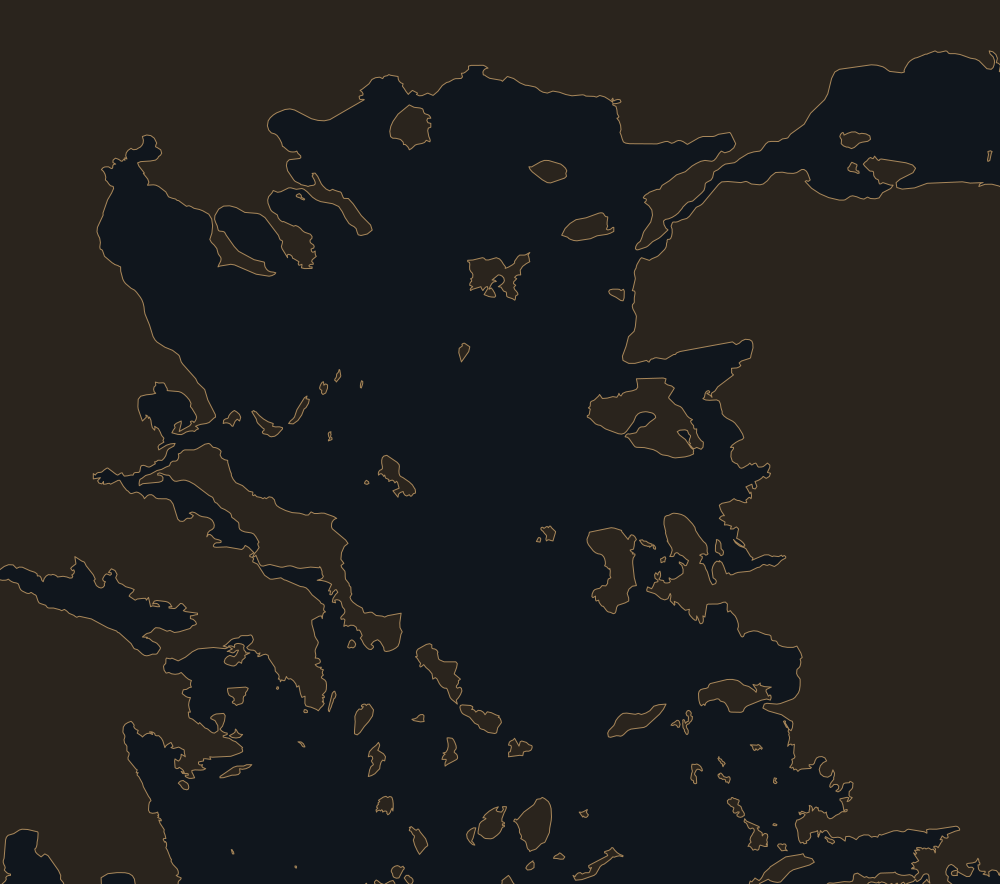
In the spring of 492 BC, a year after the last embers of the Ionian Revolt were stamped out, a Persian army and fleet crossed the Hellespont into Europe. Their commander was Mardonius, the king’s young son-in-law, and their stated goal was Athens and Eretria, the two Greek cities that had helped the rebels burn Sardis. They never got there. Off the cliffs of Mount Athos a north wind threw the fleet onto the rocks, and in Macedonia a Thracian tribe attacked the army by night. Yet the campaign that “failed” shaped everything that came after: the route of the next invasion, the canal that Xerxes dug through the Athos isthmus, and the choice every Greek city soon had to make when the king’s heralds asked for earth and water.
Where this chapter fits
The previous chapter ended with the fall of Miletus in 494 BC and the Persian reconquest of Ionia. In 493 BC the Phoenician fleet swept the islands and the coast of the Hellespont, and Miltiades, the Athenian lord of the Chersonese, fled home to Athens just ahead of it. Then Artaphernes, the satrap at Sardis, imposed a settlement on the Ionians. He made the cities agree to settle their disputes by law instead of raiding each other, measured their lands in parasangs and fixed their tribute, “about the same as that which they had rendered before”.1Herodotus, Histories 6.42Written c. 430 BC. Translation by A. D. GodleyRead on Perseus ↗ Herodotus says the measure kept them peaceful. Ionia was quiet again.
For Darius, the revolt was over but the account was not settled. Two cities on the far side of the Aegean, Athens and Eretria, had sent ships to help the rebels and had taken part in the burning of Sardis in 498 BC. Herodotus calls the twenty Athenian ships “the beginning of troubles for both Greeks and foreigners”.2Herodotus, Histories 5.97.3Written c. 430 BC. Translation by A. D. GodleyRead on Perseus ↗ This chapter follows the first Persian attempt to answer them, in 492 BC, and the diplomacy of 491 BC that prepared the next one. It is a story of preparation and of lessons learned on both sides.
Persia in Europe before 492 BC
Mardonius was not the first Persian to march an army into Europe. Around 513 BC Darius himself had crossed the Bosporus on a bridge of boats built by Mandrocles of Samos, to attack the Scythians north of the Black Sea. At the crossing he set up two pillars of white marble, inscribed in Assyrian and Greek characters with the names of “all the nations that were in his army: all the nations subject to him”.3Herodotus, Histories 4.87Written c. 430 BC. Translation by A. D. GodleyRead on Perseus ↗ His Greek subjects of Ionia and the Hellespont sailed ahead into the Black Sea and bridged the Danube. On the way north, most Thracian peoples surrendered without a fight; the Getae resisted and were conquered.
The Scythian war itself went badly: the Scythians retreated and would not stand and fight, and Darius had to come back. Herodotus tells a story about that moment that matters for this chapter. The Scythians urged the Ionians guarding the Danube bridge to break it and leave the king stranded. Miltiades, the Athenian ruler of the Chersonese, was in favour. Histiaeus of Miletus argued against it, with a frank reason: each of the Greek tyrants owed his rule to Darius, and if the king fell, “all the cities will choose democracy rather than despotism”.4Herodotus, Histories 4.137Written c. 430 BC. Translation by A. D. GodleyRead on Perseus ↗ The tyrants kept the bridge. Twenty years later, Mardonius would prove Histiaeus right in an unexpected way.
Darius returned to Asia and left Megabazus in Europe with a large army, to subdue the coast of Thrace and the cities of the Hellespont. Herodotus says “the conquest of Thrace, was the charge given him by Darius”.5Herodotus, Histories 5.2Written c. 430 BC. Translation by A. D. GodleyRead on Perseus ↗ Megabazus deported some of the Paeonians of the Strymon valley to Asia and sent seven Persian envoys to Amyntas, king of the Macedonians, to demand earth and water. Amyntas “readily gave to them what they asked” and entertained them at a feast.6Herodotus, Histories 5.18.1Written c. 430 BC. Translation by A. D. GodleyRead on Perseus ↗ Herodotus tells a lurid story of how the envoys were then murdered by Amyntas’ son Alexander, but Macedon stayed formally under Persian overlordship.
So by 500 BC Persia held a European province along the north coast of the Aegean, from the Hellespont towards the Strymon, with Macedon as a client kingdom beyond it. During the Ionian Revolt that hold slipped. Rawlinson, writing in 1871, noted that the revolt spread to the king’s Thracian territories and that “vassal monarchs, like Miltiades, assumed independence”.7Rawlinson, The Fifth Monarchy: Persia, ch. 7G. Rawlinson, The Seven Great Monarchies, vol. 5 (1871). A Victorian history of Persia, based mostly on Greek writersRead on Project Gutenberg ↗ After the fall of Miletus the Phoenician fleet burned the towns of the European shore of the Hellespont; the land beyond still had to be brought back under control. That was the first task waiting for Mardonius.
Why Persia turned on mainland Greece
Herodotus gives a personal reason first. When Darius heard that Sardis had been burned by the Ionians and the Athenians, he asked who the Athenians were, shot an arrow into the sky and prayed for revenge, and ordered a servant to say to him three times at every dinner, “Master, remember the Athenians.”8Herodotus, Histories 5.105Written c. 430 BC. Translation by A. D. GodleyRead on Perseus ↗ When the story picks up again in book 6, the servant is still at work, and the exiled Pisistratids, the former tyrants of Athens, are at Darius’ side “maligning the Athenians”.9Herodotus, Histories 6.94Written c. 430 BC. Translation by A. D. GodleyRead on Perseus ↗ The old tyrant Hippias hoped to return to Athens behind a Persian army.
But Herodotus himself saw a larger plan behind the punishment. When Mardonius set out, Athens and Eretria were the target, but “This was the stated end of their expedition, but they intended to subdue as many of the Greek cities as they could.”10Herodotus, Histories 6.44Written c. 430 BC. Translation by A. D. GodleyRead on Perseus ↗ Later he says that Darius wanted to use the burning of Sardis as a pretext “for subduing all the men of Hellas who had not given him earth and water”.11Herodotus, Histories 6.94Written c. 430 BC. Translation by A. D. GodleyRead on Perseus ↗
The older modern historians mostly agreed. Grundy argued in 1901 that the size of the fleet and army sent with Mardonius shows a distant and ambitious goal: the punishment of Athens and Eretria “was an essential part of the programme of this expedition; but it was only a part. … It threatened Greece as a whole.”12Grundy, The Great Persian War, ch. 4G. B. Grundy, The Great Persian War (1901). Grundy travelled the routes and battlefields himselfRead on Project Gutenberg ↗ How and Wells, in their commentary of 1912, gave the strategic logic: “The conquest of European Hellas may well have seemed the only means of securing the dominion of Persia over the Greeks of Asia.”13How and Wells, A Commentary on Herodotus, note on Herodotus 6.45W. W. How and J. Wells, A Commentary on Herodotus, vol. 2 (1912). A line-by-line commentary; dated in placesRead on archive.org ↗ As long as free Greek cities across the sea could send ships and men to help rebels, Ionia would never be safe.
Modern historians put the emphasis differently. The ancient narrative is written from Athens backwards, so it makes everything point at Athens. Studies of Persian rule in Europe stress that the most concrete result of 492 BC, and perhaps its first purpose, was to restore and tighten the king’s hold on Thrace and Macedon after the revolt, before anything further was attempted.14M. I. Vasilev, The Policy of Darius and Xerxes towards Thrace and Macedonia (2015), ch. “The policy of Darius towards Thrace and Macedonia (499/8–492/1)”Modern study of Persian rule in Europe (Brill, Mnemosyne Supplements 379)View on Google Books ↗ The two readings do not exclude each other: a secure land route through Thrace and Macedon was also the first step on any road to Athens.
Mardonius takes command
“At the beginning of spring”, Herodotus writes, the king removed the other generals from their commands, and Mardonius came down to the coast with a large army and fleet. He was “a man young in years and recently married to Darius’ daughter Artozostre”.15Herodotus, Histories 6.43Written c. 430 BC. Translation by A. D. GodleyRead on Perseus ↗ His father Gobryas was one of the seven Persian nobles who had overthrown the false Smerdis and put Darius on the throne in 522 BC, and Darius’ first wife was Gobryas’ daughter. Mardonius was thus the king’s nephew by marriage, his son-in-law, and a member of the inner family circle of the court.
The year was 492 BC; How and Wells note that Herodotus, like Thucydides, starts his year in the spring. The army marched overland across Asia Minor to the Hellespont under other commanders. Mardonius himself went on board ship in Cilicia, in the south-east corner of Asia Minor, and sailed along the coast with the fleet to Ionia.16Herodotus, Histories 6.43Written c. 430 BC. Translation by A. D. GodleyRead on Perseus ↗ The joint advance of army and fleet, the army on the coast road and the fleet beside it carrying supplies, was the method Persia would use again in 480 BC.
Democracies in Ionia
In Ionia Mardonius did something that astonished the Greeks. Herodotus introduces it as a proof for doubters. Earlier in his book he had told of a debate among the seven Persian conspirators, in which Otanes argued that Persia should be ruled by the people. Many Greeks refused to believe that a Persian could have said such a thing. To them Herodotus now offers this: “Mardonius deposed all the Ionian tyrants and set up democracies in their cities.”17Herodotus, Histories 6.43Written c. 430 BC. Translation by A. D. GodleyRead on Perseus ↗
It was a sharp change of policy. For decades Persia had ruled the Greek cities through local tyrants, men like Histiaeus and Aristagoras of Miletus, who depended on the king for their power. The Ionian Revolt had begun when those same tyrants changed sides, and the cities had expelled them in 499 BC. Grote thought the Persians had learned from experience: “His proceeding in Ionia surprises us, and seems to have appeared surprising as well to Herodotus himself as to his readers.”18Grote, History of Greece, vol. 4, ch. 36G. Grote, History of Greece, vol. 4 (1847). A modern history, written 2,300 years laterRead on Project Gutenberg ↗ Rawlinson, in the language of his time, praised the measure as showing “a wisdom which we should scarcely have expected in an Oriental”; the word “Oriental” was a standard Victorian label for Asian peoples, and it carries his assumptions about them.19Rawlinson, The Fifth Monarchy: Persia, ch. 7G. Rawlinson, The Seven Great Monarchies, vol. 5 (1871). A Victorian history of Persia, based mostly on Greek writersRead on Project Gutenberg ↗
How and Wells were more doubtful about Herodotus’ wording. “The proof here alleged is of the weakest,” they wrote: Otanes had argued for democracy in Persia, which is a very different thing from allowing it in Ionia.20How and Wells, A Commentary on Herodotus, note on Herodotus 6.43W. W. How and J. Wells, A Commentary on Herodotus, vol. 2 (1912). A line-by-line commentary; dated in placesRead on archive.org ↗ They also pointed out that tyrants and dynasts are found in Greek cities under Persia after 492 BC, among them Strattis in Chios, Aeaces in Samos and the queen Artemisia in Halicarnassus. The change was probably partial: a restoration of local self-government in the cities that had expelled their tyrants, driven more by distrust of tyrants who had proved unreliable than by any love of democracy. Modern historians generally share this cautious reading. Either way, the measure made Ionia safer behind the army as it moved into Europe.
Across the Hellespont: Thasos and Macedonia
From Ionia Mardonius sailed on to the Hellespont, where the army and the fleet came together. “When a great multitude of ships and a great army were assembled, the Persians crossed the Hellespont on shipboard and marched through Europe, with Eretria and Athens as their goal.”21Herodotus, Histories 6.43Written c. 430 BC. Translation by A. D. GodleyRead on Perseus ↗ Herodotus gives no numbers for either. Grundy thought the fleet was at least as large as the six hundred ships of the fleet that won at Lade, but that is an inference, not evidence.
The first gains came quickly. The fleet subdued the island of Thasos, whose people “did not so much as lift up their hands against it”. The land army “added the Macedonians to the slaves that they had already”, for all the peoples east of Macedonia were already subject to Persia.22Herodotus, Histories 6.44Written c. 430 BC. Translation by A. D. GodleyRead on Perseus ↗ Herodotus uses the Greek word for slaves for all subjects of the king; it describes their status as the Greeks saw it, not literal slavery. Macedon had given earth and water some twenty years before, but How and Wells thought the Persian army probably now crossed the Strymon in force for the first time.23How and Wells, A Commentary on Herodotus, note on Herodotus 6.44W. W. How and J. Wells, A Commentary on Herodotus, vol. 2 (1912). A line-by-line commentary; dated in placesRead on archive.org ↗ Macedon went from a distant vassal to a kingdom with Persian troops on its soil.
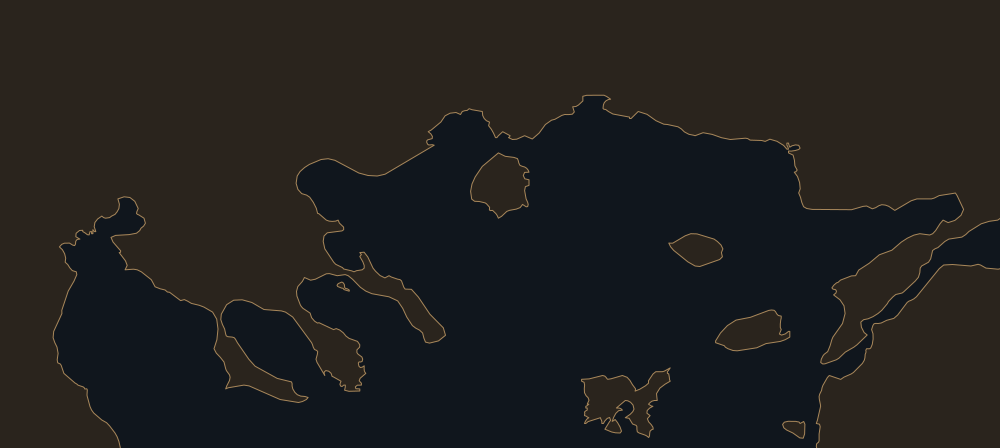
The plan was for the fleet to keep pace with the army. From Thasos the ships followed the coast westward to Acanthus, at the neck of the Athos peninsula, while the army marched inland. Grote describes the intended next step: the fleet was to “double the promontory of Mount Athos, and to join the land-force again at the gulf of Therma”, the modern Gulf of Thessaloniki, and from there the army would turn south towards Thessaly and Greece.24Grote, History of Greece, vol. 4, ch. 36G. Grote, History of Greece, vol. 4 (1847). A modern history, written 2,300 years laterRead on Project Gutenberg ↗
The storm off Athos
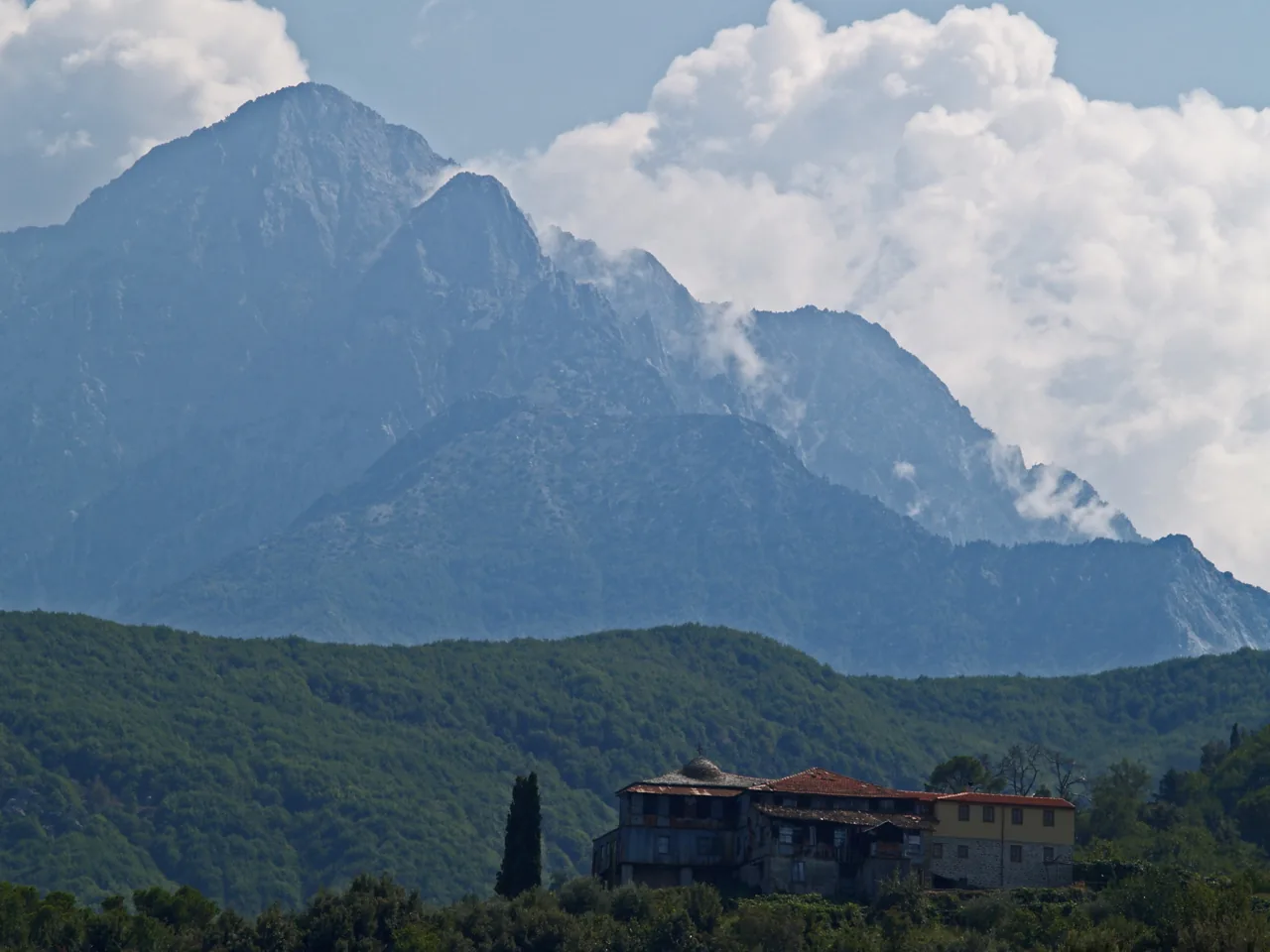
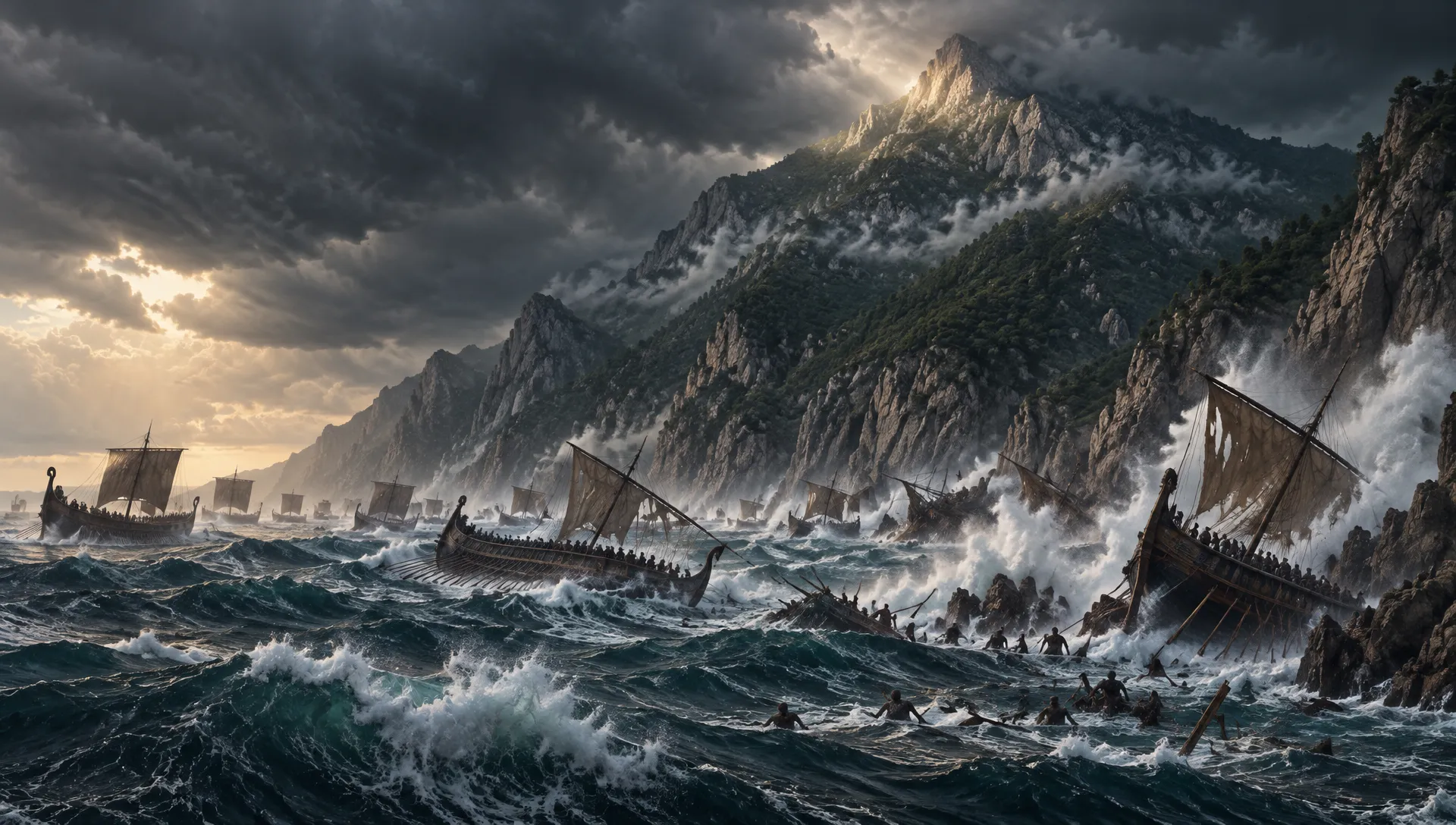
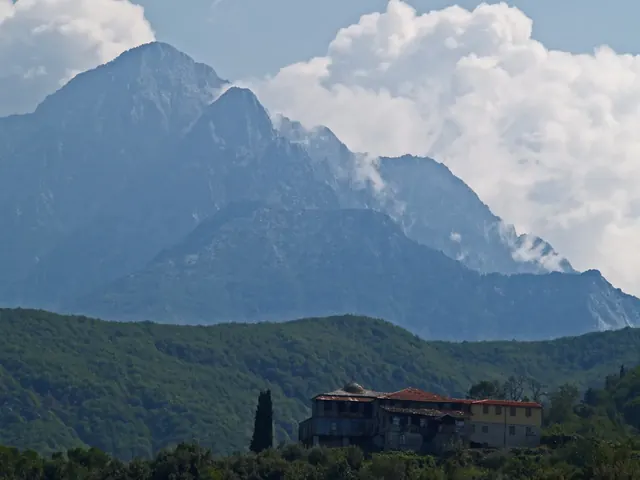
Mount Athos is the end of the easternmost of the three peninsulas of Chalcidice: a mountain of some 2,000 metres that drops straight into the sea, with no harbour on its outer coast. The fleet put out from Acanthus to sail round it. “But a great and irresistible north wind fell upon them as they sailed past and dealt very roughly with them, driving many of their ships upon Athos.”25Herodotus, Histories 6.44Written c. 430 BC. Translation by A. D. GodleyRead on Perseus ↗
Herodotus gives the losses with care: “It is said that about three hundred ships were lost, and more than twenty thousand men.” He describes how they died. Some were seized by wild beasts on the shore, some were dashed against the rocks, those who could not swim drowned, and others died of cold. The words “it is said” matter. Grundy read them as a sign that Herodotus himself suspected the figure was inflated.26Grundy, The Great Persian War, ch. 4G. B. Grundy, The Great Persian War (1901). Grundy travelled the routes and battlefields himselfRead on Project Gutenberg ↗ No other source gives a number, and modern historians treat it as a report, not a count. The storm itself is not in doubt.
The coast was notorious. Grote, writing in 1847, said that “The sea near Athos was then, and is now, full of peril to navigators.”27Grote, History of Greece, vol. 4, ch. 36G. Grote, History of Greece, vol. 4 (1847). A modern history, written 2,300 years laterRead on Project Gutenberg ↗ Rawlinson added that Greek boatmen of his own day still refused to sail round the cape. How and Wells describe Athos as “a harbourless coast off which high seas and dangerous currents are prevalent”.28How and Wells, A Commentary on Herodotus, note on Herodotus 6.44W. W. How and J. Wells, A Commentary on Herodotus, vol. 2 (1912). A line-by-line commentary; dated in placesRead on archive.org ↗ Ancient warships were light, low and crowded with rowers. They could not ride out a gale in the open sea and normally spent the night on a beach. A fleet caught off a cliff coast by a strong onshore wind had nowhere to go.
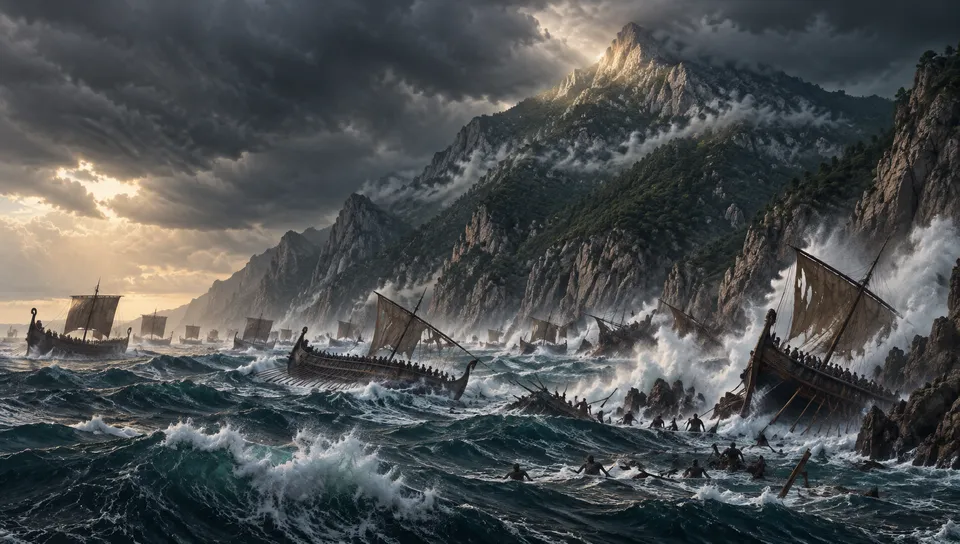
Herodotus is not our only witness. Charon of Lampsacus, a Greek historian of the fifth century BC whose work is now lost, wrote as an older contemporary of Herodotus or close to his time, and he lived at Lampsacus on the Hellespont, close to the events. Grote, in a footnote, sums up what Charon recorded: “Charon of Lampsakus had noticed the storm near Mount Athos, and the destruction of the fleet of Mardonius”.29Grote, History of Greece, vol. 4, ch. 36G. Grote, History of Greece, vol. 4 (1847). A modern history, written 2,300 years laterRead on Project Gutenberg ↗ So the disaster was known in the Greek world independently of Herodotus.
The night attack of the Brygi
The army had its own disaster. While it was camped in Macedonia, “the Brygi of Thrace attacked them by night and killed many of them, wounding Mardonius himself.”30Herodotus, Histories 6.45Written c. 430 BC. Translation by A. D. GodleyRead on Perseus ↗ Herodotus adds at once that the Brygi did not escape: Mardonius did not leave until he had subdued them. Only then did he lead the army home, “since the Brygi had dealt a heavy blow to his army and Athos an even heavier blow to his fleet.”
Who were the Brygi? Herodotus elsewhere says that, according to the Macedonians, the Phrygians of Asia Minor had been called Briges while they lived in Europe as neighbours of the Macedonians, and changed their name when they moved to Asia. Some of them evidently stayed behind. Where exactly they lived in 492 BC is uncertain. How and Wells placed these “Thracian neighbours of Macedon” between the Strymon and Mount Athos; later geographers put Brygi far to the west, near Illyria.31How and Wells, A Commentary on Herodotus, note on Herodotus 6.45W. W. How and J. Wells, A Commentary on Herodotus, vol. 2 (1912). A line-by-line commentary; dated in placesRead on archive.org ↗ Twelve years later, Brygi were among the European peoples who marched in Xerxes’ army.
Herodotus tells the night attack after the storm, but it need not have happened after it. Grundy argued that Herodotus simply put the two disasters side by side, and that the fighting in Macedonia, the Brygi included, probably came before the fleet tried to round Athos. In his reading the army had already done its work in Macedonia, supplied from an anchorage near Acanthus, when the fleet set out.32Grundy, The Great Persian War, ch. 4G. B. Grundy, The Great Persian War (1901). Grundy travelled the routes and battlefields himselfRead on Project Gutenberg ↗ The order of events cannot be settled from the sources.
A failure, or a success?
Herodotus’ verdict is short: “This expedition after an inglorious adventure returned back to Asia.”33Herodotus, Histories 6.45Written c. 430 BC. Translation by A. D. GodleyRead on Perseus ↗ Darius seems to have agreed. When he sent the next expedition, he “dismissed from command Mardonius, who had fared so badly on his expedition”, and gave the command to Datis and Artaphernes.34Herodotus, Histories 6.94Written c. 430 BC. Translation by A. D. GodleyRead on Perseus ↗ Grote thought this unfair: “Nor was Mardonius again employed by Darius, though we cannot make out that the fault was imputable to him.”35Grote, History of Greece, vol. 4, ch. 36G. Grote, History of Greece, vol. 4 (1847). A modern history, written 2,300 years laterRead on Project Gutenberg ↗
Yet Herodotus himself records what the campaign achieved. When Xerxes marched in 480 BC, “all the country as far as Thessaly had been enslaved and was tributary to the king, by the conquests of Megabazus and Mardonius after him.”36Herodotus, Histories 7.108Written c. 430 BC. Translation by A. D. GodleyRead on Perseus ↗ In his speech before Xerxes’ council, which Herodotus wrote in his own words, Mardonius boasts: “I marched as far as Macedonia and almost to Athens itself, yet none came out to meet me in battle.”37Herodotus, Histories 7.9AWritten c. 430 BC. Translation by A. D. GodleyRead on Perseus ↗
Grundy drew the conclusion in 1901: Macedonia and southern Thrace “were re-conquered, and remained passive in the hands of Persia for thirteen succeeding years”, and “on his own showing, the campaign was a success in so far as the operations in Macedonia and Southern Thrace were concerned.”38Grundy, The Great Persian War, ch. 4G. B. Grundy, The Great Persian War (1901). Grundy travelled the routes and battlefields himselfRead on Project Gutenberg ↗ How and Wells weighed both sides: if the aim was Athens and Eretria, the task was unfulfilled, and the losses were real. “No doubt Greek writers exaggerate the failure of Mardonius, but his losses were real, and his recall is best explained by Darius’ adoption of a different plan of operations.”39How and Wells, A Commentary on Herodotus, note on Herodotus 6.45W. W. How and J. Wells, A Commentary on Herodotus, vol. 2 (1912). A line-by-line commentary; dated in placesRead on archive.org ↗
Modern research leans further towards success. Studies of Persian rule in Europe treat 492 BC as the moment when the king’s control of Thrace was restored after the revolt and Macedon became a fully subject kingdom, owing tribute and troops, which it remained until 479 BC.40M. I. Vasilev, The Policy of Darius and Xerxes towards Thrace and Macedonia (2015), ch. “The policy of Darius towards Thrace and Macedonia (499/8–492/1)”Modern study of Persian rule in Europe (Brill, Mnemosyne Supplements 379)View on Google Books ↗ In 480 BC Macedonians and Thracians marched with Xerxes, and his army could cross the north of Greece unopposed as far as Thessaly. The campaign failed against Greece but succeeded in Europe.
Thasos pulls down its walls
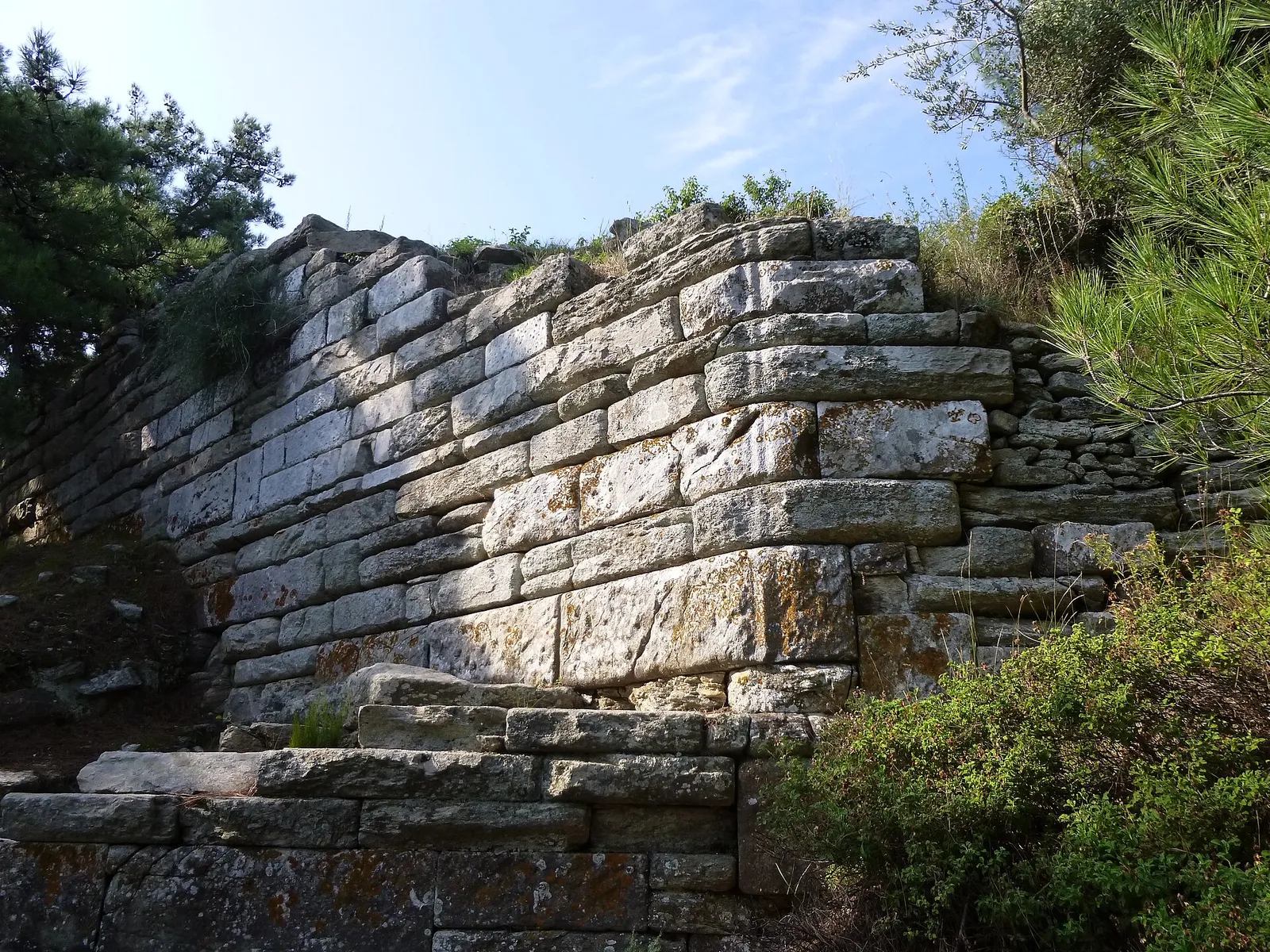
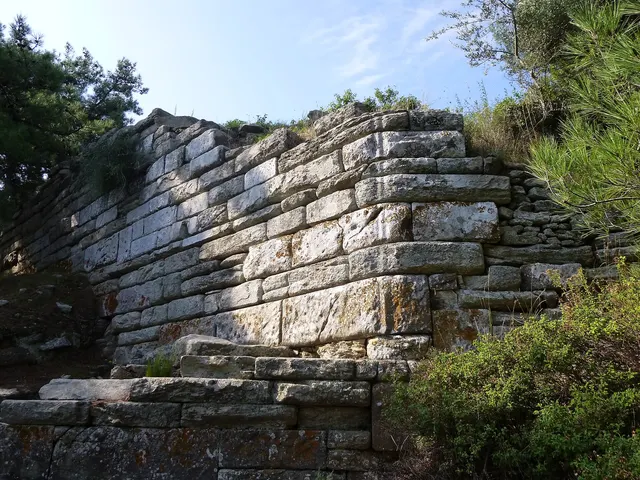
“In the next year after this”, that is 491 BC, Darius sent orders to Thasos. The island’s neighbours had reported that the Thasians were planning to rebel. Herodotus says the reports were false, but the Thasians had certainly been arming. Since being besieged by Histiaeus during the revolt, they had built warships and stronger walls, and they could afford it.41Herodotus, Histories 6.46Written c. 430 BC. Translation by A. D. GodleyRead on Perseus ↗
Thasos was one of the richest cities in Greece. It owned gold mines on the mainland opposite, at the place called Scapte Hyle, the “Dug Forest”, which brought in about eighty talents a year, and mines on the island itself. In total, Herodotus says, the city drew two hundred talents a year on average, and three hundred in the best years, so that its citizens paid no tax on their crops. He went to see the mines himself, and describes a whole hill “dug up in the searching” by the Phoenicians who first settled the island. Then he gives the outcome in one sentence: “The Thasians at the king’s command destroyed their walls and brought all their ships to Abdera.”42Herodotus, Histories 6.47Written c. 430 BC. Translation by A. D. GodleyRead on Perseus ↗
Grote saw in this a pattern of Persian rule: jealous neighbours denounced a rich city to the king, and “the jealousies among subject neighbors often procured revelations to the superior power”.43Grote, History of Greece, vol. 4, ch. 36G. Grote, History of Greece, vol. 4 (1847). A modern history, written 2,300 years laterRead on Project Gutenberg ↗ How and Wells mention a suggestion that Herodotus may have told the same surrender of Thasos twice, from two sources, but they thought the second, voluntary disarmament plausible after the losses at Athos. For Darius the result was what mattered: no fortified fleet base was left on the north Aegean coast that could resist the next Persian army.
Earth and water: Darius’ heralds
In the same year Darius set out to learn “whether the Greeks intended to wage war against him or to surrender themselves.” He sent heralds through Greece to demand earth and water for the king, and at the same time ordered his tributary cities on the coast to build warships and transports for horses.44Herodotus, Histories 6.48Written c. 430 BC. Translation by A. D. GodleyRead on Perseus ↗ The two orders belong together. The heralds would show who would resist; the horse transports would carry cavalry straight across the sea.
Many gave. The heralds received what they asked “from many of those dwelling on the mainland and from all the islanders to whom they came with the demand.”45Herodotus, Histories 6.49Written c. 430 BC. Translation by A. D. GodleyRead on Perseus ↗ Herodotus names only one: the island of Aegina, a few hours’ sail from Athens. Grote guessed that the mainland states that gave included the Thebans and Thessalians, “though Herodotus does not particularize them”; that is a modern inference from their behaviour in 480 BC.46Grote, History of Greece, vol. 4, ch. 36G. Grote, History of Greece, vol. 4 (1847). A modern history, written 2,300 years laterRead on Project Gutenberg ↗
Athens and Sparta did not give. Herodotus tells what they did in a later book, when he explains why Xerxes sent no heralds to either city in 481 BC: when Darius’ heralds came, “those who made the request were cast at the one city into the Pit and at the other into a well, and bidden to obtain their earth and water for the king from these locations.”47Herodotus, Histories 7.133Written c. 430 BC. Translation by A. D. GodleyRead on Perseus ↗ The Pit, the barathron, was a gorge at Athens into which condemned criminals were thrown. Killing heralds broke one of the oldest rules of Greek religion, and Herodotus believed Sparta was punished for it: its sacrifices went bad until two Spartans, Sperthias and Bulis, volunteered to go to Susa and give their lives to Xerxes in atonement. Xerxes sent them home unharmed, saying he would not do what he blamed the Spartans for.
Is the story true? Some scholars doubted it, partly because the Pit and the well look like a neat joke on “earth and water”. How and Wells weighed the objections and concluded that there “seems no sufficient reason for rejecting the whole story”; the heralds may even have been Greek interpreters, whom an angry crowd could treat as traitors.48How and Wells, A Commentary on Herodotus, note on Herodotus 7.137W. W. How and J. Wells, A Commentary on Herodotus, vol. 2 (1912). A line-by-line commentary; dated in placesRead on archive.org ↗ Some scholars have doubted at least the Athenian half of the story; How and Wells saw no good reason for that doubt either. The result, at least, is clear: by 490 BC neither Athens nor Sparta could make terms with Persia.
Athens, Aegina and Cleomenes
Aegina’s submission alarmed Athens. The two cities were old enemies, and the Athenians assumed that Aegina had given earth and water so that it could join the Persians in attacking Athens. “Gladly laying hold of this pretext, they went to Sparta and there accused the Aeginetans of acting to betray Hellas.”49Herodotus, Histories 6.49Written c. 430 BC. Translation by A. D. GodleyRead on Perseus ↗ How and Wells saw this appeal as a turning point: Athens, “compromised by her share in the Ionic revolt and more immediately threatened”, was recognising Sparta as leader of all the loyal Greeks.50How and Wells, A Commentary on Herodotus, appendix “Sparta under King Cleomenes”W. W. How and J. Wells, A Commentary on Herodotus, vol. 2 (1912). A line-by-line commentary; dated in placesRead on archive.org ↗
The Spartan king Cleomenes crossed to Aegina to arrest the men responsible. He was rebuffed. An Aeginetan named Crius, “the Ram”, told him he had no authority from Sparta and had been bribed by the Athenians, since otherwise the other Spartan king would have come with him. Cleomenes asked his name, and answered: “Now is the time to put bronze on your horns, Mr. Ram, for great calamity will confront you.”51Herodotus, Histories 6.50Written c. 430 BC. Translation by A. D. GodleyRead on Perseus ↗
Crius knew about the other king because Demaratus, Cleomenes’ fellow king, had written to the Aeginetans to undermine him. Cleomenes answered by having Demaratus deposed on the grounds that he was not the true son of the previous king, with the help of a bribed priestess at Delphi. Then he returned to Aegina with the new king, Leotychides. This time the Aeginetans gave way, and ten of their leading men, Crius among them, were handed over to the Athenians, “the bitterest foes of the Aeginetans”, as hostages.52Herodotus, Histories 6.73Written c. 430 BC. Translation by A. D. GodleyRead on Perseus ↗ Demaratus fled to Persia, and would march with Xerxes in 480 BC.
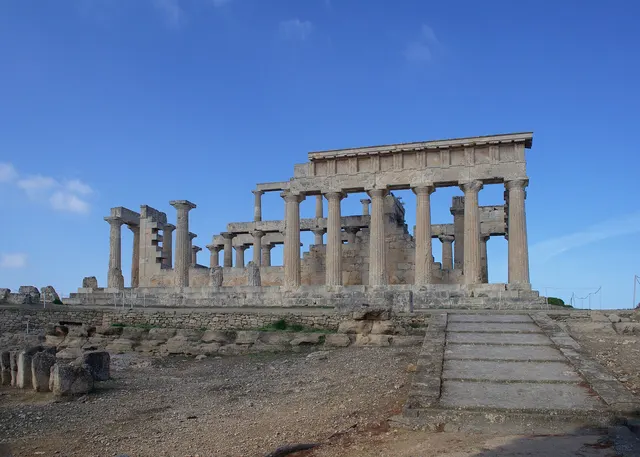
The quarrel did not end there. After Cleomenes’ death the Aeginetans demanded their hostages back, Athens refused, and a war at sea followed. Athens had too few good ships and had to borrow twenty from Corinth. Herodotus later says that this war with Aegina “saved Hellas by compelling the Athenians to become seamen”: it was the reason Themistocles gave when he persuaded the Athenians to spend the silver of Laurium on two hundred new warships, a few years before Xerxes came.53Herodotus, Histories 7.144Written c. 430 BC. Translation by A. D. GodleyRead on Perseus ↗
The lesson of Athos: a new route, then a canal
In 490 BC the next expedition did not go the way Mardonius had gone. Datis and Artaphernes gathered their army in Cilicia, loaded the horses on the new transports, and sailed to Ionia with six hundred triremes. From Samos they struck straight across the Aegean from island to island. Herodotus gives the reason: “this, to my thinking, was because they feared above all the voyage around Athos, seeing that in the previous year they had come to great disaster by holding their course that way”; Naxos, still unconquered, was another goal.54Herodotus, Histories 6.95Written c. 430 BC. Translation by A. D. GodleyRead on Perseus ↗ Herodotus counts the years loosely here: the wreck had been two summers before.
Grundy explained the change of plan. The disaster had shown “the dangers attendant upon the voyage of a large fleet by that circuitous route in those stormy seas”, slowed down by the need to keep pace with an army on land. So Darius decided that the joint advance of army and fleet must be given up, and “that the attack must be made by the short sea-route through the islands of the Ægean.”55Grundy, The Great Persian War, ch. 4G. B. Grundy, The Great Persian War (1901). Grundy travelled the routes and battlefields himselfRead on Project Gutenberg ↗ The price was size: an army that crossed by ship had to be small enough to be carried. That smaller force landed at Marathon, the subject of the next chapter.
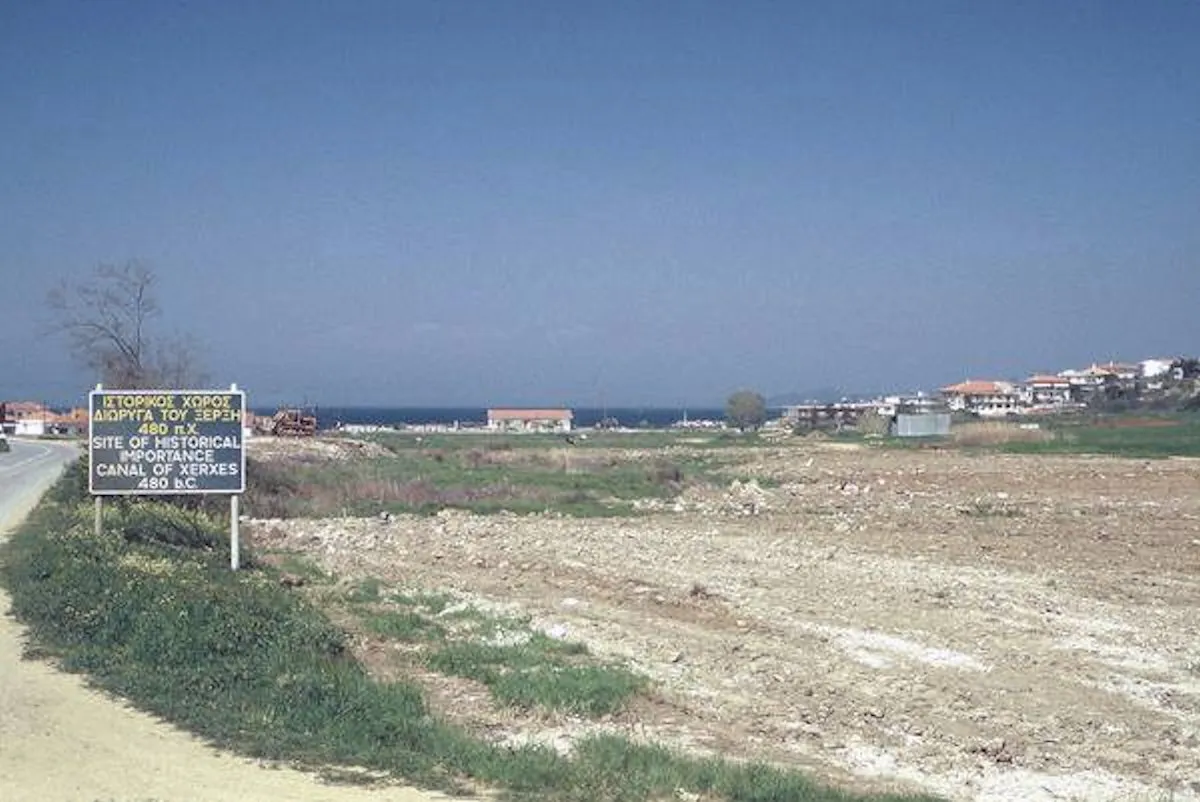
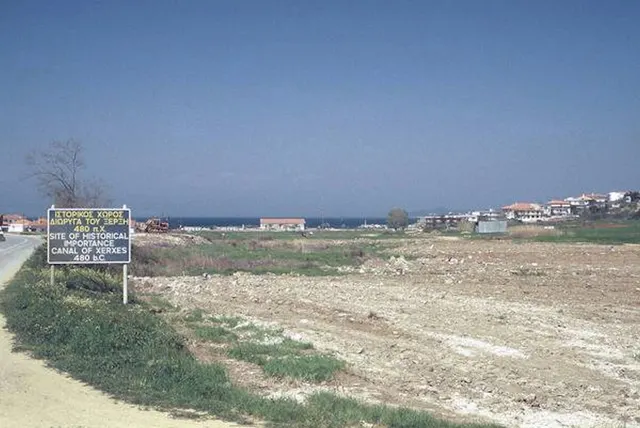
After Marathon, Persia went back to the plan of 492 BC on a far larger scale, and this time it dealt with Athos first. “Since those who had earlier attempted to sail around Athos had suffered shipwreck, for about three years preparations had been underway there.”56Herodotus, Histories 7.22Written c. 430 BC. Translation by A. D. GodleyRead on Perseus ↗ Gangs from the whole army, driven by the whip, and the local people dug a canal through the isthmus, about twelve stadia wide, under two Persian overseers, Bubares and Artachaees. Herodotus describes the method. The ground was divided among the nations, and the earth was passed up from hand to hand on steps; only the Phoenicians thought to make the trench wider at the top than at the bottom, so their sides did not collapse.
Herodotus thought the canal was a monument to pride: “with no trouble they could have drawn their ships across the isthmus, yet he ordered them to dig a canal from sea to sea, wide enough to float two triremes rowed abreast.”57Herodotus, Histories 7.24Written c. 430 BC. Translation by A. D. GodleyRead on Perseus ↗ Later writers mocked the story, and some doubted that the canal was ever finished. The Victorian historians defended Xerxes on practical grounds. Rawlinson called the canal “quite a legitimate and judicious undertaking”, because “No portion of the Greek coast is so dangerous as that about Athos.”58Rawlinson, The Fifth Monarchy: Persia, ch. 7G. Rawlinson, The Seven Great Monarchies, vol. 5 (1871). A Victorian history of Persia, based mostly on Greek writersRead on Project Gutenberg ↗ Herodotus says the work was completely finished before the army set out, and that the fleet of 480 BC sailed through it.59Herodotus, Histories 7.122Written c. 430 BC. Translation by A. D. GodleyRead on Perseus ↗ Thucydides, describing a campaign in the area in 424 BC, mentions the town of Sane “close to the canal”.60Thucydides, History of the Peloponnesian War 4.109Written c. 400 BC. Translation by R. CrawleyRead on Project Gutenberg ↗
Modern fieldwork has settled the question. Between 1991 and 2001 a British and Greek team surveyed the isthmus with seismic and other geophysical methods and drilled cores into the sediments. They found a buried, trench-like channel about 30 metres wide and up to about 3 metres deep running across the roughly 2-kilometre isthmus, and no rock barrier that would have prevented digging at the southern end, as one ancient critic had claimed. Their conclusion: the evidence points to a real canal, not a slipway for dragging ships, with features that match Herodotus’ account.61B. S. J. Isserlin, R. E. Jones, V. Karastathis, S. P. Papamarinopoulos, G. E. Syrides and J. Uren, “The Canal of Xerxes: summary of investigations 1991–2001”, Annual of the British School at Athens 98 (2003), pp. 369–385Report of the British–Greek geophysical survey of the canalRead on Cambridge Core ↗ Herodotus’ “two triremes rowed abreast” and his twelve stadia (a little over 2 km) are close to what the survey found.
Order on the western edge
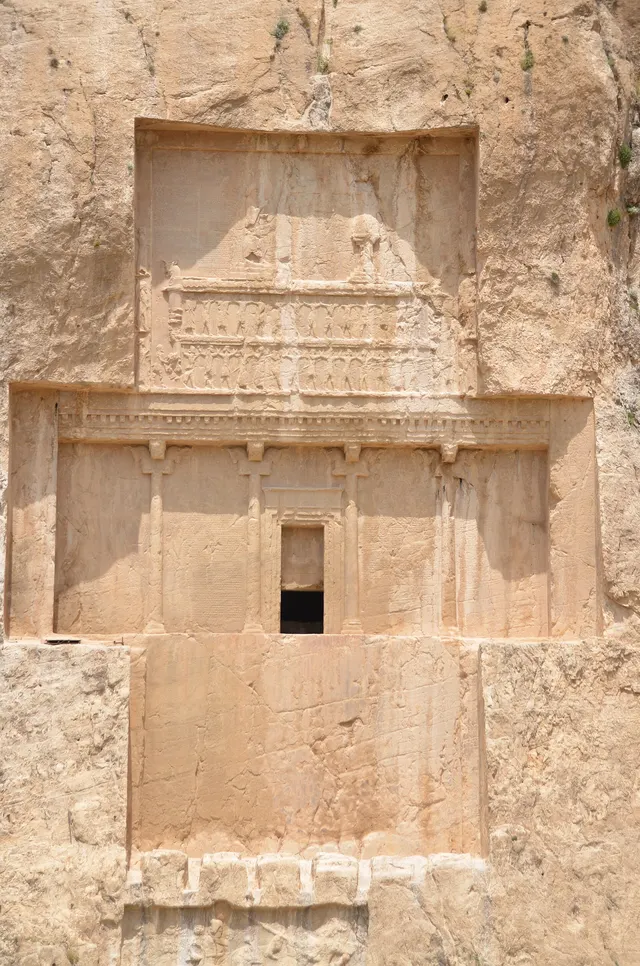
No Persian text mentions Mardonius, the storm or the heralds. What the Persian kings did leave are inscriptions that show how they saw their empire: as a list of lands and peoples given to the king by the god Auramazda, each bringing tribute. At Behistun, around 520 BC, Darius listed twenty-three lands, among them the Ionians, Yauna, and declared: “These are the provinces which are subject unto me; by the grace of Auramazda they became subject unto me; they brought tribute unto me.”62Darius I, Behistun inscription, column 1, § 6Carved c. 520 BC on Darius’ orders. Translation by L. W. King and R. C. Thompson (1907)Read on archive.org ↗
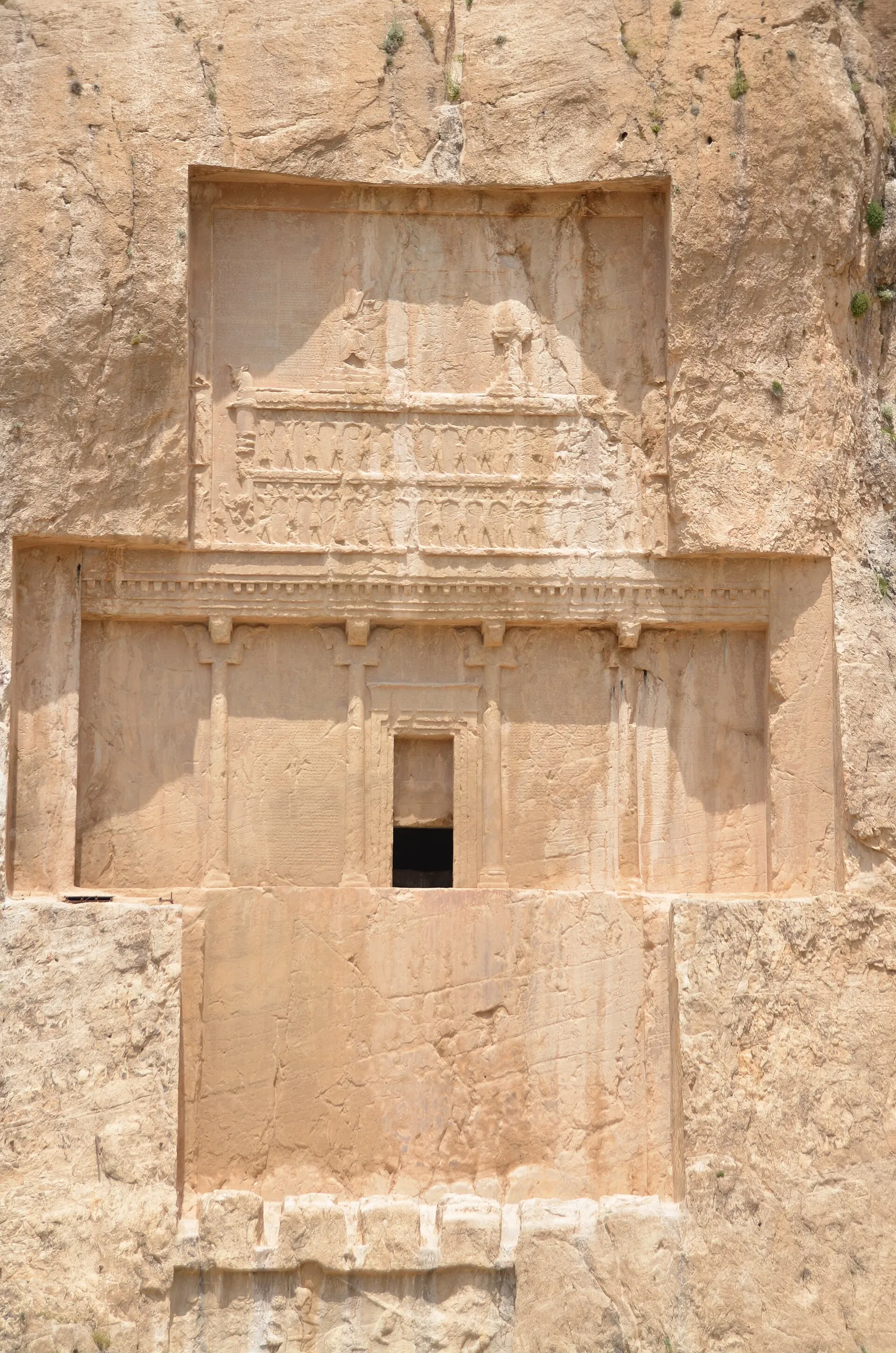
Later in his reign the list grew. The inscription on Darius’ tomb at Naqsh-e Rostam near Persepolis, known as DNa, names new peoples in the west: Skudra, the European province that probably covered Thrace; the “Scythians across the sea”; and the Yauna takabara, “Ionians who wear the sun-hat”, often taken to be the Macedonians or the Greeks of the north Aegean, after the broad-brimmed hat they wore.63A. Kuhrt, The Persian Empire: A Corpus of Sources from the Achaemenid Period (2007), translation of Darius’ tomb inscription DNaModern collection of Persian and other sources in translation (Routledge)View on Google Books ↗ Below the inscription, figures representing the subject peoples hold up the king’s throne. Seen this way, the campaign of 492 BC was not an adventure but the restoration of order in lands that already belonged on the list.
From that point of view, the Greeks of Europe were a security problem on the frontier. Free cities across the Aegean had sent ships to help rebels, sheltered exiles and traded with the king’s subjects. Herodotus puts the imperial logic in Mardonius’ mouth in 480 BC: the Persians, he says, had subdued Sacae, Indians, Ethiopians and Assyrians “for no wrong done to the Persians but of mere desire to add to our power”, so they could hardly leave unpunished Greeks who had wronged them.64Herodotus, Histories 7.9Written c. 430 BC. Translation by A. D. GodleyRead on Perseus ↗ The speech is Herodotus’ own composition, written for Greek readers, but the logic fits the inscriptions: an empire whose kings saw it as having no natural limit.
Earth and water fits the same pattern. For the Greeks it was a humiliating token; for the king it was a cheap way to win submission without a war, and many Greek cities, as well as the king of Macedon, accepted it. Modern historians agree that it was a gesture of submission to the king, but not on what exactly it meant or where it came from: it appears only in Greek sources, and no Persian text mentions it.65A. Kuhrt, “Earth and Water”, in A. Kuhrt and H. Sancisi-Weerdenburg (eds.), Achaemenid History III (1988), pp. 87–99Modern study of the Persian demand for earth and water (Leiden)Find in a library (WorldCat) ↗ The Thasians who pulled down their walls, the Aeginetans who gave the tokens and the Macedonians who sent troops in 480 BC all show that, for many Greeks, accepting Persian overlordship was a realistic choice, not treason. The choice of Athens and Sparta to kill the heralds was the exception, and it made war certain.
Why it mattered
The campaign of 492 BC is easy to overlook between the Ionian Revolt and Marathon, but it set the course of the war. It returned the north Aegean to Persian control and made Macedon a subject kingdom. Thrace and Macedon remained under Persian control until after 479 BC, so that in 480 BC Xerxes’ army could march from the Hellespont to the border of Thessaly through friendly or subject land, with supply depots waiting along the coast.
The storm off Athos taught Persia two lessons. In the short term it made Darius send the next army by the island route, which kept that army small enough to be beaten at Marathon. In the long term it led Xerxes to dig a canal through the isthmus and to bridge the Strymon, so that a fleet and army of unheard-of size could move together without facing the cape. Grundy summed up the effect: the disaster “had aroused within the Persian breast a dread of this formidable promontory.”66Grundy, The Great Persian War, ch. 5G. B. Grundy, The Great Persian War (1901). Grundy travelled the routes and battlefields himselfRead on Project Gutenberg ↗
The diplomacy of 491 BC divided the Greek world. The heralds showed who would submit, and the killing of the heralds at Athens and Sparta tied the two leading cities to resistance. Athens’ appeal to Sparta against Aegina brought them together, and the war with Aegina that followed pushed Athens to build the fleet that fought at Salamis. Mardonius himself returned, as Xerxes’ chief adviser and general in 480 BC, and died at Plataea in 479 BC, at the head of the army he had urged Xerxes to send.
How close is our evidence?
Almost everything we know about the campaign of 492 BC comes from one writer, Herodotus, who wrote some sixty years later. He could still talk to people whose parents had lived through it, and he travelled in the region: he saw the mines of Thasos himself. But his account of these years is brief, he gives few numbers, and the one big figure he gives, three hundred ships and twenty thousand men, he marks as hearsay. The only other Greek writer of the time who mentioned the storm, Charon of Lampsacus, survives in a single quotation, more than six centuries later. The canal is the one part of the story that can be checked on the ground, and there Herodotus has been proved right. On the Persian side, the royal inscriptions show how the kings saw their empire and its western peoples, but they never mention Mardonius’ campaign or its losses.
- Herodotus, Histories 6.42
- Herodotus, Histories 5.97.3
- Herodotus, Histories 4.87
- Herodotus, Histories 4.137
- Herodotus, Histories 5.2
- Herodotus, Histories 5.18.1
- Rawlinson, The Fifth Monarchy: Persia, ch. 7
- Herodotus, Histories 5.105
- Herodotus, Histories 6.94
- Herodotus, Histories 6.44
- Herodotus, Histories 6.94
- Grundy, The Great Persian War, ch. 4
- How and Wells, A Commentary on Herodotus, note on Herodotus 6.45
- M. I. Vasilev, The Policy of Darius and Xerxes towards Thrace and Macedonia (2015), ch. “The policy of Darius towards Thrace and Macedonia (499/8–492/1)”
- Herodotus, Histories 6.43
- Herodotus, Histories 6.43
- Herodotus, Histories 6.43
- Grote, History of Greece, vol. 4, ch. 36
- Rawlinson, The Fifth Monarchy: Persia, ch. 7
- How and Wells, A Commentary on Herodotus, note on Herodotus 6.43
- Herodotus, Histories 6.43
- Herodotus, Histories 6.44
- How and Wells, A Commentary on Herodotus, note on Herodotus 6.44
- Grote, History of Greece, vol. 4, ch. 36
- Herodotus, Histories 6.44
- Grundy, The Great Persian War, ch. 4
- Grote, History of Greece, vol. 4, ch. 36
- How and Wells, A Commentary on Herodotus, note on Herodotus 6.44
- Grote, History of Greece, vol. 4, ch. 36
- Herodotus, Histories 6.45
- How and Wells, A Commentary on Herodotus, note on Herodotus 6.45
- Grundy, The Great Persian War, ch. 4
- Herodotus, Histories 6.45
- Herodotus, Histories 6.94
- Grote, History of Greece, vol. 4, ch. 36
- Herodotus, Histories 7.108
- Herodotus, Histories 7.9A
- Grundy, The Great Persian War, ch. 4
- How and Wells, A Commentary on Herodotus, note on Herodotus 6.45
- M. I. Vasilev, The Policy of Darius and Xerxes towards Thrace and Macedonia (2015), ch. “The policy of Darius towards Thrace and Macedonia (499/8–492/1)”
- Herodotus, Histories 6.46
- Herodotus, Histories 6.47
- Grote, History of Greece, vol. 4, ch. 36
- Herodotus, Histories 6.48
- Herodotus, Histories 6.49
- Grote, History of Greece, vol. 4, ch. 36
- Herodotus, Histories 7.133
- How and Wells, A Commentary on Herodotus, note on Herodotus 7.137
- Herodotus, Histories 6.49
- How and Wells, A Commentary on Herodotus, appendix “Sparta under King Cleomenes”
- Herodotus, Histories 6.50
- Herodotus, Histories 6.73
- Herodotus, Histories 7.144
- Herodotus, Histories 6.95
- Grundy, The Great Persian War, ch. 4
- Herodotus, Histories 7.22
- Herodotus, Histories 7.24
- Rawlinson, The Fifth Monarchy: Persia, ch. 7
- Herodotus, Histories 7.122
- Thucydides, History of the Peloponnesian War 4.109
- B. S. J. Isserlin, R. E. Jones, V. Karastathis, S. P. Papamarinopoulos, G. E. Syrides and J. Uren, “The Canal of Xerxes: summary of investigations 1991–2001”, Annual of the British School at Athens 98 (2003), pp. 369–385
- Darius I, Behistun inscription, column 1, § 6
- A. Kuhrt, The Persian Empire: A Corpus of Sources from the Achaemenid Period (2007), translation of Darius’ tomb inscription DNa
- Herodotus, Histories 7.9
- A. Kuhrt, “Earth and Water”, in A. Kuhrt and H. Sancisi-Weerdenburg (eds.), Achaemenid History III (1988), pp. 87–99
- Grundy, The Great Persian War, ch. 5
- Herodotus, Histories: 6.44, 7.73