In the late summer of 490 BC a Persian fleet crossed the Aegean, burned Naxos and Eretria, and landed an army on the plain of Marathon, 40 kilometres from Athens. The Athenians marched out to meet it with no help except a thousand men from little Plataea; the Spartans had promised to come, but only after the full moon. After several days of waiting the Athenians attacked, broke the Persian army and drove it into its ships. The Persians sailed for Athens, found the victors already home, and went back to Asia. It was the first time a Greek army had beaten a Persian one in the open field, and it set the stage for everything that followed.
Where this chapter fits
Ten years earlier Athens and Eretria had sent ships to help the Ionian Greeks in their revolt against Persia, and in 498 BC the rebels burned Sardis, the seat of the Persian governor. Herodotus tells a famous story about Darius’ reaction: the king asked who the Athenians were, shot an arrow into the sky and told a servant to say to him three times at every dinner, “Master, remember the Athenians.”1Herodotus, Histories 5.105Written c. 430 BC. Translation by A. D. GodleyRead on Perseus ↗ By 493 BC the revolt was crushed. In 492 BC Darius’ son-in-law Mardonius led an army and fleet along the north coast of the Aegean, but a storm off Mount Athos wrecked much of the fleet, as the previous chapter told.
In 491 BC Darius sent heralds to the Greek cities to ask for earth and water, the tokens of submission. Many mainland cities and all the islands they visited gave them. At Athens and Sparta the heralds were thrown into a pit and a well and told to take their earth and water from there.2Herodotus, Histories 7.133Written c. 430 BC. Translation by A. D. GodleyRead on Perseus ↗ Herodotus gives three reasons for the expedition that followed: the king’s servant kept reminding him of the Athenians, the exiled family of the Athenian tyrant Pisistratus was at his court speaking against Athens, and Darius wanted a pretext to subdue all the Greeks who had not given him earth and water.
Datis and Artaphrenes: the fleet of 490 BC
Darius did not send Mardonius again. He chose two new commanders, Datis, “a Mede by birth”, and his own nephew Artaphrenes, son of the satrap of Sardis who had fought the Ionian Revolt; their orders were “to enslave Athens and Eretria and bring the slaves into his presence”.3Herodotus, Histories 6.94Written c. 430 BC. Translation by A. D. GodleyRead on Perseus ↗ Datis was no stranger to the west. A clay tablet from the Persian administrative archive at Persepolis, published in modern times, records a man called Datiya travelling from Sardis to the king in early 494 BC with a sealed royal document. Modern historians identify him with Herodotus’ Datis, which would mean he had served against the Ionian rebels.4D. M. Lewis, “Datis the Mede”, Journal of Hellenic Studies 100 (1980), pp. 194–195Modern article: Datis named on a Persepolis Fortification tablet (Q-1809) of early 494 BCFind on JSTOR ↗
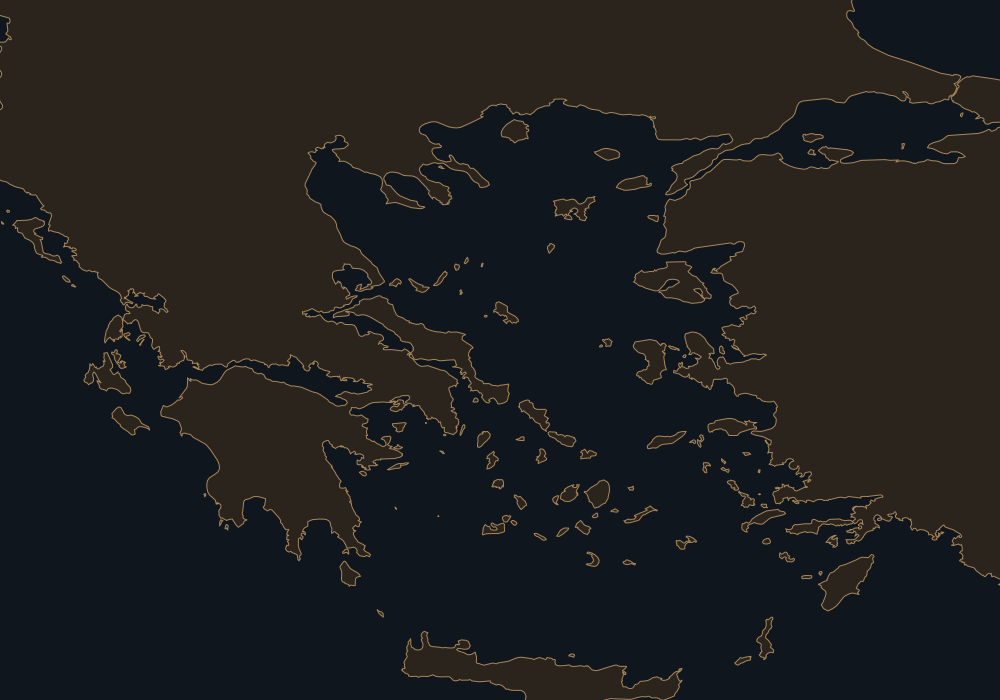
The army gathered on the Aleian plain in Cilicia, in the south-east corner of Asia Minor, where the fleet and the horse transports that Darius had ordered the year before joined it. Herodotus says they sailed to Ionia with six hundred triremes, and then, instead of hugging the coast towards the Hellespont and Thrace as Mardonius had done, set out from Samos straight across the Icarian Sea from island to island. He thought they feared another disaster off Athos, and that Naxos, still unconquered, drew them that way.5Herodotus, Histories 6.95Written c. 430 BC. Translation by A. D. GodleyRead on Perseus ↗ How many soldiers were aboard he does not say. Grote, in 1847, admitted that the numbers of the Persians “we cannot be said to know at all”.6Grote, History of Greece, vol. 4, ch. 36G. Grote, History of Greece, vol. 4 (1847). A modern history, written 2,300 years laterRead on Project Gutenberg ↗ Modern historians usually reckon with a fighting force of some 20,000 to 30,000 men, with a small but feared force of cavalry, far below the hundreds of thousands of later Greek writers.7P. Green, The Greco-Persian Wars (1996)Modern history of the Persian Wars (University of California Press)View on Google Books ↗
Naxos burned, Delos spared
Naxos had beaten off a Persian siege in 499 BC, the failure that sparked the Ionian Revolt. This time its people did not wait: remembering the earlier siege, they fled into the mountains.8Herodotus, Histories 6.96Written c. 430 BC. Translation by A. D. GodleyRead on Perseus ↗ The Persians enslaved everyone they caught and burned the temples and the town. Plutarch, writing six centuries later, followed local Naxian chroniclers who claimed that Datis was driven off; How and Wells answered that the conquest of Naxos “could only be doubted by a blind patriotism”, since Herodotus later shows Naxos in Persian hands.9How and Wells, A Commentary on Herodotus, note on 6.96W. W. How and J. Wells, A Commentary on Herodotus, vol. 2 (1912). A line-by-line commentary; dated in placesRead on archive.org ↗
Delos was different. The Delians fled to Tenos, but Datis anchored his fleet off the neighbouring island of Rhenaea instead of Delos and sent them a herald: it was his own wish and the king’s command, he said, to harm neither the island where the two gods, Apollo and Artemis, had been born nor its people. Then he “piled up three hundred talents of frankincense on the altar and burnt it”.10Herodotus, Histories 6.97Written c. 430 BC. Translation by A. D. GodleyRead on Perseus ↗ How and Wells suggested that the Persians may have seen in them their own gods of the sun and moon, and that Datis also wanted to please his Ionian sailors.11How and Wells, A Commentary on Herodotus, note on 6.97W. W. How and J. Wells, A Commentary on Herodotus, vol. 2 (1912). A line-by-line commentary; dated in placesRead on archive.org ↗ Respect for local gods who had not resisted was normal Persian policy.
Soon after the fleet left, Delos was shaken by an earthquake, the first and last, the Delians said, before Herodotus’ own time, which Herodotus took as a sign of the evils to come. The fleet then sailed round the islands collecting soldiers and taking the sons of the islanders as hostages. Only Carystus, at the southern tip of Euboea, refused to give hostages or to fight against its neighbours Eretria and Athens; the Persians besieged it and laid waste its land until it gave in.
Eretria: besieged and betrayed
Eretria, on the west coast of Euboea, asked Athens for help. The Athenians sent the 4,000 settlers who held the land of the horse-breeding aristocracy of neighbouring Chalcis, confiscated sixteen years earlier. But Herodotus says “all the plans of the Eretrians were unsound”: some wanted to abandon the city for the hills of Euboea, others were plotting to betray it in the hope of reward.12Herodotus, Histories 6.100Written c. 430 BC. Translation by A. D. GodleyRead on Perseus ↗ A leading Eretrian, Aeschines son of Nothon, warned the Athenian settlers to leave before they shared the city’s fate, and they crossed to Oropus on the mainland. Grundy suspected that this part of the story was shaped to cover up the settlers’ failure to fight.13Grundy, The Great Persian War, ch. 4G. B. Grundy, The Great Persian War (1901). Grundy surveyed the battlefields himselfRead on Project Gutenberg ↗
The Persians landed at Temenos, Choereae and Aegilia, in Eretrian territory, and at once unloaded their horses. The Eretrians decided not to fight in the open but to defend their walls. For six days the attacks went on and many fell on both sides; on the seventh day two prominent citizens, Euphorbus and Philagrus, opened the city to the Persians. The Persians “plundered and burnt the temples, in revenge for the temples that were burnt at Sardis”, and enslaved the people, as Darius had ordered.14Herodotus, Histories 6.101Written c. 430 BC. Translation by A. D. GodleyRead on Perseus ↗
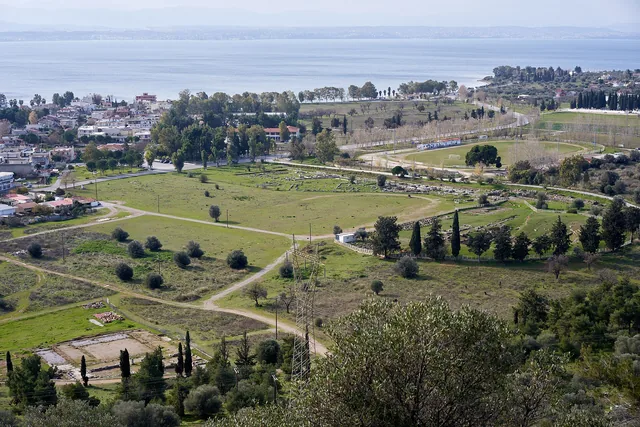
The captives were not killed. After the campaign they were taken inland to Susa. Darius had been furious with the Eretrians, Herodotus says, but when they were brought before him he did them no harm and settled them at a royal estate called Ardericca, in the land of Cissia, near a well that yielded asphalt, salt and oil. He adds that their descendants were still living there in his own time, keeping their old language. How and Wells thought that Eretria was attacked first as “the easier prey”, so that its fate might frighten those at Athens who were wavering.15How and Wells, A Commentary on Herodotus, appendix XVIIIW. W. How and J. Wells, A Commentary on Herodotus, vol. 2 (1912). A line-by-line commentary; dated in placesRead on archive.org ↗
Why Marathon?
A few days after Eretria fell, the fleet crossed the strait to Attica. Herodotus gives two reasons for the landing place: “Marathon was the place in Attica most suitable for riding horses and closest to Eretria, so Hippias son of Pisistratus led them there.”16Herodotus, Histories 6.102Written c. 430 BC. Translation by A. D. GodleyRead on Perseus ↗ Hippias, the last tyrant of Athens, had been driven out in 510 BC and had gone over to the Persians. Now an old man, he guided the army into the land he hoped to rule again, twenty years after his expulsion, as Grote noted.17Grote, History of Greece, vol. 4, ch. 36G. Grote, History of Greece, vol. 4 (1847). A modern history, written 2,300 years laterRead on Project Gutenberg ↗ He knew the route well. As a young man he had landed at Marathon from Eretria with his father Pisistratus, who then marched on Athens and seized power for the third time, about 546 BC.
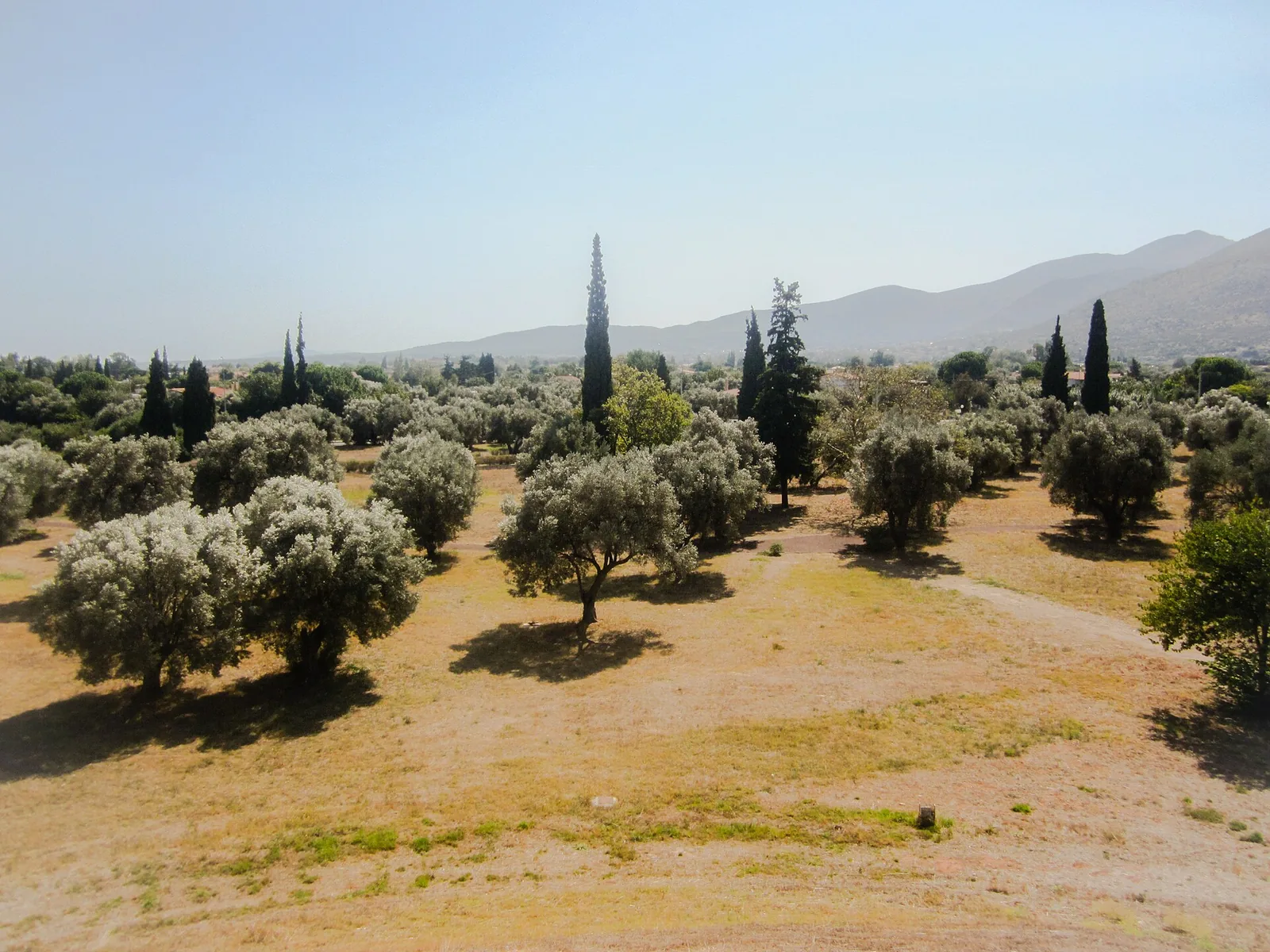
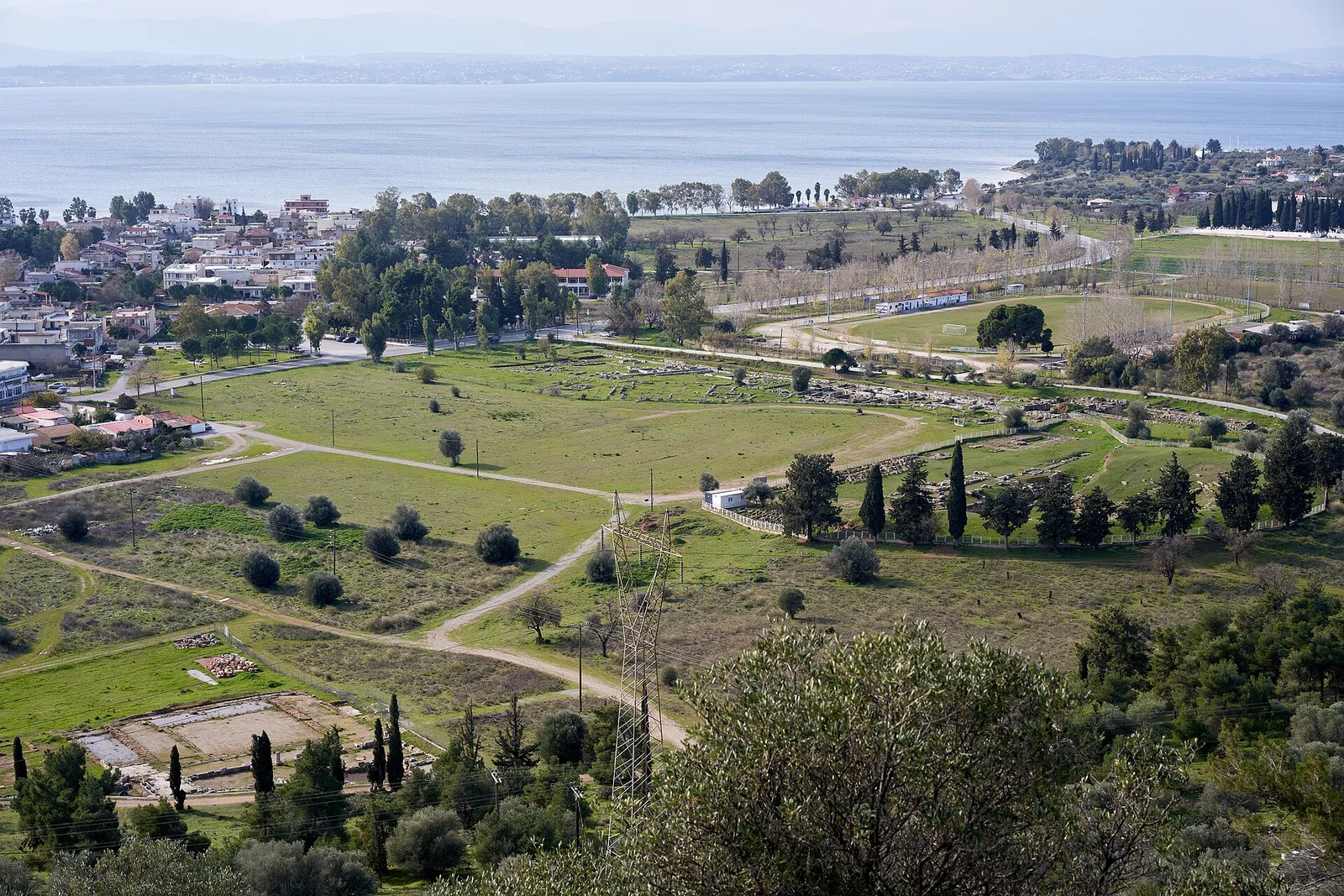
The plain is a crescent of flat land about eight kilometres long and two to three wide, closed in by hills, with a large marsh at the north-east end, a small one at the south-west and a stream, the Charadra, cutting across the middle. A long rocky headland, the Kynosoura, shelters the northern end of the bay, a good anchorage for a fleet. Old historians who walked the ground were not convinced by Herodotus’ cavalry argument: the plain of Athens itself is better for horses, and the Persians made no use of their cavalry in the battle. Many modern historians think the real aim was political: to draw the Athenian army far from the city, while Hippias’ friends inside Athens prepared to open the gates.
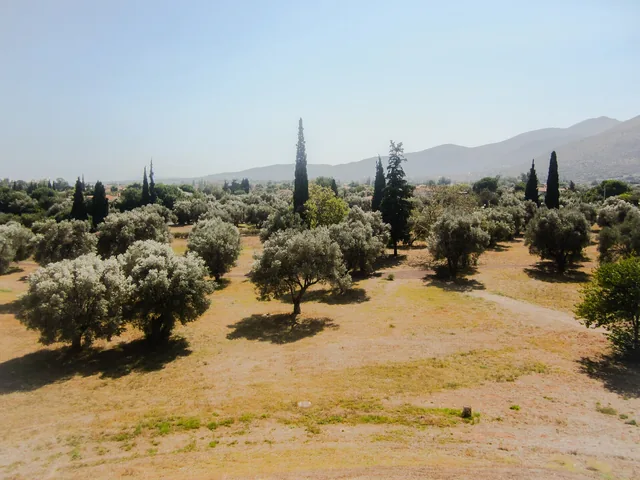
Herodotus adds a strange scene. The night before the landing Hippias dreamed that he slept with his mother and took it to mean that he would return to Athens and die there as an old man in his own country. While he was drawing up the troops on the shore he sneezed and coughed so hard that one of his loose old teeth fell out into the sand. He searched for it in vain and then said: “This land is not ours and we will not be able to subdue it. My tooth holds whatever share of it was mine.”
Athens marches out: ten generals and a polemarch
When the news reached Athens, the army marched to Marathon “with ten generals leading them. The tenth was Miltiades”. Each of the ten tribes created by Cleisthenes’ reforms in 508/507 BC elected one general, who led his tribe’s regiment. Later writers say that Miltiades himself had proposed the decree to march out and fight in the field instead of waiting behind the walls, as Eretria had done. Grote thought the great debate over whether to fight at all probably took place in Athens before the march, not at Marathon as Herodotus tells it.
Miltiades was the most experienced of them in war against Persia. His family, the Philaids, had ruled the Thracian Chersonese, the peninsula on the European side of the Hellespont, and Miltiades had governed it as a Persian subject. He had served Darius on the Scythian campaign, joined the Ionian Revolt and taken Lemnos for Athens. When the revolt collapsed in 493 BC he fled to Athens with a Phoenician squadron at his heels, which captured one of his ships with his son on board. At home his enemies prosecuted him for tyranny there; he was acquitted and elected general. He knew the Persians, and the Persians knew him.
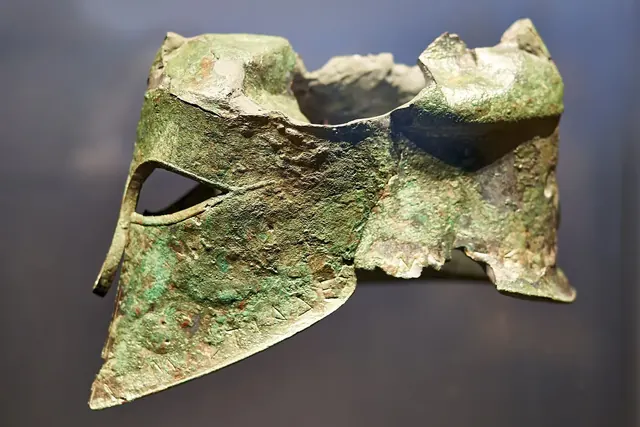
Above the ten generals stood the polemarch, the archon in charge of war, who by old custom had a vote equal to theirs and commanded the right wing. In 490 BC this was Callimachus of Aphidna. Herodotus says he was “chosen by lot”,18Herodotus, Histories 6.109Written c. 430 BC. Translation by A. D. GodleyRead on Perseus ↗ but the Aristotelian Constitution of the Athenians dates the use of the lot for the archons to 487 BC, three years later. How and Wells called this a slight anachronism on Herodotus’ part. Many historians therefore think that in 490 BC the polemarch was still the real commander-in-chief, presiding over a council of ten tribal generals.
The Athenians marched over the hills by the shorter road and camped in the sacred precinct of Heracles, at the south-western edge of the plain. Grundy, who walked the ground in 1899, located it high up the valley of Avlona, where it blocked both roads to Athens and threatened the flank of any army that tried to march south along the coast.19Grundy, The Great Persian War, ch. 4G. B. Grundy, The Great Persian War (1901). Grundy surveyed the battlefields himselfRead on Project Gutenberg ↗ From there they could watch the Persians without being attacked by cavalry on the open plain.
Philippides and the Spartan full moon
Before the army left the city, the generals sent a runner to Sparta, Philippides, a professional long-distance runner. Herodotus says he reached Sparta on the day after he left Athens, a distance of about 240 kilometres over mountain roads. Grote reckoned it at a hundred and fifty miles on foot in forty-eight hours. Since 1983 runners have repeated the feat every year in the Spartathlon, which modern runners finish in well under two days.
On the way, in the Parthenian mountains above Tegea, Philippides said he met the god Pan, who called him by name and asked why the Athenians paid him no attention, though he had often helped them and would again. After the war the Athenians founded a shrine of Pan in a cave below the Acropolis, with yearly sacrifices and a torch-race. At Sparta Philippides delivered his message: the Athenians asked the Spartans not to allow “the most ancient city among the Hellenes to fall into slavery at the hands of the foreigners”.20Herodotus, Histories 6.106Written c. 430 BC. Translation by A. D. GodleyRead on Perseus ↗
The Spartans agreed to help, but not at once. It was the ninth day of the month, and “they said that on the ninth they could not go out to war until the moon’s circle was full”.21Herodotus, Histories 6.106Written c. 430 BC. Translation by A. D. GodleyRead on Perseus ↗ Pausanias, centuries later, repeats it as a Spartan custom.22Pausanias, Description of Greece 1.28.4Written c. AD 160; Pausanias visited the sites. Translation by A. R. Shilleto (1886)Read on Project Gutenberg ↗ How and Wells thought the rule probably applied to one month only, Carneius, when the Spartans held their great festival of Apollo Carneius up to the full moon and did not fight, just as a festival kept them at home during Thermopylae ten years later.23How and Wells, A Commentary on Herodotus, note on 6.106W. W. How and J. Wells, A Commentary on Herodotus, vol. 2 (1912). A line-by-line commentary; dated in placesRead on archive.org ↗ The ancient critics were less kind. Plutarch accused Herodotus of slandering the Spartans and claimed the battle was fought on the sixth day of the month Boedromion, before any full moon.24Plutarch, On the Malice of Herodotus 26Written c. AD 100. Translation by W. W. Goodwin (1874)Read on Project Gutenberg ↗ The sixth of Boedromion was in fact the day of the yearly thanksgiving for the victory, not necessarily of the battle.
The full-moon rule also gives the best clue to the date. How and Wells, following the nineteenth-century scholar August Böckh, put the battle at the full moon of the Athenian month Metageitnion, on the 17th, which they equated with 12 September. Modern historians still debate it. If the Spartan festival month did not coincide with the Athenian one, the battle may have been fought a month earlier, in August 490 BC; the question is unresolved.25P. Krentz, The Battle of Marathon (2010), appendix on the date of the battleModern study of the battle (Yale University Press, Yale Library of Military History)View on Google Books ↗
The Plataeans
Only one city came. As the Athenians stood in the precinct of Heracles, “the Plataeans came to help them in full force”.26Herodotus, Histories 6.108Written c. 430 BC. Translation by A. D. GodleyRead on Perseus ↗ Plataea was a small Boeotian town on the slopes of Mount Cithaeron. Some years before, threatened by Thebes, it had put itself under the protection of Athens, on the advice of the Spartans, who, Herodotus remarks, gave that advice mainly to set Athens and the Boeotians against each other. Later writers put the Plataean force at about a thousand men.
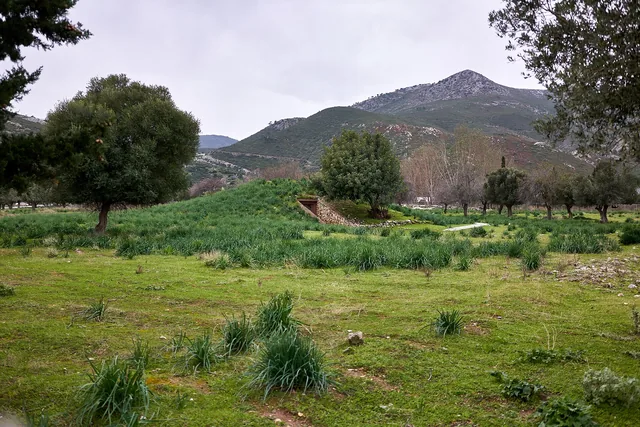
Grote, a Victorian banker and radical, was moved by it: “this volunteer march of the whole Platæan force to Marathon is one of the most affecting incidents of all Grecian history”.27Grote, History of Greece, vol. 4, ch. 36G. Grote, History of Greece, vol. 4 (1847). A modern history, written 2,300 years laterRead on Project Gutenberg ↗ The Athenians did not forget. Herodotus says that ever since, at the great festivals held every fourth year, “the Athenian herald prays for good things for the Athenians and Plataeans together”.28Herodotus, Histories 6.111Written c. 430 BC. Translation by A. D. GodleyRead on Perseus ↗ The Plataeans were buried on the field in their own mound, together with the slaves who had fought; Pausanias calls it “the first engagement in which slaves fought”.29Pausanias, Description of Greece 1.32.3Written c. AD 160; Pausanias visited the sites. Translation by A. R. Shilleto (1886)Read on Project Gutenberg ↗
Days of waiting: the vote and the horsemen
For several days the two armies watched each other. The Athenian generals were split: some argued that they were too few to attack the army of the Medes, others, Miltiades among them, wanted to fight. With the generals evenly divided, Miltiades turned to the polemarch, whose vote would decide. Herodotus gives him a speech: “Callimachus, it is now in your hands to enslave Athens or make her free”.30Herodotus, Histories 6.109Written c. 430 BC. Translation by A. D. GodleyRead on Perseus ↗ The danger, Miltiades argued, was not only the Persians. “If we do not attack now, I expect that great strife will fall upon and shake the spirit of the Athenians, leading them to medize.”31Herodotus, Histories 6.109Written c. 430 BC. Translation by A. D. GodleyRead on Perseus ↗
Callimachus voted to fight. Herodotus then says that the generals who agreed with Miltiades handed him their days of command, but that he would not attack until his own day of command came round. The story is hard to believe as it stands: why would the man who demanded an attack at once wait for his turn? Grundy thought Herodotus had read the command system of his own day back into 490 BC, and that the polemarch, not a rotating general, was in charge, while Miltiades was the author of the plan.32Grundy, The Great Persian War, ch. 4G. B. Grundy, The Great Persian War (1901). Grundy surveyed the battlefields himselfRead on Project Gutenberg ↗ Plutarch adds that Aristides, general of his tribe, handed his day of command to Miltiades and led the others to do the same.
Why the attack came when it did is the central puzzle of the battle. Herodotus never mentions the Persian cavalry in the fighting, although the horses had been shipped across the Aegean, landed at Eretria and were the stated reason for choosing Marathon. One explanation comes from a very late source. The Suda, a Byzantine encyclopaedia of the tenth century AD, explains the proverb chōris hippeis, “the horsemen are apart”, with a story: when Datis withdrew, the Ionians in his army climbed trees and signalled to the Athenians that the cavalry had gone, and Miltiades attacked. How and Wells were frank that “the late Byzantine grammarian, Suidas, traces the origin of the proverb” and that its source is suspect.33How and Wells, A Commentary on Herodotus, appendix XVIIIW. W. How and J. Wells, A Commentary on Herodotus, vol. 2 (1912). A line-by-line commentary; dated in placesRead on archive.org ↗ Grundy and Munro built on it the theory that the Persians had begun to re-embark their cavalry, and part of the infantry, to sail round to Athens, and that Miltiades attacked the part that was left.
The theory is attractive but rests on a story written down about 1,500 years after the battle. Modern historians remain divided. Some still accept a departure of the cavalry; others, notably Peter Krentz, argue that the cavalry was present at Marathon and that the Greeks charged at speed precisely to close with the Persians before the horsemen and archers could do their work.34P. Krentz, The Battle of Marathon (2010)Modern study of the battle (Yale University Press, Yale Library of Military History)View on Google Books ↗ What all agree on is that the Persians could not wait for ever: the Spartans would march after the full moon.
The battle: thin centre, strong wings
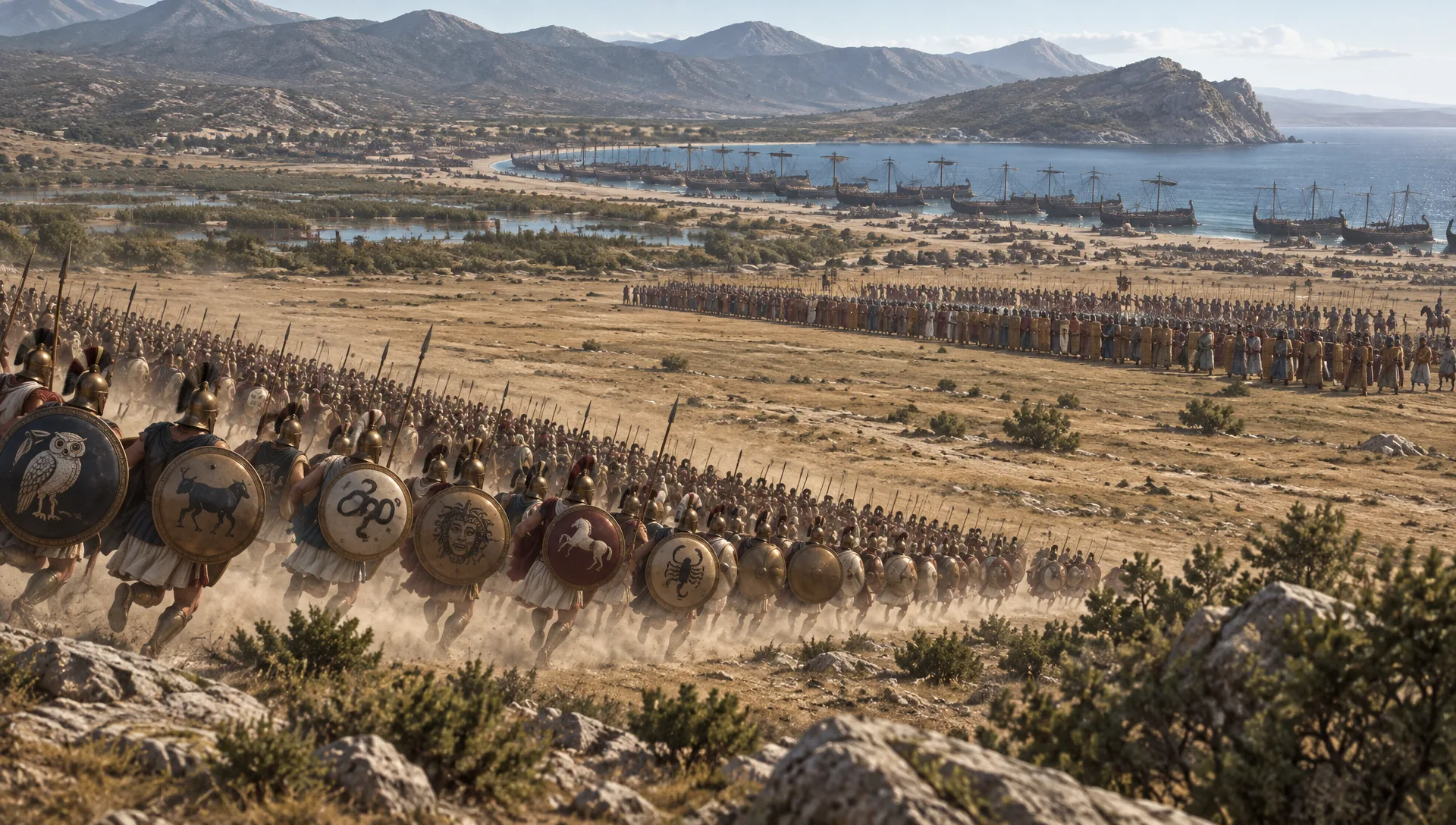
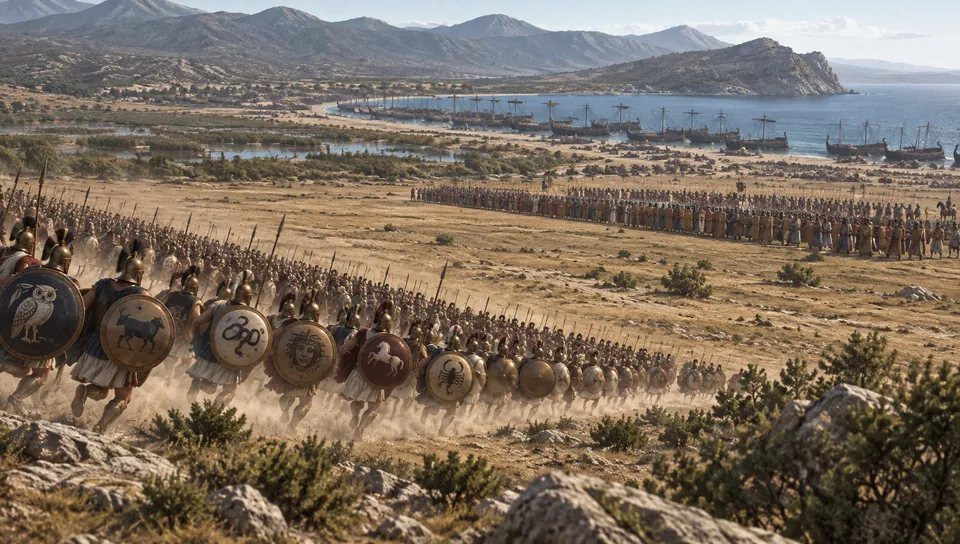
When the day came, the Athenians drew up with Callimachus on the right wing, then the tribes in their official order, and the Plataeans on the left. To avoid being outflanked by the larger army, Miltiades made the Greek line as long as the Persian one. “The center, where the line was weakest, was only a few ranks deep, but each wing was strong in numbers.”35Herodotus, Histories 6.111Written c. 430 BC. Translation by A. D. GodleyRead on Perseus ↗ Plutarch adds that the two tribes in the centre were Leontis and Antiochis, with Themistocles and Aristides fighting side by side.36Plutarch, AristidesWritten c. AD 100. Translation by J. Dryden, revised by A. H. CloughRead on Project Gutenberg ↗ Opposite them, in the Persian centre, stood the best troops: the Persians themselves and the Sacae, Scythian warriors from Central Asia.
The sacrifices were favourable and the Athenians went forward. “When they had been set in order and the sacrifices were favorable, the Athenians were sent forth and charged the foreigners at a run. The space between the armies was no less than eight stadia.”37Herodotus, Histories 6.112Written c. 430 BC. Translation by A. D. GodleyRead on Perseus ↗ Eight stades is about 1.5 kilometres. The Persians, Herodotus says, thought them “absolutely crazy”, so few, without cavalry or archers, and running. He calls them the first Greeks known to have charged at a run, and the first to endure the sight of Median dress, at a time when the very name of the Medes had terrified the Greeks.
Could men in bronze armour run 1.5 kilometres and then fight? Grote took Herodotus literally and thought the run disordered the Greek ranks, which explained the defeat of the centre: “I accept the account of Herodotus literally”.38Grote, History of Greece, vol. 4, ch. 36G. Grote, History of Greece, vol. 4 (1847). A modern history, written 2,300 years laterRead on Project Gutenberg ↗ How and Wells did not believe it: “No doubt the advance was rapid, but only for the last 200 yards, when within bowshot, would the Attic hoplites charge at full speed.”39How and Wells, A Commentary on Herodotus, note on 6.112W. W. How and J. Wells, A Commentary on Herodotus, vol. 2 (1912). A line-by-line commentary; dated in placesRead on archive.org ↗ That remains the view of many modern historians. Krentz has argued the opposite: that a hoplite of 490 BC carried far less than the 30-plus kilograms often assumed, at most about 23 kilograms, and could have run the whole distance.40P. Krentz, The Battle of Marathon (2010), pp. 43–62Modern study of the battle (Yale University Press, Yale Library of Military History)View on Google Books ↗ The question is still open.
The fighting, Herodotus says, lasted a long time. In the centre the Persians and Sacae won, broke the thin Greek line and chased it “inland”. On both wings the Athenians and Plataeans won. Then came the decisive move: instead of chasing the beaten wings, they “brought the wings together to fight those who had broken through the center”, and beat them too.41Herodotus, Histories 6.113Written c. 430 BC. Translation by A. D. GodleyRead on Perseus ↗ Whether this was Miltiades’ plan or the result of the wings simply winning first, the effect was a double envelopment, one of the earliest recorded. Grundy thought the plan “one of the ablest designs traceable in the history of Greek warfare”.42Grundy, The Great Persian War, ch. 4G. B. Grundy, The Great Persian War (1901). Grundy surveyed the battlefields himselfRead on Project Gutenberg ↗
Fighting at the ships
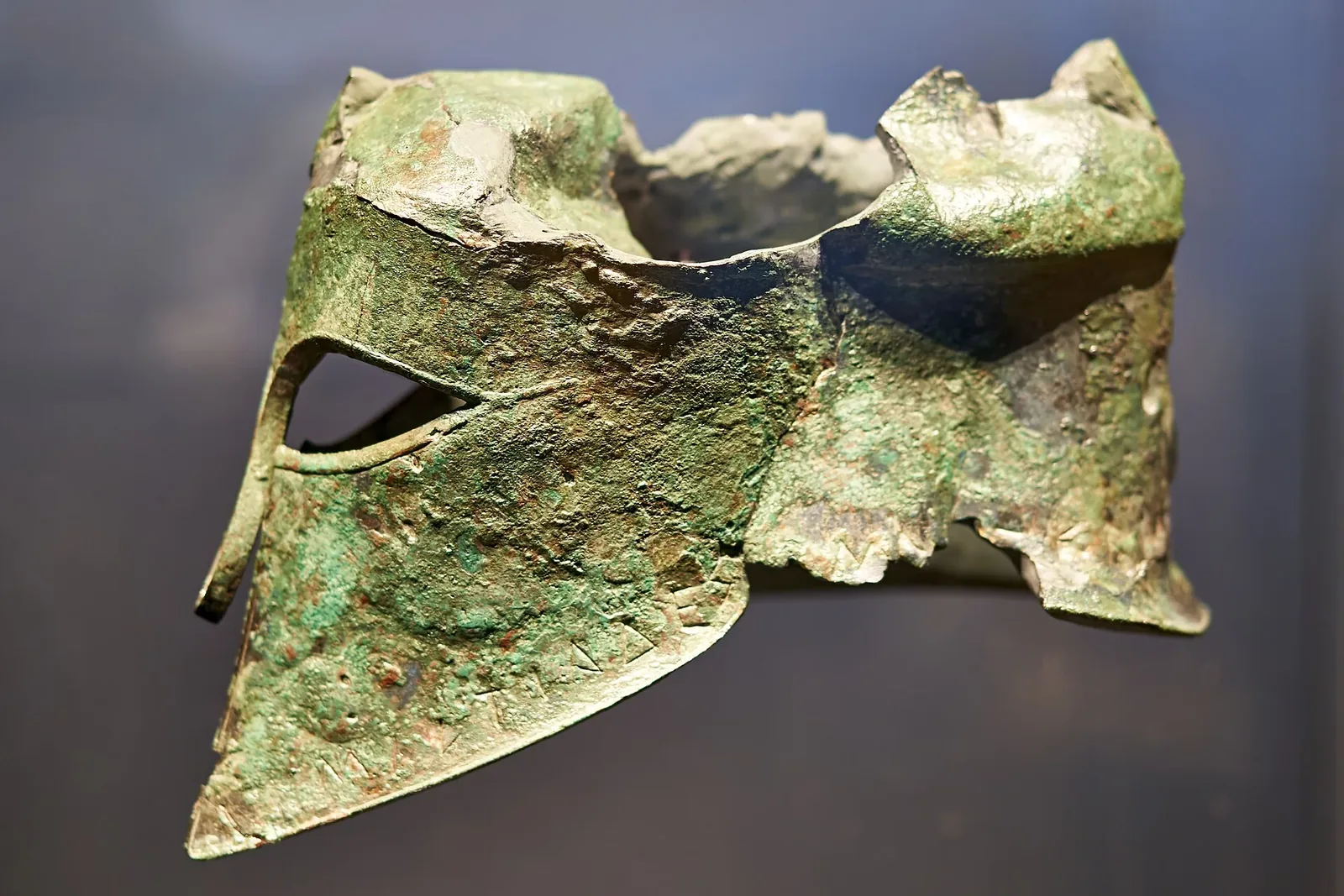
The Greeks chased the fleeing Persians down to the shore. “When they reached the sea they demanded fire and laid hold of the Persian ships.”43Herodotus, Histories 6.113Written c. 430 BC. Translation by A. D. GodleyRead on Perseus ↗ Here the fighting was hardest for the Athenians, and the Persians held them off long enough to get most of their men aboard. The polemarch Callimachus was killed, a brave man in Herodotus’ words,44Herodotus, Histories 6.114Written c. 430 BC. Translation by A. D. GodleyRead on Perseus ↗ and so was one of the generals, Stesilaus son of Thrasylaus. Cynegirus son of Euphorion, the brother of the playwright Aeschylus, fell with “his hand cut off with an ax as he grabbed a ship’s figurehead”.45Herodotus, Histories 6.114Written c. 430 BC. Translation by A. D. GodleyRead on Perseus ↗ Later writers made the story grander, until Cynegirus was said to have held on with his teeth after losing both hands; Grote praised Herodotus’ plain version against the later romancers.46Grote, History of Greece, vol. 4, ch. 36G. Grote, History of Greece, vol. 4 (1847). A modern history, written 2,300 years laterRead on Project Gutenberg ↗
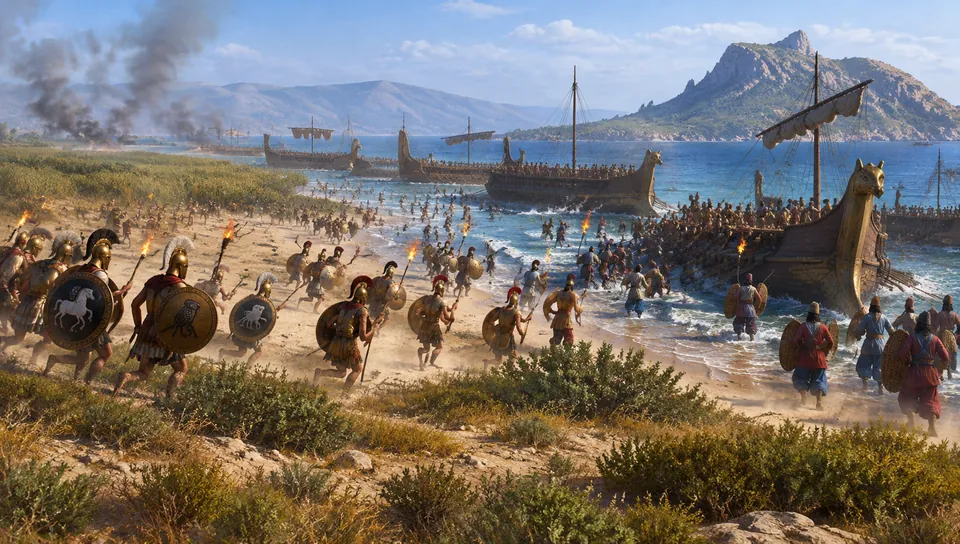
In the end the Athenians took seven ships; the rest pushed off. Other Persians, according to the local tradition that Pausanias heard, ran into the great marsh at the north end of the plain, “not knowing the way”, and that was where most of the killing happened.47Pausanias, Description of Greece 1.32.7Written c. AD 160; Pausanias visited the sites. Translation by A. R. Shilleto (1886)Read on Project Gutenberg ↗ A large painting of the battle in the Painted Stoa at Athens, made within a generation, showed the same three stages: an even fight, the barbarians in the middle “fleeing and pushing one another into the marsh”, and at the end the Greeks killing those trying to board the Phoenician ships.48Pausanias, Description of Greece 1.15.3Written c. AD 160; Pausanias visited the sites. Translation by A. R. Shilleto (1886)Read on Project Gutenberg ↗
Herodotus also records a marvel he heard from the man himself. An Athenian called Epizelus, fighting bravely, suddenly lost his sight, though nothing had struck him, and stayed blind for the rest of his life. He told how a huge armed man, whose beard overshadowed his shield, had passed him by and killed the man next to him. Later tradition added more helpers on the Greek side: the hero Theseus rising from the earth, Heracles, and a country man with a ploughshare whom an oracle named Echetlaeus, the “man of the plough handle”.
The dead: 6,400 and 192
Herodotus gives exact numbers for the dead and none for the armies. “In the battle at Marathon about six thousand four hundred men of the foreigners were killed, and one hundred and ninety-two Athenians.”49Herodotus, Histories 6.117Written c. 430 BC. Translation by A. D. GodleyRead on Perseus ↗ The Athenian figure is almost certainly accurate: the names of the dead were inscribed on stone slabs on their grave mound, arranged by tribe, where Pausanias still read them in the second century AD. He gives no number for the Plataeans or the slaves.
The Persian figure may also be close to the truth; it could have come from a count of the bodies, and a vow helps explain it. Before the battle the Athenians had promised Artemis Agrotera, the huntress, a goat for every enemy killed; there were so many that they settled on five hundred goats a year, and the sacrifice was still made in Plutarch’s time.50Plutarch, On the Malice of Herodotus 26Written c. AD 100. Translation by W. W. Goodwin (1874)Read on Project Gutenberg ↗ Later writers inflated everything. How and Wells set Herodotus’ moderate figure against the 200,000 dead of a later inscription and the 300,000 of Pausanias: “The moderation of the estimate contrasts most favourably with later exaggerations”.51How and Wells, A Commentary on Herodotus, note on 6.117W. W. How and J. Wells, A Commentary on Herodotus, vol. 2 (1912). A line-by-line commentary; dated in placesRead on archive.org ↗
How big were the armies? Herodotus does not say, which suggests he had no figure he trusted. Later writers give 9,000 or 10,000 Athenians and 1,000 Plataeans, figures that modern historians generally accept as about right for the hoplites. For the Persians the ancient numbers run from 100,000 to 600,000 and are impossible; the fleet of 600 ships also carried rowers, horses and supplies. Grundy argued that no rational estimate could put the Persians who actually fought “at much above 20,000”.52Grundy, The Great Persian War, ch. 4G. B. Grundy, The Great Persian War (1901). Grundy surveyed the battlefields himselfRead on Project Gutenberg ↗ Most modern estimates are of the same order, with the Persians outnumbering the Greeks perhaps two to one.53P. Green, The Greco-Persian Wars (1996)Modern history of the Persian Wars (University of California Press)View on Google Books ↗
The shield signal and the race to Phalerum
The battle did not end the danger. The Persian fleet picked up the Eretrian captives from the island where they had been left and sailed south round Cape Sunium, hoping to reach the city before the Athenian army. And someone in Attica made a signal. Herodotus reports an accusation that the Alcmaeonids, the powerful family of Cleisthenes, “were said to have arranged to hold up a shield as a signal once the Persians were in their ships”.54Herodotus, Histories 6.115Written c. 430 BC. Translation by A. D. GodleyRead on Perseus ↗
Herodotus defends the Alcmaeonids at length. They hated tyrants, he says, and it was they who had driven out Hippias’ family. But he does not deny the signal itself: “A shield was held up; this cannot be denied, for it happened; but who did it I do not know”.55Herodotus, Histories 6.124Written c. 430 BC. Translation by A. D. GodleyRead on Perseus ↗ Plutarch mocked the whole story: a shield flashed at an army fleeing in panic to its ships could not even have been seen.56Plutarch, On the Malice of Herodotus 27Written c. AD 100. Translation by W. W. Goodwin (1874)Read on Project Gutenberg ↗ Modern historians mostly believe that a group in Athens, whoever they were, was ready to betray the city to Hippias, and that the Persians meant to land at Phalerum while the army was away at Marathon.
The army raced back. “The Athenians marched back to defend the city as fast as their feet could carry them and got there ahead of the foreigners.”57Herodotus, Histories 6.116Written c. 430 BC. Translation by A. D. GodleyRead on Perseus ↗ They camped in another precinct of Heracles, at Cynosarges outside the walls, and when the Persian fleet appeared off Phalerum, then the harbour of Athens, it rode at anchor for a while and sailed away to Asia. Plutarch says the army made the march the same day, leaving Aristides and his tribe to guard the prisoners and the spoil.58Plutarch, AristidesWritten c. AD 100. Translation by J. Dryden, revised by A. H. CloughRead on Project Gutenberg ↗ How and Wells thought a march of 40 kilometres after a battle was too much and put it on the next day; Grote believed it was the same afternoon. Either way, the sight of the victors on the shore ended the campaign.
After the full moon 2,000 Spartans came, marching so fast that they reached Attica on the third day after leaving Sparta. They were too late for the battle, but they wanted to see the Medes, went to Marathon to look at the dead, praised the Athenians and went home.
The Soros and the monuments
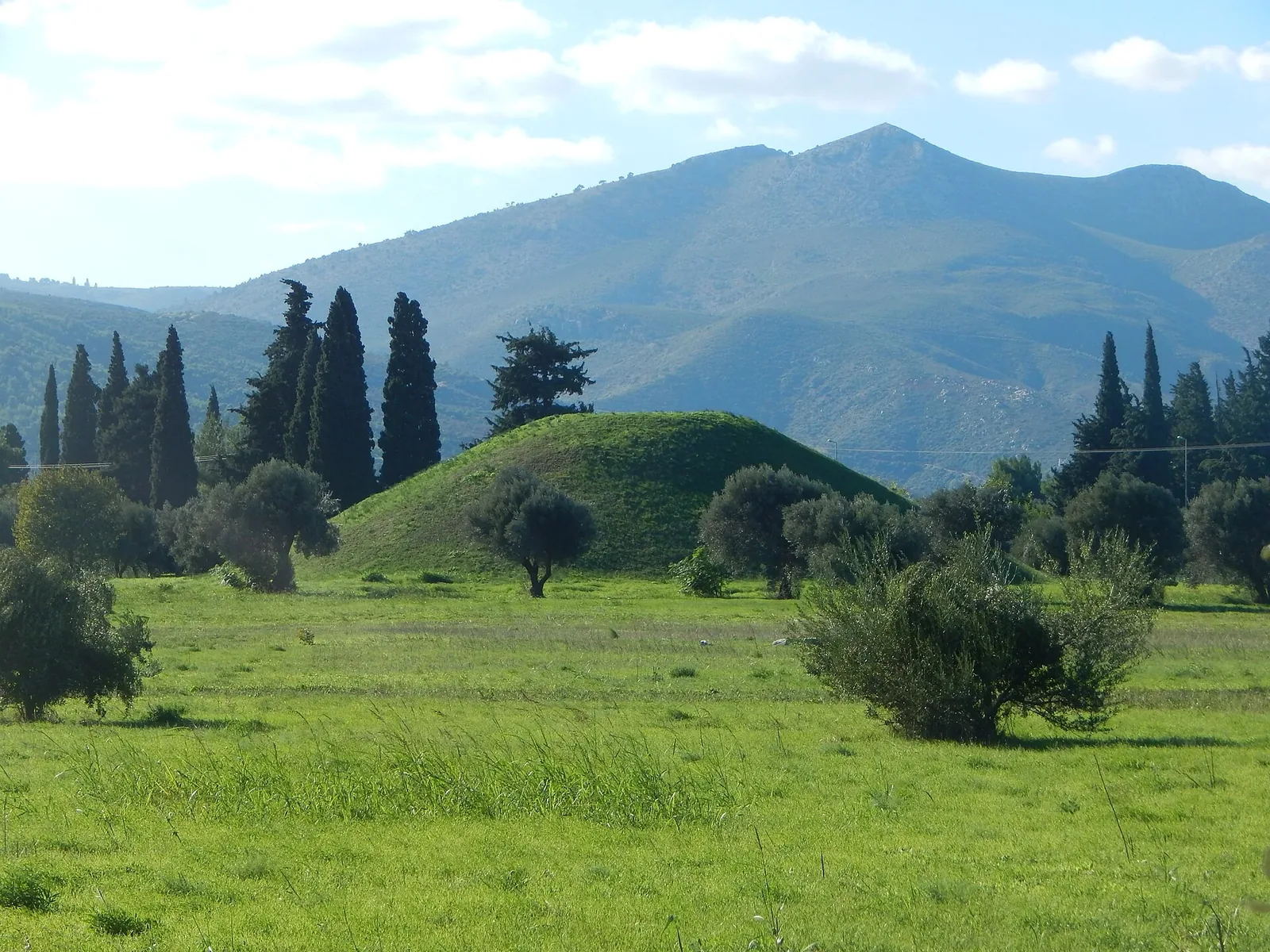
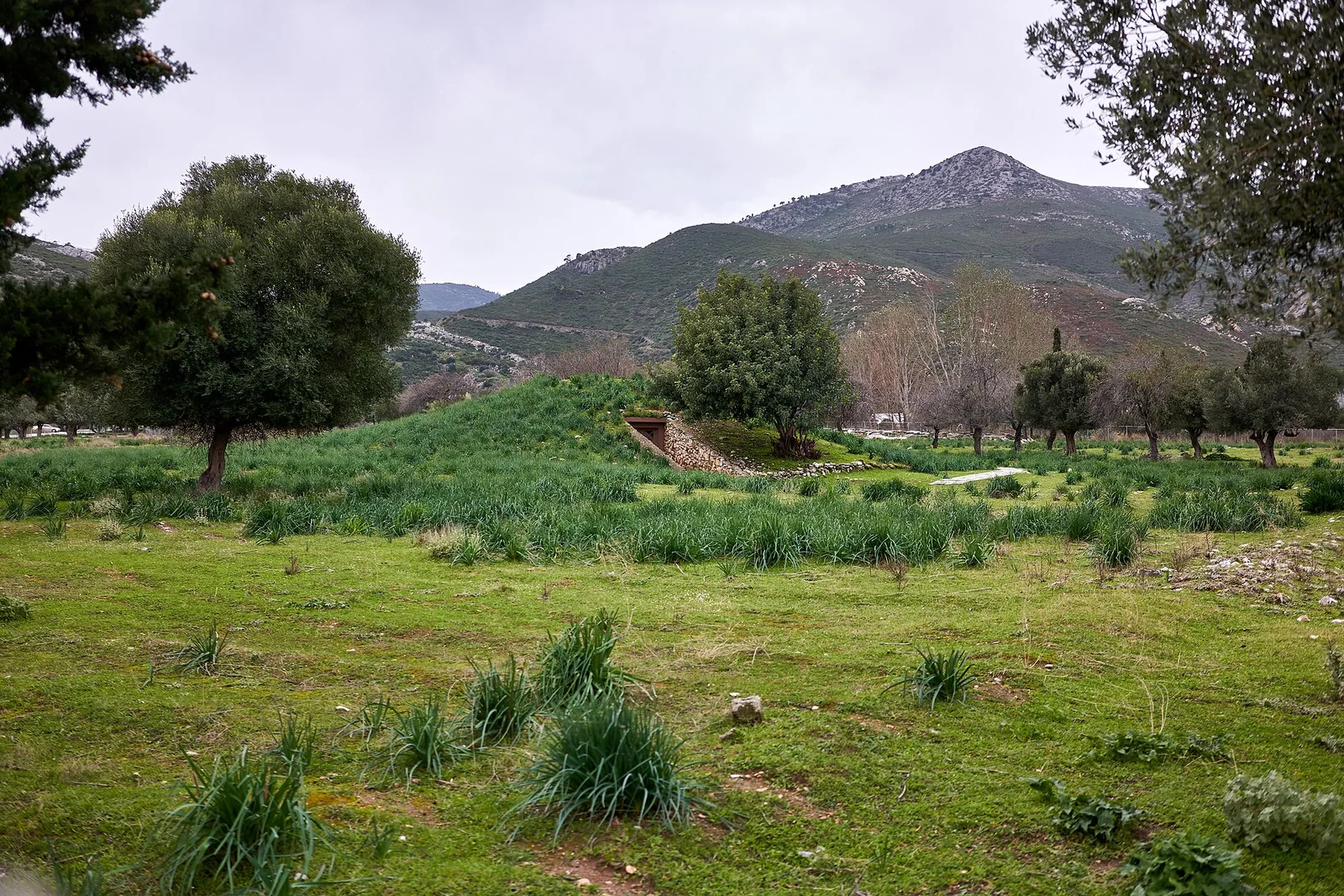
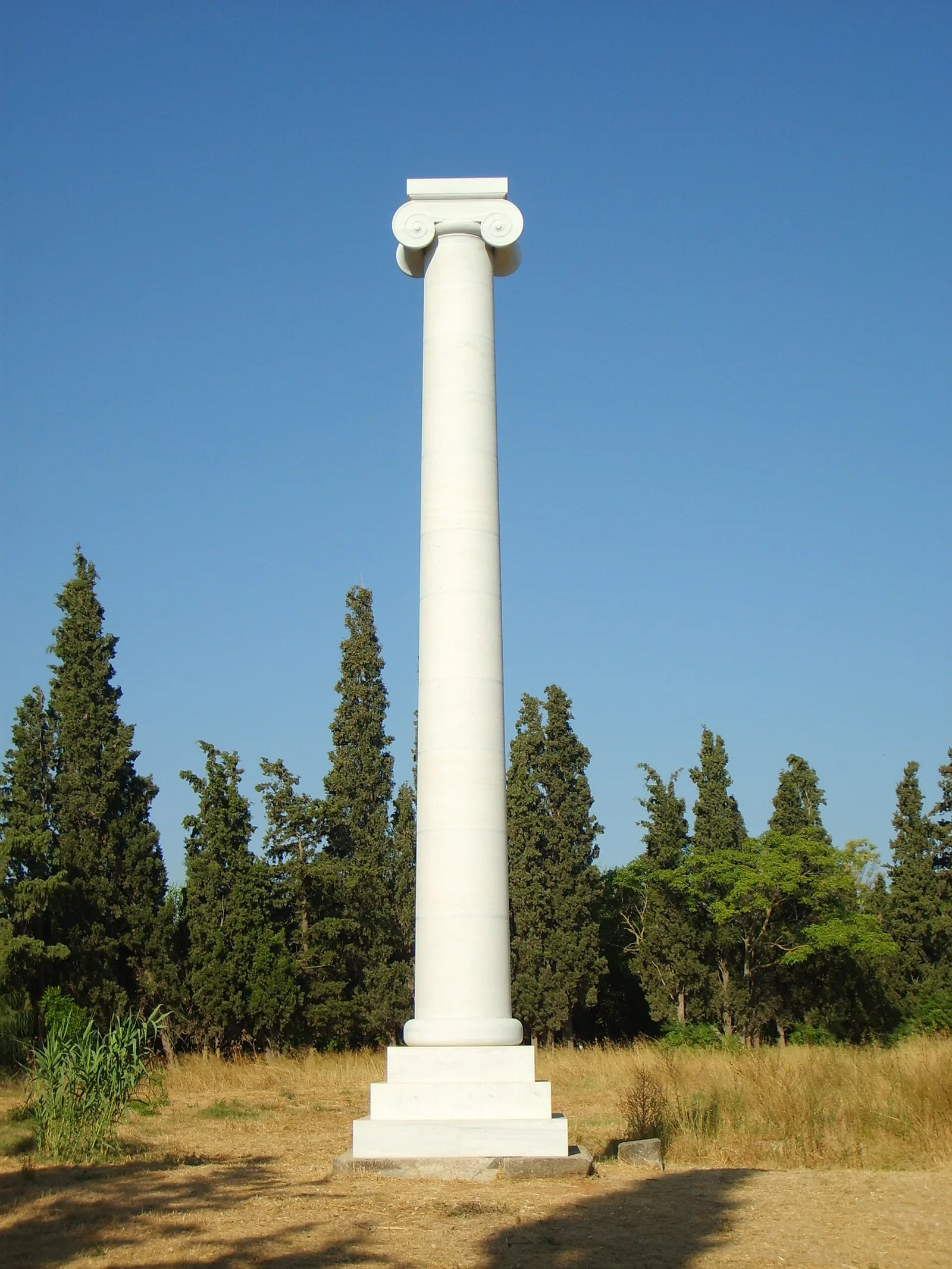
Athenians who died in war were normally brought home and buried in the public cemetery outside the city. Marathon was the exception. Thucydides, describing the custom about sixty years later, notes that the men of Marathon “for their singular and extraordinary valour were interred on the spot where they fell”.59Thucydides, History of the Peloponnesian War 2.34Written c. 400 BC. Translation by R. CrawleyRead on Project Gutenberg ↗ Their mound, the Soros, still stands on the plain, about 9 metres high and some 50 metres across. Pausanias saw it with its stone pillars: “in the plain is the tomb of the Athenians, and on it are pillars with the names of the dead according to their tribes”.60Pausanias, Description of Greece 1.32.3Written c. AD 160; Pausanias visited the sites. Translation by A. R. Shilleto (1886)Read on Project Gutenberg ↗
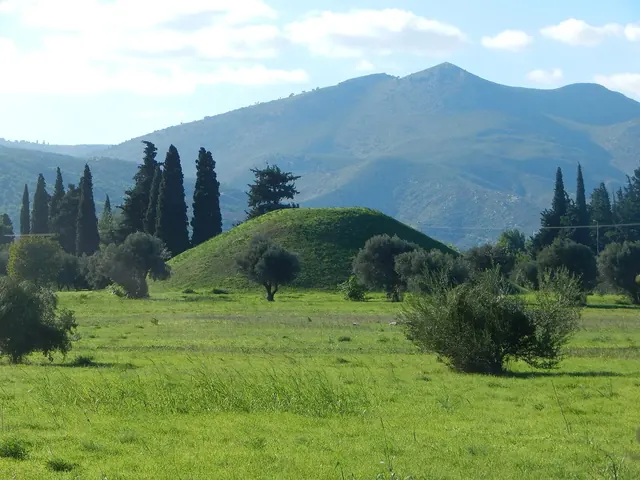
Excavations in 1890 and 1891 confirmed that the mound is the grave of the victors, as How and Wells noted. Nearby, Pausanias saw the mound of the Plataeans and slaves, a separate monument to Miltiades, and a trophy of white marble.61Pausanias, Description of Greece 1.32.5Written c. AD 160; Pausanias visited the sites. Translation by A. R. Shilleto (1886)Read on Project Gutenberg ↗ Of the Persian dead he found nothing: the Athenians said they had buried them, “but I could find no tomb”.62Pausanias, Description of Greece 1.32.5Written c. AD 160; Pausanias visited the sites. Translation by A. R. Shilleto (1886)Read on Project Gutenberg ↗ Krentz places the main fighting further north-east than the Soros, near the remains of the trophy, which by its nature marked the spot where the enemy turned.63P. Krentz, The Battle of Marathon (2010)Modern study of the battle (Yale University Press, Yale Library of Military History)View on Google Books ↗
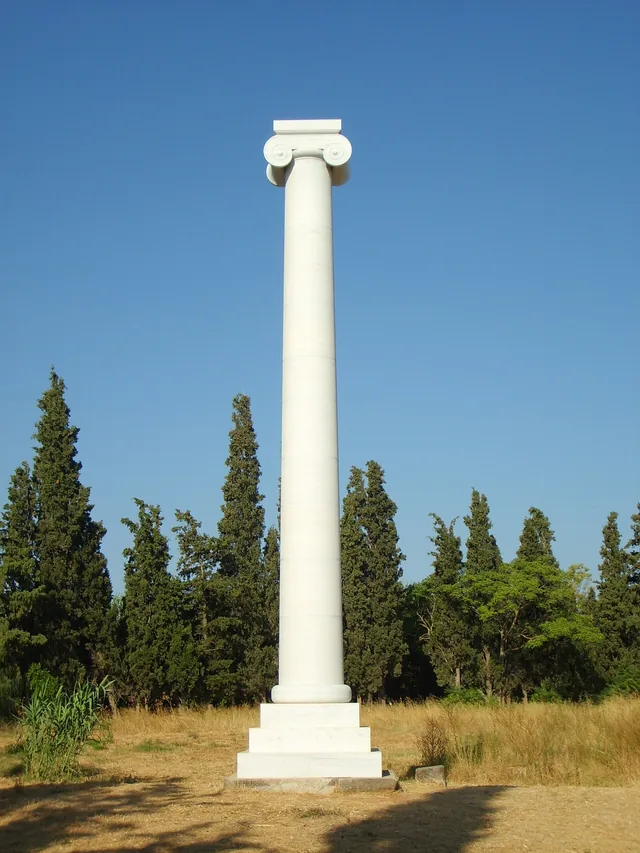
The epitaph quoted by the orator Lycurgus in the fourth century BC, often ascribed to Simonides, sums up how Athens remembered the day: “At Marathon the Athenians fought for Greece”.64Epigram on the Athenians at Marathon, quoted by Lycurgus, Against Leocrates 109 (ascribed to Simonides)Quoted c. 330 BC; the ascription to Simonides is doubtful. Translation in J. M. Edmonds, Lyra Graeca II (1924)Read on archive.org ↗ The battle became sacred ground. Pausanias heard that every night on the plain “one may hear horses neighing and men fighting”, and that the people of Marathon worshipped the dead as heroes.65Pausanias, Description of Greece 1.32.4Written c. AD 160; Pausanias visited the sites. Translation by A. R. Shilleto (1886)Read on Project Gutenberg ↗
The run that never was
Every modern marathon race recalls a run that Herodotus never mentions. His runner, Philippides, ran from Athens to Sparta before the battle. The story of a messenger who ran from the battlefield to Athens, announced the victory and dropped dead appears for the first time nearly 600 years later. Plutarch, in an essay on the glory of Athens, tells it of a herald called Thersippus or Eucles; in the second century AD the satirist Lucian gives the name Philippides and has him announce the victory with his last breath. How and Wells remarked that the poet Robert Browning had accepted “Lucian’s addition to the story that Pheidippides ran back to fight” at Marathon and died after bringing the news, “a feat commemorated by the Marathon races of to-day”.66How and Wells, A Commentary on Herodotus, note on 6.105W. W. How and J. Wells, A Commentary on Herodotus, vol. 2 (1912). A line-by-line commentary; dated in placesRead on archive.org ↗
Browning’s poem “Pheidippides” (1879) inspired the French scholar Michel Bréal to propose a race from Marathon to Athens at the first modern Olympic Games in 1896. It was won by a Greek water-carrier, Spyridon Louis. Modern historians see the death run as a later legend that merged the runner to Sparta with the army’s march back to Athens.67F. J. Frost, “The Dubious Origins of the ‘Marathon’”, American Journal of Ancient History 4 (1979)Modern article on how the story of the run from Marathon to Athens grew upFind on Google Scholar ↗ Even the runner’s name is uncertain: the manuscripts of Herodotus give both Philippides and Pheidippides, and How and Wells preferred Philippides, since Pheidippides is a joke name in Aristophanes’ comedy The Clouds.68How and Wells, A Commentary on Herodotus, note on 6.105W. W. How and J. Wells, A Commentary on Herodotus, vol. 2 (1912). A line-by-line commentary; dated in placesRead on archive.org ↗
Why it mattered
In military terms Marathon was a check, not a conquest. The Persian empire lost a few thousand men and seven ships, punished Eretria and Naxos and kept the Cyclades. But for Darius it was an insult that had to be avenged. When the news came, Herodotus writes, “already greatly angry against the Athenians for their attack upon Sardis, he was now much more angry and eager to send an expedition against Hellas”.69Herodotus, Histories 7.1Written c. 430 BC. Translation by A. D. GodleyRead on Perseus ↗ For three years Asia prepared. Then Egypt revolted, Darius died in 486 BC, and the task passed to his son Xerxes, who in 480 BC came by land with an army and fleet far larger than Datis’. In Aeschylus’ play The Persians, performed in 472 BC, the queen mother says that the barbarians “whom Marathon destroyed were not enough” for her son, who sought revenge and found disaster.70Aeschylus, The Persians, lines 473–475Performed in 472 BC; Aeschylus fought at Marathon. Translation by H. W. SmythRead on Perseus ↗
For Athens the victory changed everything. A city that had just thrown out its tyrants had beaten the army of the king without Sparta. The men of Marathon became the model of Athenian courage for generations: at Sparta in 432 BC Athenian envoys still boasted “that at Marathon we were at the front, and faced the barbarian single-handed”.71Thucydides, History of the Peloponnesian War 1.73Written c. 400 BC. Translation by R. CrawleyRead on Project Gutenberg ↗ Before Plataea in 479 BC, Herodotus has the Athenians claim the place of honour because “alone of all Greeks we met the Persian singlehandedly”, forgetting the Plataeans who had stood with them.72Herodotus, Histories 9.27Written c. 430 BC. Translation by A. D. GodleyRead on Perseus ↗ How and Wells summed it up: “if the material results of Marathon were small, the moral effect was tremendous”.73How and Wells, A Commentary on Herodotus, appendix XVIIIW. W. How and J. Wells, A Commentary on Herodotus, vol. 2 (1912). A line-by-line commentary; dated in placesRead on archive.org ↗
For the two men at the centre the result was very different. Miltiades, at the height of his fame, asked for seventy ships and money for an expedition he would not name, attacked the island of Paros, failed after twenty-six days, injured his leg and came home to be prosecuted. Fined fifty talents, he “later died of gangrene and rot in his thigh”, and his son Cimon paid the fine.74Herodotus, Histories 6.136Written c. 430 BC. Translation by A. D. GodleyRead on Perseus ↗ Themistocles, who had fought in the centre, drew another lesson. Plutarch says that while others thought Marathon “an end to the war”, he saw it as the beginning of far greater conflicts, and that “the trophy of Miltiades would not let him sleep”.75Plutarch, ThemistoclesWritten c. AD 100. Translation by J. Dryden, revised by A. H. CloughRead on Project Gutenberg ↗ In 483 BC he persuaded the Athenians to spend the silver of the new mines at Laurium on warships, the fleet that would fight at Salamis.
A punitive raid that did half its job
No Persian account of Marathon exists. The royal inscriptions of Darius list the peoples of the empire and the rebels he defeated, but they do not mention Athens, Eretria or the expedition of 490 BC, and the Persepolis tablets record Datis only as a traveller on royal business four years before. Everything we know about the Persian side comes from Greek writers.
Seen from Susa, the expedition had clear and limited aims: to punish the two cities that had helped the Ionian rebels and burned Sardis, and to bring the islands under control. Much of that was done. Naxos, which had defied a Persian siege in 499 BC, was taken and burned; the Cyclades gave hostages and soldiers; Carystus submitted; Eretria was destroyed and its people were carried off to Susa, where Herodotus says their descendants still lived. Only Athens escaped, and with it Hippias’ hope of returning as the king’s governor. A Victorian historian of Persia, George Rawlinson, wrote that Datis “fell back upon Asia, having suffered worse disasters than his predecessor”.76Rawlinson, The Fifth Monarchy: Persia, ch. 7G. Rawlinson, The Seven Great Monarchies, vol. 5 (1871). A Victorian history of Persia, based mostly on Greek writersRead on Project Gutenberg ↗
The Persian court remembered the defeat in its own way. Ctesias, a Greek doctor who lived at the Persian court around 400 BC and wrote a history of Persia from Persian informants, says that Datis himself was killed at Marathon and that the Athenians refused to give back his body, and that this refusal was one of the reasons why Xerxes later invaded Greece.77Ctesias, Persica, summarised by Photius (Bibliotheca, codex 72)Ctesias wrote c. 400 BC; the summary is from the 9th century AD. Translation by J. H. Freese (1920)Read on Project Gutenberg ↗ Herodotus, who has Datis sail home past Delos and Mykonos, contradicts this, and most historians follow him. But the story shows that in Persian memory Marathon was an affront to be answered, not the end of anything. The real lesson the Persians drew was practical: a force small enough to cross the Aegean by ship was not enough to conquer Greece. Ten years later Xerxes came by land, with an army and fleet many times larger.
How close is our evidence?
Marathon is one of the best-known battles in history and one of the worst documented. The only witnesses whose words survive are Aeschylus, who fought there and mentions it in The Persians and, according to Pausanias, in his own epitaph, and the stone monuments on the plain.78Pausanias, Description of Greece 1.14.5Written c. AD 160; Pausanias visited the sites. Translation by A. R. Shilleto (1886)Read on Project Gutenberg ↗ Herodotus, writing about sixty years later, is our main source and the only connected account. He could still talk to veterans like Epizelus, but his narrative is short, gives no army sizes and hardly describes the ground. Grote already observed: “There is nothing in the account of Herodotus to make us believe that he had ever visited the ground of Marathon.”79Grote, History of Greece, vol. 4, ch. 36G. Grote, History of Greece, vol. 4 (1847). A modern history, written 2,300 years laterRead on Project Gutenberg ↗
Everything else is later. The orators of the fourth century turned Marathon into patriotic legend and forgot the Plataeans. Cornelius Nepos, about 35 BC, used the lost historian Ephorus and gives numbers and a different battle plan. Plutarch, around AD 100, adds anecdotes and attacks Herodotus. Pausanias, around AD 160, describes the monuments he saw. The story of the cavalry’s absence comes from the Suda, a thousand years after Plutarch. Where these later writers disagree with Herodotus, the safest course is to follow Herodotus and treat the rest as possible but uncertain.
- Herodotus, Histories 5.105
- Herodotus, Histories 7.133
- Herodotus, Histories 6.94
- D. M. Lewis, “Datis the Mede”, Journal of Hellenic Studies 100 (1980), pp. 194–195
- Herodotus, Histories 6.95
- Grote, History of Greece, vol. 4, ch. 36
- P. Green, The Greco-Persian Wars (1996)
- Herodotus, Histories 6.96
- How and Wells, A Commentary on Herodotus, note on 6.96
- Herodotus, Histories 6.97
- How and Wells, A Commentary on Herodotus, note on 6.97
- Herodotus, Histories 6.100
- Grundy, The Great Persian War, ch. 4
- Herodotus, Histories 6.101
- How and Wells, A Commentary on Herodotus, appendix XVIII
- Herodotus, Histories 6.102
- Grote, History of Greece, vol. 4, ch. 36
- Herodotus, Histories 6.109
- Grundy, The Great Persian War, ch. 4
- Herodotus, Histories 6.106
- Herodotus, Histories 6.106
- Pausanias, Description of Greece 1.28.4
- How and Wells, A Commentary on Herodotus, note on 6.106
- Plutarch, On the Malice of Herodotus 26
- P. Krentz, The Battle of Marathon (2010), appendix on the date of the battle
- Herodotus, Histories 6.108
- Grote, History of Greece, vol. 4, ch. 36
- Herodotus, Histories 6.111
- Pausanias, Description of Greece 1.32.3
- Herodotus, Histories 6.109
- Herodotus, Histories 6.109
- Grundy, The Great Persian War, ch. 4
- How and Wells, A Commentary on Herodotus, appendix XVIII
- P. Krentz, The Battle of Marathon (2010)
- Herodotus, Histories 6.111
- Plutarch, Aristides
- Herodotus, Histories 6.112
- Grote, History of Greece, vol. 4, ch. 36
- How and Wells, A Commentary on Herodotus, note on 6.112
- P. Krentz, The Battle of Marathon (2010), pp. 43–62
- Herodotus, Histories 6.113
- Grundy, The Great Persian War, ch. 4
- Herodotus, Histories 6.113
- Herodotus, Histories 6.114
- Herodotus, Histories 6.114
- Grote, History of Greece, vol. 4, ch. 36
- Pausanias, Description of Greece 1.32.7
- Pausanias, Description of Greece 1.15.3
- Herodotus, Histories 6.117
- Plutarch, On the Malice of Herodotus 26
- How and Wells, A Commentary on Herodotus, note on 6.117
- Grundy, The Great Persian War, ch. 4
- P. Green, The Greco-Persian Wars (1996)
- Herodotus, Histories 6.115
- Herodotus, Histories 6.124
- Plutarch, On the Malice of Herodotus 27
- Herodotus, Histories 6.116
- Plutarch, Aristides
- Thucydides, History of the Peloponnesian War 2.34
- Pausanias, Description of Greece 1.32.3
- Pausanias, Description of Greece 1.32.5
- Pausanias, Description of Greece 1.32.5
- P. Krentz, The Battle of Marathon (2010)
- Epigram on the Athenians at Marathon, quoted by Lycurgus, Against Leocrates 109 (ascribed to Simonides)
- Pausanias, Description of Greece 1.32.4
- How and Wells, A Commentary on Herodotus, note on 6.105
- F. J. Frost, “The Dubious Origins of the ‘Marathon’”, American Journal of Ancient History 4 (1979)
- How and Wells, A Commentary on Herodotus, note on 6.105
- Herodotus, Histories 7.1
- Aeschylus, The Persians, lines 473–475
- Thucydides, History of the Peloponnesian War 1.73
- Herodotus, Histories 9.27
- How and Wells, A Commentary on Herodotus, appendix XVIII
- Herodotus, Histories 6.136
- Plutarch, Themistocles
- Rawlinson, The Fifth Monarchy: Persia, ch. 7
- Ctesias, Persica, summarised by Photius (Bibliotheca, codex 72)
- Pausanias, Description of Greece 1.14.5
- Grote, History of Greece, vol. 4, ch. 36
- Herodotus, Histories: 6.94, 6.98, 6.99, 6.103, 6.104, 6.105, 6.107, 6.110, 6.113, 6.115, 6.117, 6.119, 6.120
- Grundy, The Great Persian War: ch. 4
- Grote, History of Greece, vol. 4: ch. 36
- How and Wells, A Commentary on Herodotus, note on: 6.106, 6.109, 6.117